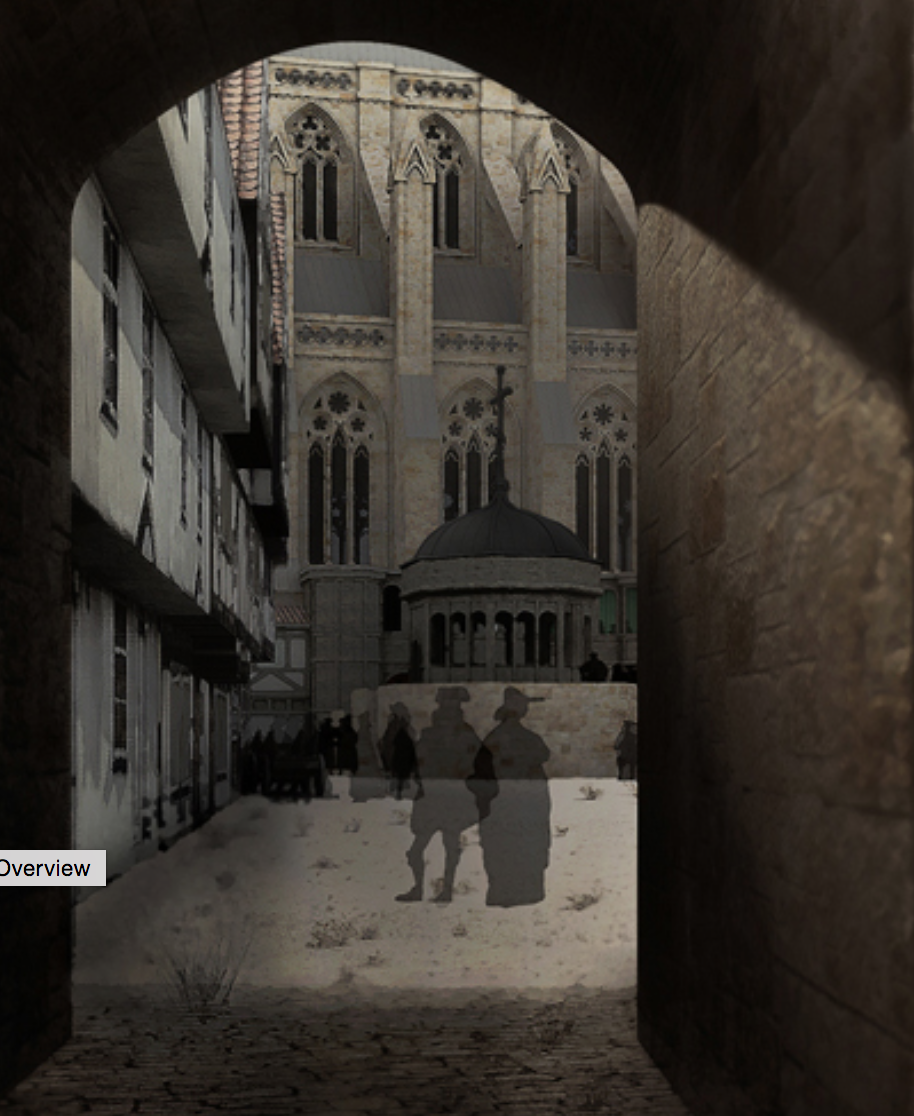
Paul’s Cross Project is a history and theology digital humanities project that attempting to virtually recreate John Donne’s Gunpowder Day sermon that took place November 5th, 1622. In order to create this virtual experience, the website offers a “fly-around” feature allowing you to see where the sermon took place from a 3D perspective, an acoustic model, a bibliography of John Donne, and the manuscript of the sermon. The creators of the website describe the purpose of the website as to “understand and evaluate our assumptions about the look and sound of the Paul’s Cross sermon, to add experience in real time to our repertory of tools for interpreting these events, and to create the opportunity for testing and evaluating multiple models of the event it recreates as new information and new interpretations emerge.”
Sources:
This recreation uses many primary and secondary sources in order to make the recreation as detailed as possible. The Primary sources include the manuscript of the sermon from the British Library, paintings like John Gipkin’s of Pauls’s Cross, and many published works like Directions Concerning Preachers and Records of Convocations. The secondary sources are mostly books used to describe the Donne and Church of England, Paul’s Cross, The Chapel Royal, Paul’s Cathedral, the historical and cultural background of the event, and the conceptual framework.
Process:
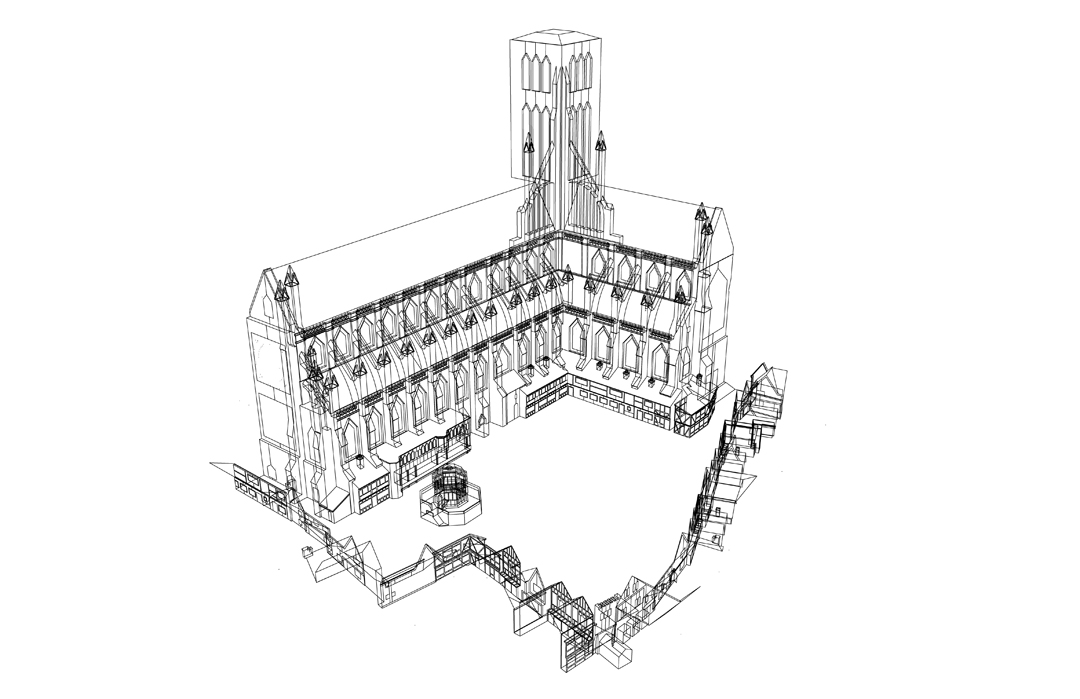
In order to transform and combine all the different sources into the Viral Paul’s Cross Project we see on the website, many process had to take place to make the sources usable. The Project used architectural modeling software and acoustic simulation software to recreate the buildings and sounds from the event. Ben Markham and Matt Azevedo were the acoustic engineers that took into account crowd noises, echo, and other ambient sounds to create the audio. Joshua Stephens, a graduate student in architecture, used google sketch up to create the visual model of the setting that also incorporated weather and environment.
Presentation:
The final piece of the project was to present all the information in a way that makes it easy for different kinds of users to engage in. Paul’s Cross Project decided to make a virtual experience through a website that categorized by churchyard, acoustics, preacher, occasion, sermon, and support. Each category brings a different element to the virtual experience that the user can explore.
Viral Paul’s Cross Project did a phenomenal job recreating the event. By going into such detail, like describing how the weather probably was at the time, it made me feel like I was apart of it. However, even after exploring the website for an hour, it was hard to understand the significance of John Donne’s sermon or any historical context.