DH101

Introduction to Digital Humanities

Page 31 of 38

Patent Medicine Trade Cards Collection

The Patent Medicine Trade Cards Collection is a digital collection of 247 patent medicine trade cards found in United States, Canada, Belgium, and Hungary between the 1870 and and 1906. Some are in English, and others are in French and German. Patent medicines were not actually patented, but they were trademarked medicines that were sold under a variety of names and labels. These cards advertised, most of the time falsely, the many cures a particular medicine can bring. They were small and colorfully illustrated to draw in the attention of the public. In 1906, the first Pure Food and Drug Act passed ending the era of patent medicine.
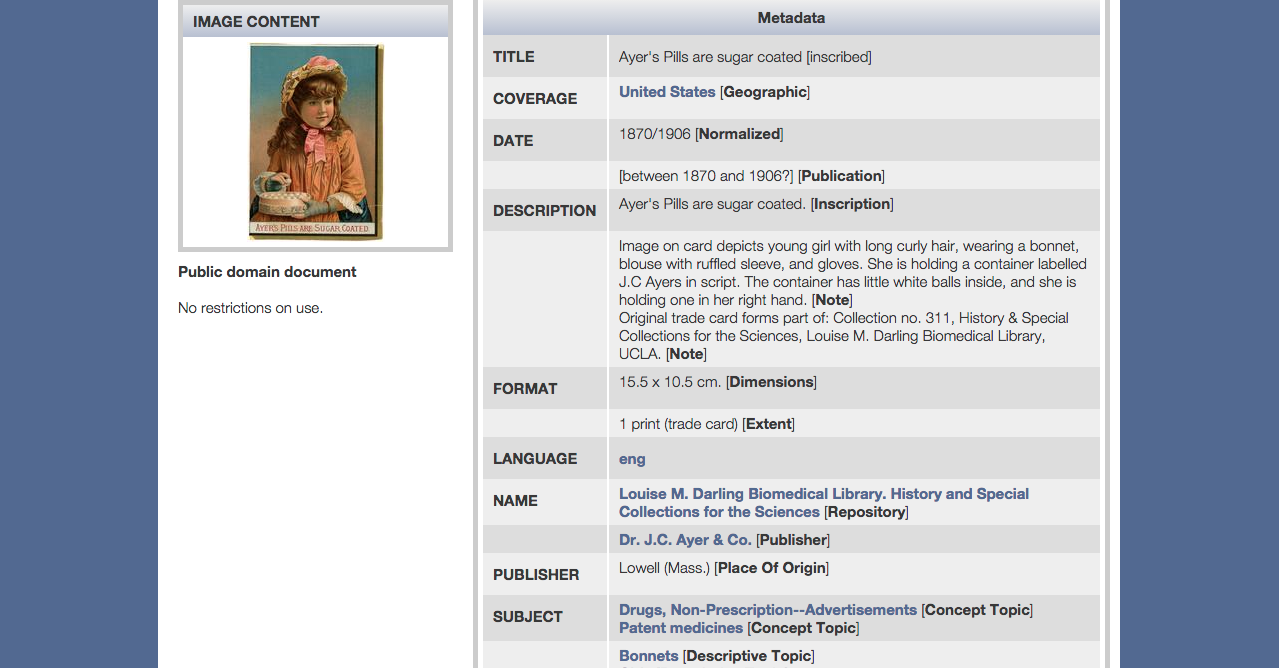
   

The collection contains the metadata for each of the cards, describing what the card is advertising and what the illustration shows. Sometimes, the cards have a long introduction or description on the back about the advertised medicine. The site allows for zooming in/out of the illustration, turning pages, viewing full screen, and clicking on hyperlinked descriptions. It also gives information about where and when the card originated from, format of the card, language, name and place of the publisher, and related concept topics. You can search the collection by coverage, language, name, subject, and type.

Based on all of these information, the viewer can have a sense of what types of medicine were advertised, how they were advertised, what the recurring themes of the trade card illustrations were, what ailments were mentioned frequently, and what the differences and similarities were between the trade cards based on geographical locations. The viewer can also wonder what might have led to the Pure Food and Drug Act to be passed in 1906. How outrageous were the claims? Also, what kind of drawing and coloring styles were used?

However, due to the limited amount of information about the cards, the collection won’t be able to tell a richer story. For example, were the cards successful in bringing in more customers? Were the customers satisfied? How were they distributed? What part did the trade cards play in the passing of Pure Food and Drug Act? How were medicine advertised and sold before and after the trade cards? What led to the creation of trade cards? How many of them were made each time, and how long were they in circulation? In order to find out more about the patent medicine trade cards, the viewer needs to look to other sources than this collection, such as articles, manuscripts, documents, secondary research, etc. This digital collection may provide the base for research on patent medicine, but it needs much more supporting evidence to further a more detailed and effective scholarly work.
 

Women Against Violence Against Women Collection

The Women Against Violence Against Women (WAVAW) Collection
Screen Shot 2015-10-12 at 12.09.30 PM

(Home Page)

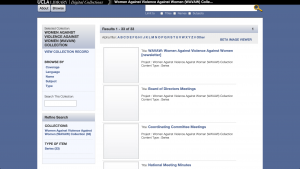
The Women Against Violence Against Women (WAVAW) Collection was created to educate the public and increase public awareness about the distorted image of women in the media.  The site is a repository of papers, records, newsletters, images, publications, audio-visual materials, scripts, internal memos, etc.

Screen Shot 2015-10-12 at 12.30.20 PM

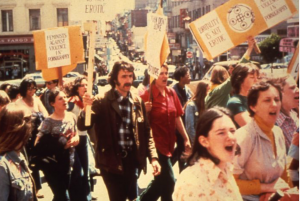
(Pornography Protest)

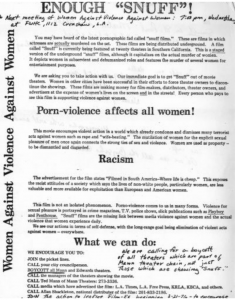
Interesting and popular topics that are presented on this site are the coverages of the The Women Against Violence Against Women’s actions against particular, well-known films and companies including the Rolling Stones “Black and Blue” advertising campaign, Warner Communications, Inc. and the Snuff film.  It could be possible to write stories on each of these particular events because of all the original sources that are provided such as protest letters, press releases, and images from the protests.  For instance, with the Snuff film, WAVAW protested against the film’s capitalization on the murder and dismemberment of a woman and rallied to stop the showing of the movie that was opening in twenty theaters throughout Los Angeles.  The organization not only condoned the violence against women in the film, but also the racism in its advertising.  Apparently in the advertisement for the film it states that the film was “Filmed in South America-Where life is cheap” which insinuates that the lives of these South Americans, particularly non-whites in general, are less valuable.  One press release against the film, which I included below, also includes things that people can do to help the cause including joining the picket lines, calling the media, calling the theater managers, etc.  This is just one example/event that could be written about purely based on this site.

Screen Shot 2015-10-12 at 12.56.33 PM

(Snuff Press Release)

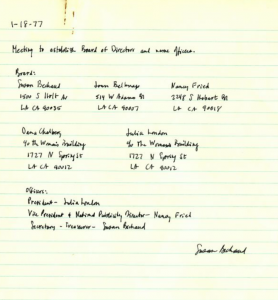
Other links I came across when I was browsing this site were the administrative details such as newsletters, coverage of the WAVAW meetings, and information about the organization in general.  Therefore, one story that could be written on this archive is a history of the WAVAW, particularly how the organization got started, and the process of getting it started.  It would also be interesting to include stories about the founders and their personal reasons for wanting to start the organization and backstories of their lives, however, I couldn’t find much information on them through this site.  However, I did find a handwritten note on the Board of Directors Meeting Minutes from January 18, 1977 that gave a little bit of information on the members.

Screen Shot 2015-10-12 at 12.52.43 PM

(Board of Directors Meeting Minutes-1/18/97)

There is a main sidebar that includes links to the collection main page, images, manuscripts, pages, and series, but it would’ve been interesting and would’ve remedied this issue if there was a tab for the autobiographies for the main members and founders.

The Bennett Photographic Collection

Screen Shot 2015-10-12 at 12.52.44 PM

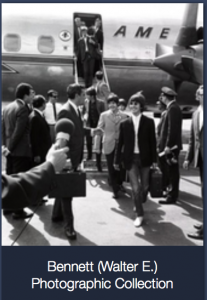
The UCLA Digital Library Program serves as a digital preservation of different images, audio, text and video. In this library, you can access The Bennett Photographic Collection which includes a title, date, format, copyright status, keyword subjects, and type to every photo in the collection. You can browse the photos by name, subject, or repositories making the collection very easy to navigate.

This archive does a great job connecting each photograph to an event, which makes it easy to understand different aspects of the story of an event through photographs. For example, there is a subsection of the collection for all photographs that have to do with abortions in California. This subsection includes photos of murder charges in courtrooms, people dealing with death after an abortion, police investigations, illegal abortion doctors etc. From this collection, I would be able to tell give explicit detail on a specific person’s experiences with abortion in California through a photograph. Just like the cliché, “A picture’s worth a thousand words,” these photographs capture history though facial expression.
Screen Shot 2015-10-12 at 12.51.37 PM

However, even though I can give great detail of specific people and perspectives through the photographs, it is difficult to understand the greater picture of what is going on in a given event by only using The Bennett Photographic Collection as a resource. I wouldn’t be able to tell you statistics about abortion in California like how many abortions took place during a give time, which economic class had the most abortions, laws about abortion, etc. Even with the specific people the photographs capture, the collection doesn’t give a back story to why the person is doing what they are doing in the given photograph. You can research it because the collection gives you names, dates and even related articles, but it is your job to find it.

To tell the best story using The Bennett Photographic Collection, I would research the different subjects photographed with other resources and use the people, places, and events in the photographs as specific details or as a given perspective of the subject I’m researching. Resources like encyclopedias, books, or any text database normally do a great job summerizing concepts yet lack the emotion of someones personal story that make the subject relatable. Combining the basic details needed to tell a story through text research with the emotion of photography shown in The Bennett Photographic Collection gives the tools needed to write something compelling.

The Index of Medieval Medical Images

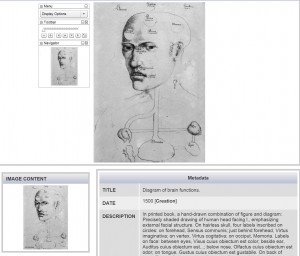
The Index of Medieval Medical Images (IMMI) is a collection of 13 manuscripts that have been digitized and are accessible through the UCLA library.  Along with a digital copy of the manuscript, each entry also includes the repository, date of creation and place of origin.  Despite being called medical images, most are primarily pages of text with images in the margins.  These images are not all medical related but are often portraits of scholars or saints.  In this way the title of the index is slightly misleading.  The sources of the manuscripts themselves are from UCLA, Yale, University of Vermont, the Rosenbach Museum and Library, and the National Library of Medicine.

IMMI

Another challenging aspect of this archive is that the sources are not translated.  We would have to translate them ourselves or concentrate on interpreting the images.  Concentrating exclusively on the images limits what can be done with these sources.  Assuming that we could translate them in some form, we could do a series of things with these manuscripts.

Having the manuscripts available digitally enables us to easily compare and research them. One approach would be to look at these manuscripts, in particular the images, and see what healing was associated with during the middle ages as a whole.  Along a similar vein, we could use these manuscripts to study medical practices of that time and compare them to ours now.  In doing this we would concentrate less on the practices themselves, which clearly have changes over the past millennia, but more on how these practices reveal their understanding of the human body.  Concentrating on their understanding, we could actually learn how correct or wrong their views were.

Another interesting rabbit trail would be to investigate the sources of these manuscripts and compare the different practices between source locations. This is a more difficult enterprise because the location of the manuscripts may be lost.  The location where the manuscripts were acquired by the last owner does not necessarily mean that that is the source of the manuscript, which could have traveled with numerous precious owners.  This sort of comparison is also assumes uniform knowledge across time at any particular location.  And while it may be tempting, it would not reveal accurate information.  If we had more sources, then this approach would be more plausible.  To do this we could search for more manuscript sources, perhaps which were transcribed online, not digitized.  This would hopefully broaden our scope.


UCLA Historic Photographs

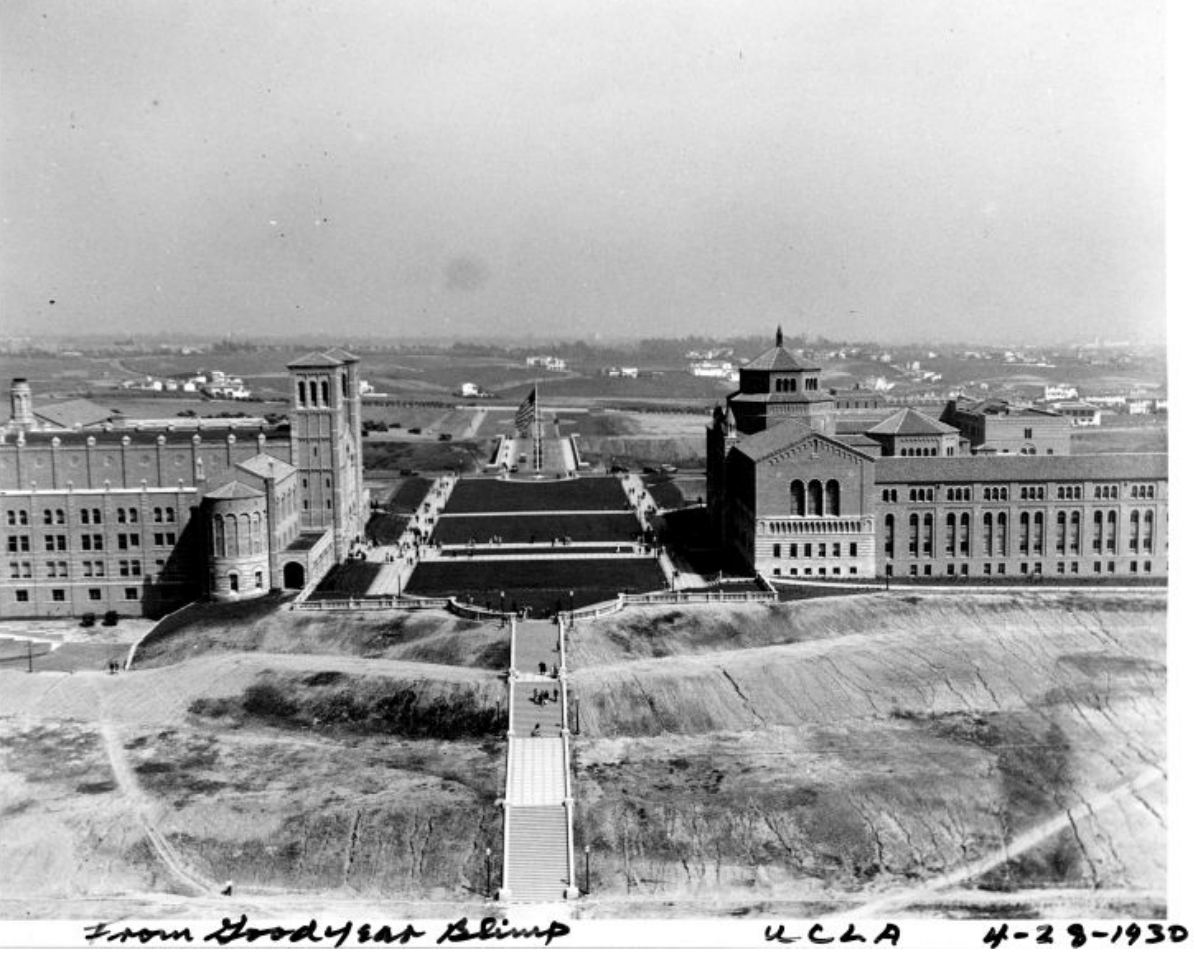
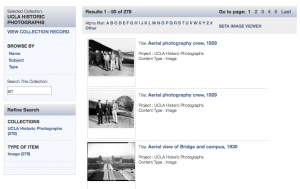
The UCLA Historic Photographs archive is a collection of pictures of the University dated back to as far as the 1920’s shortly after the school opened. We see pictures of when UCLA consisted of the four original buildings, Royce, Powell, Humanities, and Haines, to further growth of campus and the Westwood community over time. The photographs in the archive vary from pictures of campus to Westwood to gatherings for student organization events. Each photograph has basic information including the date and source, as well as a description of the photo, identifying any landmarks, buildings, people, dates, or any significance to the photo.

By examining this archive, the photographs tell a vast amount of stories, as we can write an essay on numerous things. Some could include the development of UCLA, the growth of Westwood, the visions and appearance of the surrounding areas during different points of time (during historic eras, for example). We could also learn a lot about traditions we have at UCLA, by specific student groups or long held events. For example, a lot of the people in the pictures are alumni and alumni events. We have photographic data with time stamped dates to verify exact (if not close estimates) of how the university grew to the size it exists today. Perhaps this can be an integral part of an urban planning research paper. We can compare and contrast photos from this archive to current photos we have now. We can match historical events with historical figures shown in the picture, and tell as story about their visit or attendance at UCLA.

Though this archive contains lots of information, not everything can be told. Something this archive lacks is consistency. Because it is a collection of preexisting photos, there are no two pictures showing the exact same thing. Even if a comparison piece is written with photos exemplifying the changes of the university over time in chronological order, there will always be gaps of unknown. Some years have more photos than others, and some years will have no photos at all. Furthermore, not every single picture has accurate descriptions. Some people/figures in the photos were not identified because they were not documented when the picture was first taken. For photos that lack the description, we often will not be able to piece together what is happening in the photo, or why the photo itself was taken. For some photographs, the age and quality of the photograph could influence the clarity.

Narratives from the LA Times Photo Archive

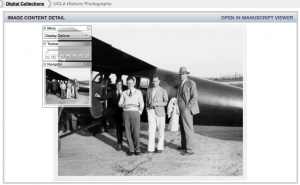
The repository I examined was the Los Angeles Times Photographic Archive. It features a variety of pictures, revolving around the 1920s and 1930s.

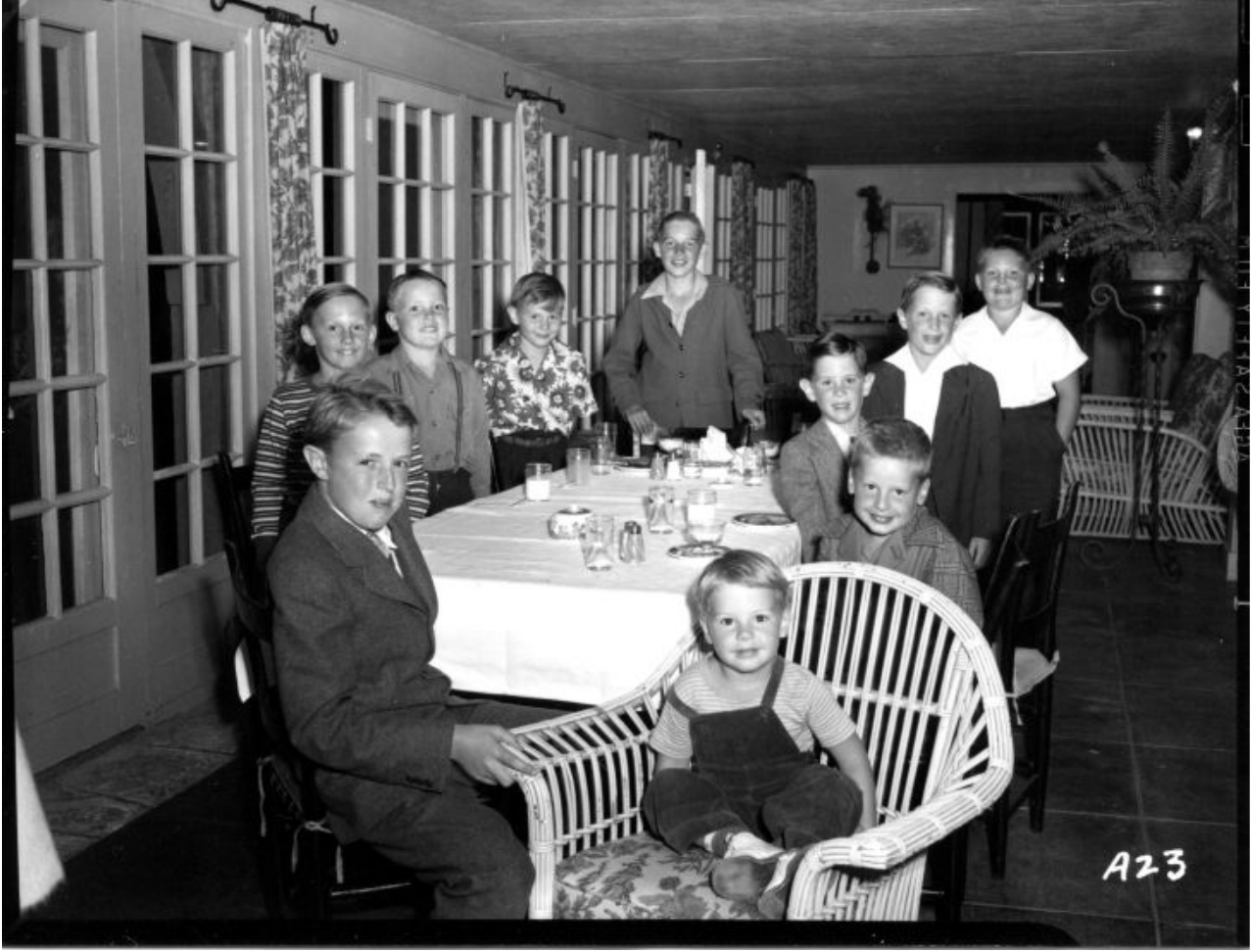
With this source I could write a paper on the several different narratives. One of those narratives could be the fashion of the time of each piece, and how that changed over time. In the first photo, most of the men are wearing fedoras and nice suits, while the women are wearing conservative dresses. The formality of dress could be explained by the fact that the photo was taken at the Rose Bowl Parade in Pasadena, which would be considered a special event. By comparing the fashion trends of the photo with that of modern day photo, perhaps a photo from the Rose Bowl Parade from January 2015, I could produce an interesting analysis of past and present fashion trends.

Since a large portion of the photos are in fact the Tournament of Roses Parade, which is a tradition that is still around today, I could also acknowledge the similarities and differences in the festival itself. I could answer questions such as “Are the modern floats and pageantry displays any different from the 1930s?” or “How has spectacle changed since the 1930s?” Problems I may run into when answering interesting questions such as these ones is the lack of timeline progression of events. It would make my narrative much more exciting if I was given access to photos of the event throughout the 20th Century, allowing me to analyze and compare a larger set of parades. This would especially important for the floats, because I could see which floats continued to appear in the Rose Parade, and therefore were staples in the Rose Parade’s purpose, and which floats only appeared for a short amount of time. Obviously expanding my research to find these photos could easily solves these problems for me.

The inclusion of metadata in the digital archive is really helpful in the creation of narrative between the pieces. The metadata is in fact that way I found out that all of these photos were taken at the same event spanning the 1930s. Because of this metadata I could potentially recreate the feel and substance of a 1930’s Tournament of Roses Parade. These photos give insight into the look and feel of the event, and with the metadata linking them together, a narrative could be formed. However, the archive would have to provide a little more information for this narrative to be acceptably fleshed out. It would be helpful if this repository provided not just dates but context, or personal anecdotes, about those pictured in the photographs.

Screen Shot 2015-10-12 at 1.06.36 PM

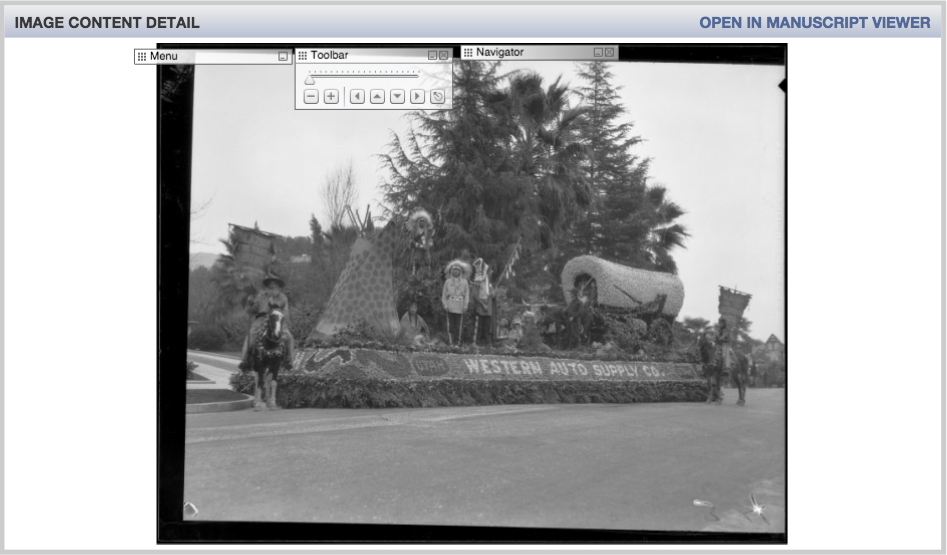
“Blazing the Trail Westward” float in the Tournament of Roses Parade, Pasadena, 1928

It is one thing to include a photo of the Western Supply Co, it is another entirely to include information as to WHY the company participated in the parade, and why they chose Native American imagery in their float. The context of the Great Depression is also an important angle to consider when producing a digital humanities project about this archive. These problems could be remedied through several interviews with primary sources, such as the people who put on the parade or those in attendance.

Digital Collections – Collection of Fashion, Theater and Film Costume Design

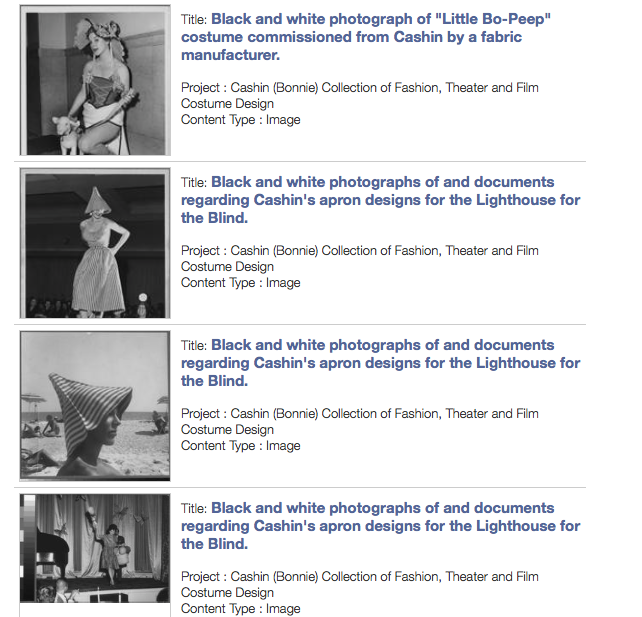
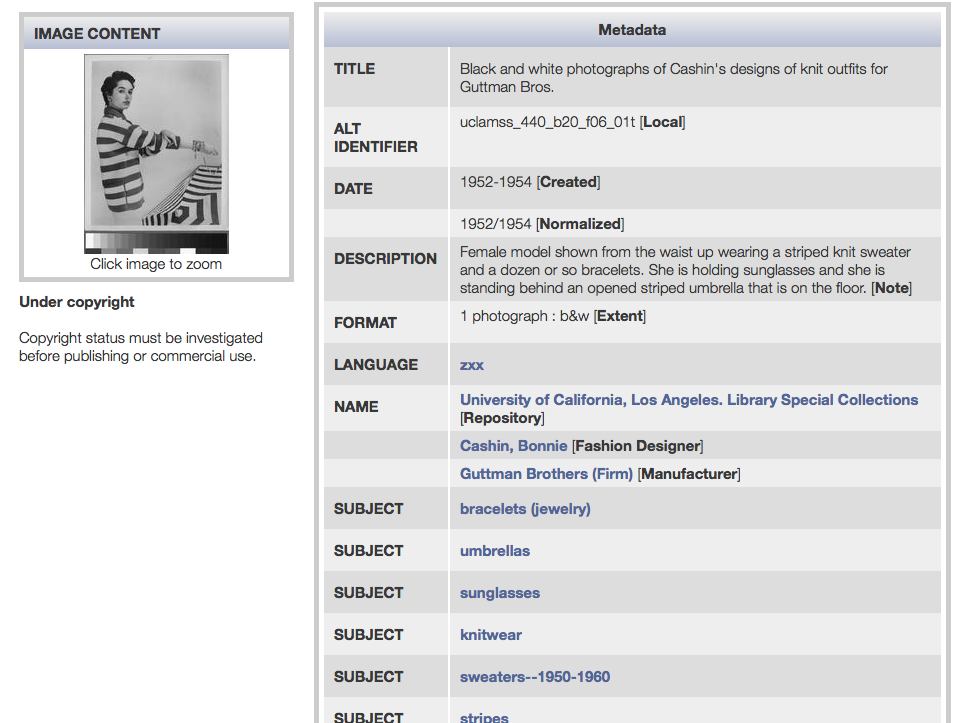
For this week’s assignment, I examined the contents of the Collection of Fashion, Theater and Film Design for the years 1913 – 2000. Each fashion design has a photograph of the outfit. Most of the links and documents available were of iconic figures such as a “Little Bo Peep” costume and iconic fashion eras such as the flapper girl styles of the 1920’s and early 1930’s. The great thing about the posts is that there is a clear description of the clothing worn in the photographs. There is also another section in the table that shows the manufacturer and fashion designers for the outfit. If you click on name of the fashion designer or manufacturer of the design, it takes you to a screen with a compilation of all the photographs of the outfits and designs created by either the fashion designer or manufacturer.  One problem that I foresee is not having enough information about the fashion designers or manufacturers. For one, there should be a more detailed explanation of the individuals or companies that came up with the outfits. I feel that an excerpt about them would be beneficial to users. Another problem that I see is not as much specification with the types of materials that were used in the fabric to make the outfits. I feel that this is relevant because many different fabrics had to be used throughout history. This is important because an individual can draw different conclusions and even expand on their findings for research if this type of information were to be provided. An example of the impact that information like this would make is the fact that during the mid 1900’s, clothes was being made out of hemp (same plant that comes from marijuana). Yet at some point, that type of material to make clothes became banned. This information could help a historian or a sociologist analyze the correlation between importing and exporting laws with clothes, drug laws and clothes, social impact of hemp and clothes, etc.

Overall, I really like the digital archive because it has pictures for every outfit and simple, concise descriptions that really break down the photographs. However, I wish the digital archive would have more details about the specifications of the outfits including more information about the manufacturers and fashion designers as well as information about the type of fabrics that were used to create the outfits so that this information could be used to analyze the different epochs within the fashion industry.


Screen Shot 2015-10-12 at 1.02.38 PM

Screen Shot 2015-10-12 at 1.02.50 PM

Blog 2 – Elena Cullen

Screen Shot 2015-10-12 at 12.58.36 PM


The repository that I chose to explore was the UCLA historic photographs collection. A majority of the photographs in this collection were taken by Thelner Hoover who has documented the history of university since it’s inception. The images in the archive range from the State Normal School in 1925 through 1982. One interesting aspect of his photography is that many of his images are aerial documentations of the university, a more uncommon technique for early times. Through the archive I could tell many stories that reflect upon UCLA’s growth throughout the years. Some of the photographs include in this repository include alumni events on lake arrowhead, sorority composites, and photos building being completed. Though initially the images focus on the university and how the campus has changed since the early 20th century, the breadth of the collection goes beyond the school. Not only dose the archive have early images of the campus but the photo collection also has early images of Westwood Village and surrounding neighborhoods. Many famous figures, specifically figures whom have been associated with the inception of UCLA are also documented in the collection, such as donors and important professors. Because the scope of what has been included in the collection is so large one could include pieces of this collection in various different narratives. Possible narratives include the growth of the school, the growth of the city of Los Angeles, how neighborhoods have grown to change in Los Angeles in the past 100 years or so, or one could even reference this collection when exploring a specific donor or professor who played a large role in UCLAs existence. Some narratives that would not be possible to tell through this collection include any questions on what the interior of many of the buildings on the campus look like or basic data regarding the school or what it was like during the specific times. Also, many of the photographs have no information attached to them. Most pieces of media only have a date and a basic description of the subject. There are also many images of people who do not have indicators who the people in the image actually are. One means of fixing this is to reference other collections of photographs of the university. Also by exploring written records of the university would help to complete many narratives that could be explored through the records.


Screen Shot 2015-10-12 at 1.47.05 PM

10/12/2015 Arseniy K – UCLA Preserved Silent Animation Library

This week I checked out the UCLA Preserved Silent Animation Library which contains a relatively small number of silent cartoons from the period of the early 1900’s to the mid 1930’s. The collection aims to provide an archive of these nearly-forgotten animated films.

The website functions much like a concise and limited media player. It offers a viewing of each of the 11 films, arranged by date, and offers users the ability to watch the short films in silence, or with arranged music. The player has theater-like aesthetic to it, complete with red curtains, and is well-suited to the material it contains. There is also an option for commentary by the archive’s perservationist.

The films themselves are quite charming, and range from showcasing simple camera/animation trickery such as the wine-hat trick in The Enchanted Drawing, to portraying the subtle struggles of daily life like in Joys And Gloom, to even film trailers such as The Lost World (1925) trailer, which has a surprisingly modern tone to it and really lets viewers understand how old the traditions and tropes of modern movie trailers really are.

Each of the films are provided with, not only commentary, but also historical notes that allows viewers to explore and read about the history of the animated film, a short biography of its animator/creator, how it was preserved. It is a convenient, engaging, and best of all non-intrusive way of providing more historical context and background to those viewers who want it. Too often do historical archives try to shove history down the throats of people who do not necessarily want it. The archive creators seem to have a good understanding that some people would just want to watch the films, while others would want to explore the history of the films. The archive allows users to do both, without sacrificing the enjoyment of either.

The music is all created, commissioned, and played by one man, Michael D. Mortilla, and while each piece of music certainly fits the mood of each of the films, I want to know how the music was chosen. Was it based on the music notes that the original films would have been accompanied by, or are each of the pieces of music originals by Mr. Mortilla? It was not made very clear by the archive.

This brings me to my next question: why are there so few films? I understand the preservation process must be difficult, let alone finding the films themselves, but with such a limited archive it makes me wonder how and why these specific films were chosen for preservation. Were there copyright limitations? If so, would the archivist have included Popeye and Betty Boop and other pre-WW2 animations, or would that not have fit into the schema of the archive?

Garment Workers of Los Angeles Photograph Collection

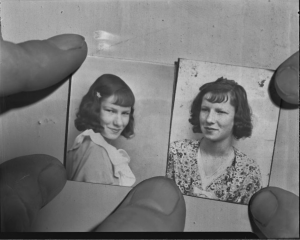
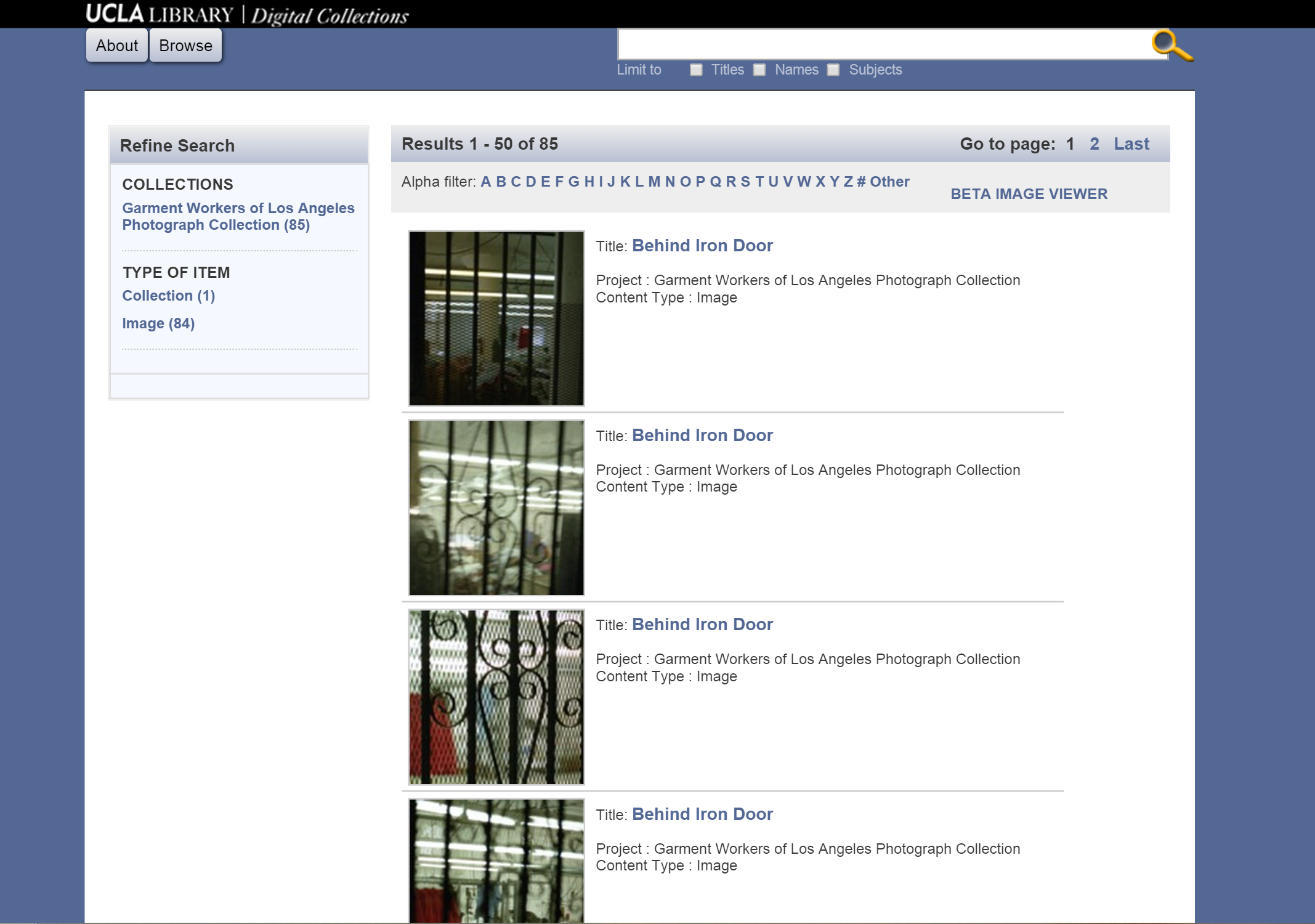
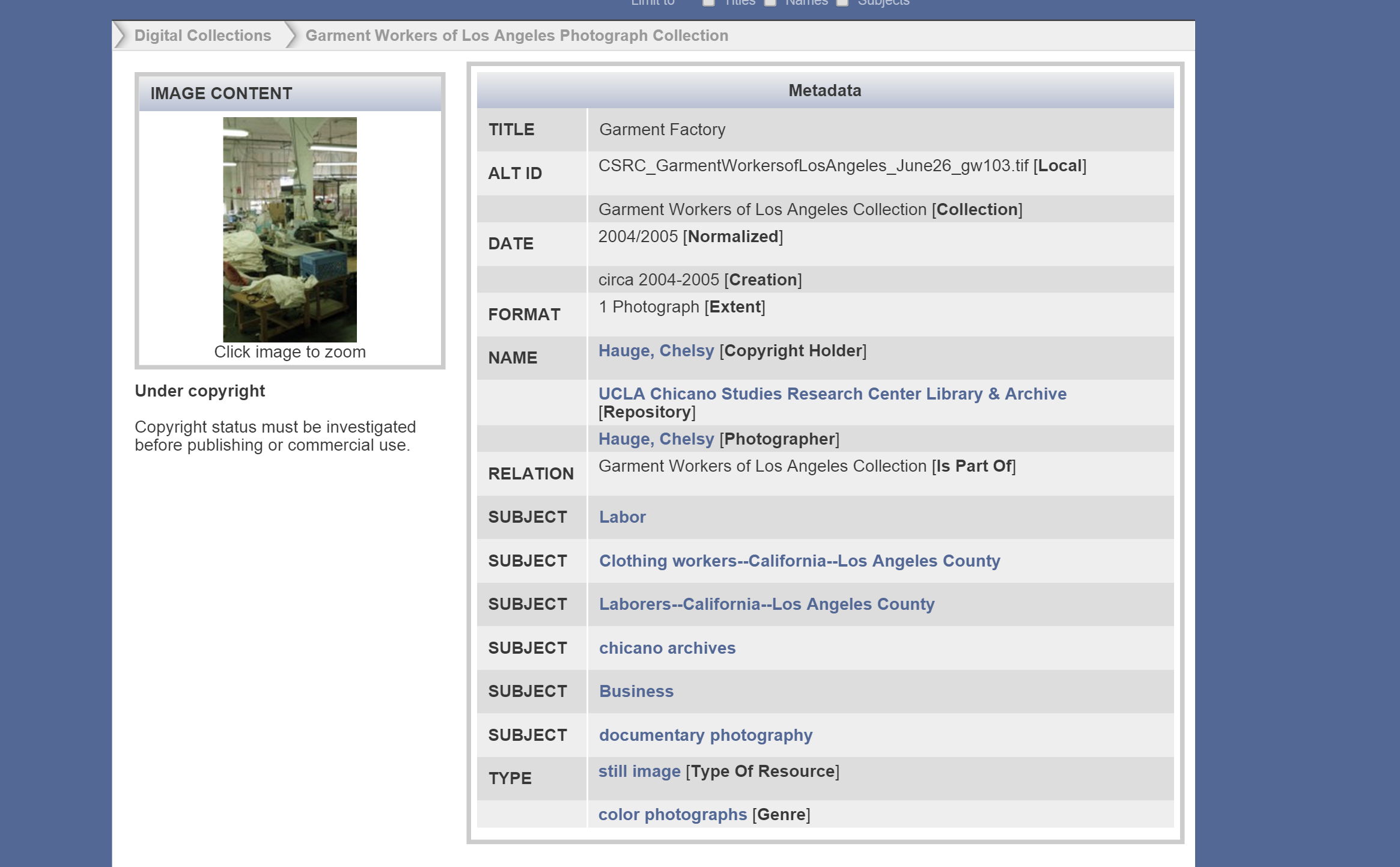
The Garment Workers of Los Angeles Photograph Collection is an archive of 85 color images, taken by Chelsy Hauge in 2004-2005, of Chicano clothing workers and of the clothing factories where they work

. garment 2

Each image has a title and other identification information, such as the date it was taken,  format, subject, and type (see below).

garment1

Besides the actual photos themselves, there is limited information that can be pulled from these images to write a comprehensive essay about Chicano workers in garment factories. For example, there is not clear-cut information of who the workers in the photographs are, the exact locations of where the photos were taken, how do the workers feel, etc. It is difficult to provide context of what is occurring in each image. Why did Hauge decide to take several photos from “Behind the Door?” Why did she name several photographs with the same title?  These photographs are not spectacularly appealing to the eye–they are not vividly colored, some are blurry, others do not have much movement or life. Complete stories cannot be pulled from these images, but can be remedied by searching for interviews and even documentaries of garment factories in Los Angeles;. There is plenty of information from other sites that can fill in the gaps in this archive.

Despite the gaps, if I were to write a paper on this archive, I would analyze the photographs based on the photography style. Hauge took these photos in a particular documentary-like style to deliver some sort of message about the garment factories in Los Angeles. These dreary photos reflect what a garment worker working in these Los Angeles garment factory sees, not doctored to be more vivid, more bright, more exciting. Multiple photos of the garment buildings, doors, other workers, a fire hydrant depict what these workers see from a day to day basis; they reflect the monotony of their lives. Even with the limited scope provided by these photographs, anyone who browses through this archive is forced into the position of a garment worker. The blurriness, clutter–the composition–and titles of these photographs can provide snapshots of a complete story.

Overall, the archive, while it does lack full stories and descriptions on Chicano garment workers in Los Angeles, it does provide contextual clues onto what the industry is like for such a group of people. Hence, the archival of this particular collection, without direct and complete descriptions and explanations, is more like an exhibition, where the meanings of the photographs are up to the spectators to interpret.


« Older posts Newer posts »

© 2026 DH101

Theme by Anders NorenUp ↑