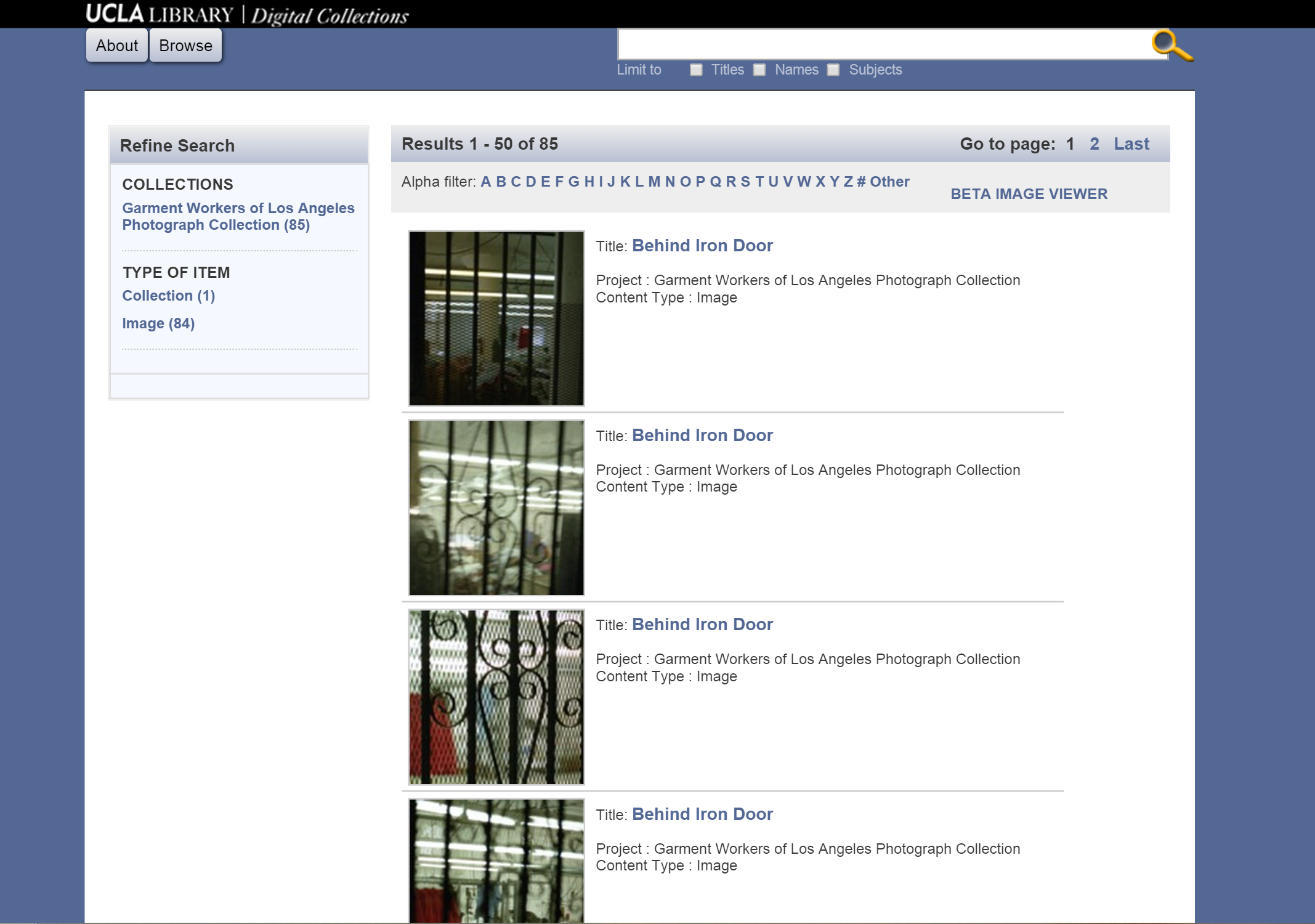
The Garment Workers of Los Angeles Photograph Collection is an archive of 85 color images, taken by Chelsy Hauge in 2004-2005, of Chicano clothing workers and of the clothing factories where they work
. 
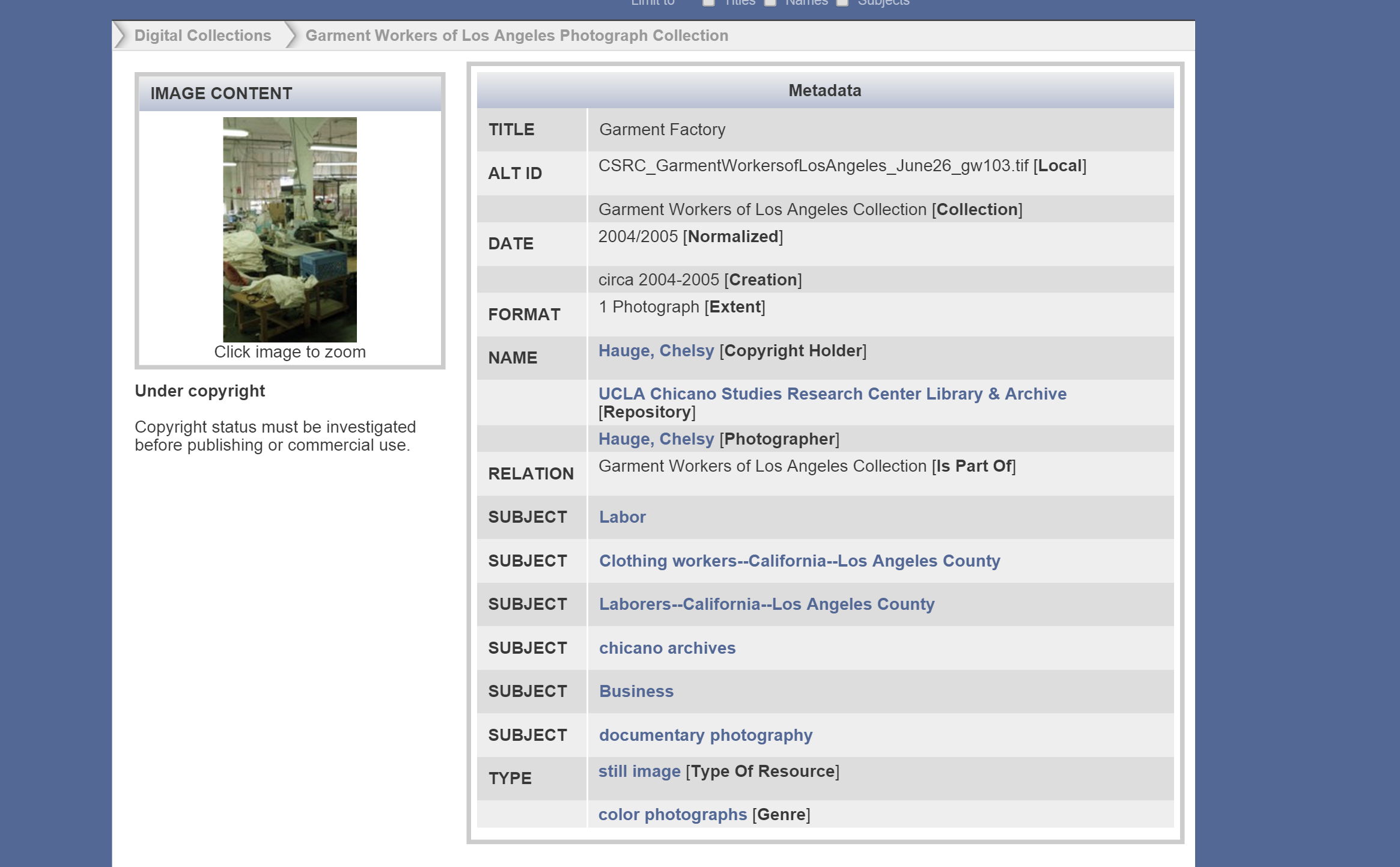
Each image has a title and other identification information, such as the date it was taken, format, subject, and type (see below).
Besides the actual photos themselves, there is limited information that can be pulled from these images to write a comprehensive essay about Chicano workers in garment factories. For example, there is not clear-cut information of who the workers in the photographs are, the exact locations of where the photos were taken, how do the workers feel, etc. It is difficult to provide context of what is occurring in each image. Why did Hauge decide to take several photos from “Behind the Door?” Why did she name several photographs with the same title? These photographs are not spectacularly appealing to the eye–they are not vividly colored, some are blurry, others do not have much movement or life. Complete stories cannot be pulled from these images, but can be remedied by searching for interviews and even documentaries of garment factories in Los Angeles;. There is plenty of information from other sites that can fill in the gaps in this archive.
Despite the gaps, if I were to write a paper on this archive, I would analyze the photographs based on the photography style. Hauge took these photos in a particular documentary-like style to deliver some sort of message about the garment factories in Los Angeles. These dreary photos reflect what a garment worker working in these Los Angeles garment factory sees, not doctored to be more vivid, more bright, more exciting. Multiple photos of the garment buildings, doors, other workers, a fire hydrant depict what these workers see from a day to day basis; they reflect the monotony of their lives. Even with the limited scope provided by these photographs, anyone who browses through this archive is forced into the position of a garment worker. The blurriness, clutter–the composition–and titles of these photographs can provide snapshots of a complete story.
Overall, the archive, while it does lack full stories and descriptions on Chicano garment workers in Los Angeles, it does provide contextual clues onto what the industry is like for such a group of people. Hence, the archival of this particular collection, without direct and complete descriptions and explanations, is more like an exhibition, where the meanings of the photographs are up to the spectators to interpret.