Mapping Decadence aims to show the relationship between Decadent writers and their publishers at the end of the nineteenth century in Paris, France, and how location influenced the authors’ choices in publishers. Each tab contains a map highlighting a specific Decadent writer, using the digital tool ArcGIS. These authors include Joris-Karl Huysmans, Jean Lorrain, Rachilde, and Marcel Schwob. The maps give a general overview of who lived where and when; of which books were written where and when; of which books were published where, when, and with whom; and other details such as specific street addresses, personal timeline events, and reasons for moving.
On the general overview map, each author is associated with a specific color, while the publishers are in red.
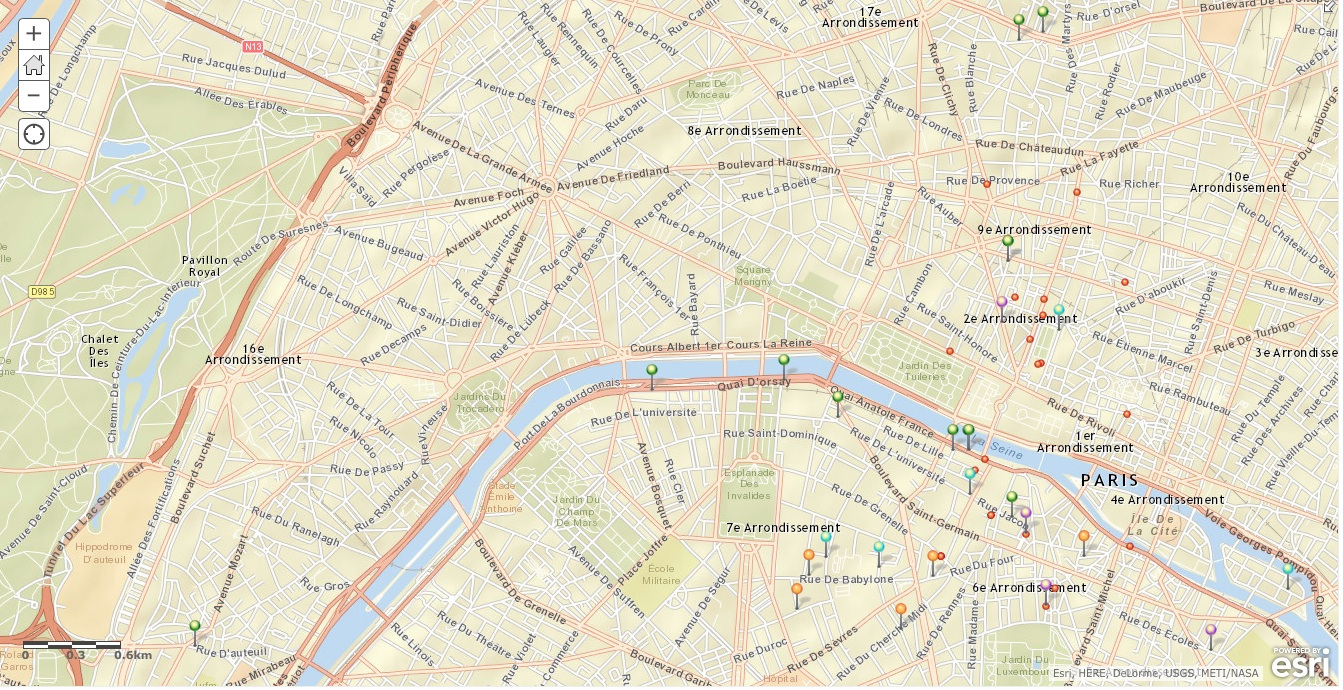
On each individual author map, the lines represent the connection between the author’s location at a given timeframe and their chosen publishers.
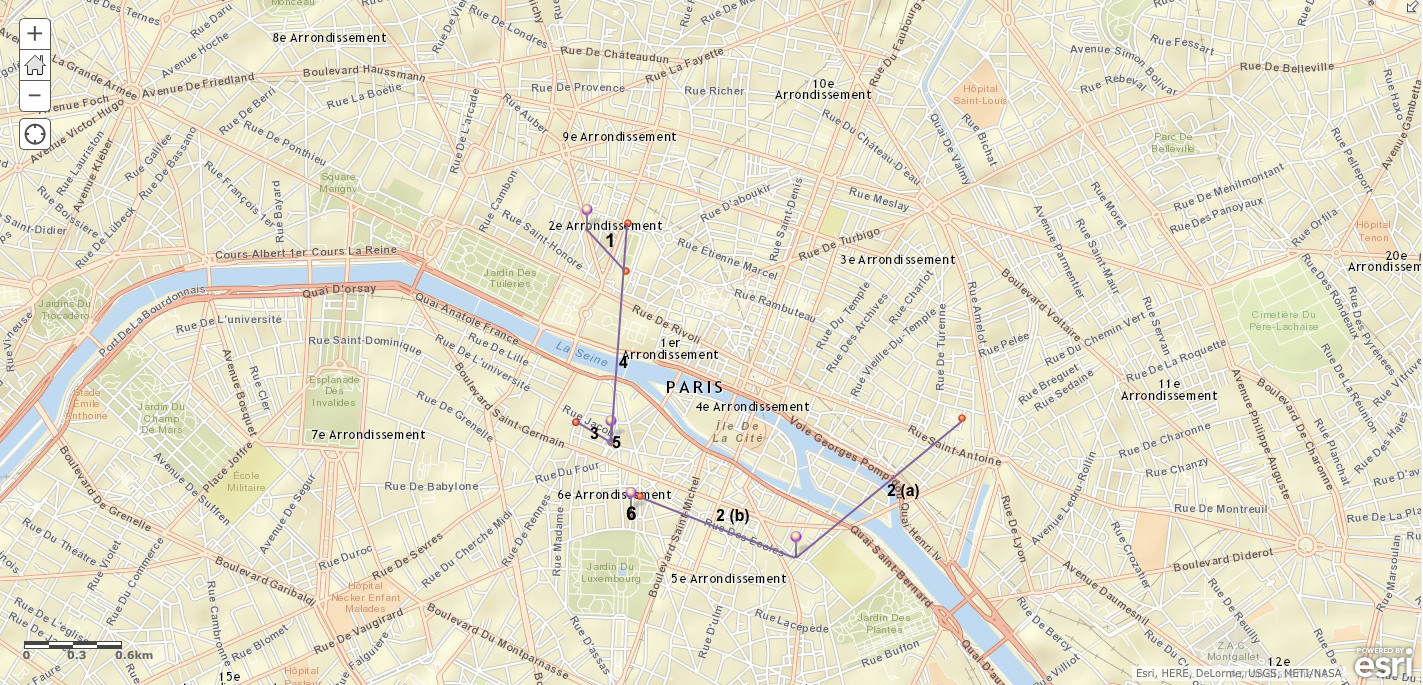
The project is from the point of view from someone like us–a scholar or academic of some sort, digging through research and presenting them visually. As far as what kinds of assumptions this project makes, the points demonstrated are relatively straightforward. The project at first hints that location plays a huge role in which publishers were chosen by given authors i.e. closer publishers were chosen as the authors moved. Upon exploration of these maps, location does and does not seem to have an influence, as some locations are further than one would expect, while other locations do follow the trend initially hinted by the project creator. The maps reveal that some authors had preferred publishers, as the site does list how many and which books these publishers produced–some producing more than others. The maps also reveal that as these authors travelled, some would choose new publishers whereas some others would stay with the same publishers. The map also reveals movements within the authors’ lives, and gave context to these movements, which I greatly appreciated and found really interesting. The map doesn’t seem to obscure much, as it covers the basics that one would expect–specific names, specific addresses, time frames, books written and published when and where, movement, and movement context.
For an alternate map, I can’t really come up with any, as the project’s maps are pretty thorough to me. Exploring different geographical regions, time frames, or literary movements could open more discussions of location centrality. Maybe including the bookstores where these books sold the best in could show interesting patterns in consumption and distribution.