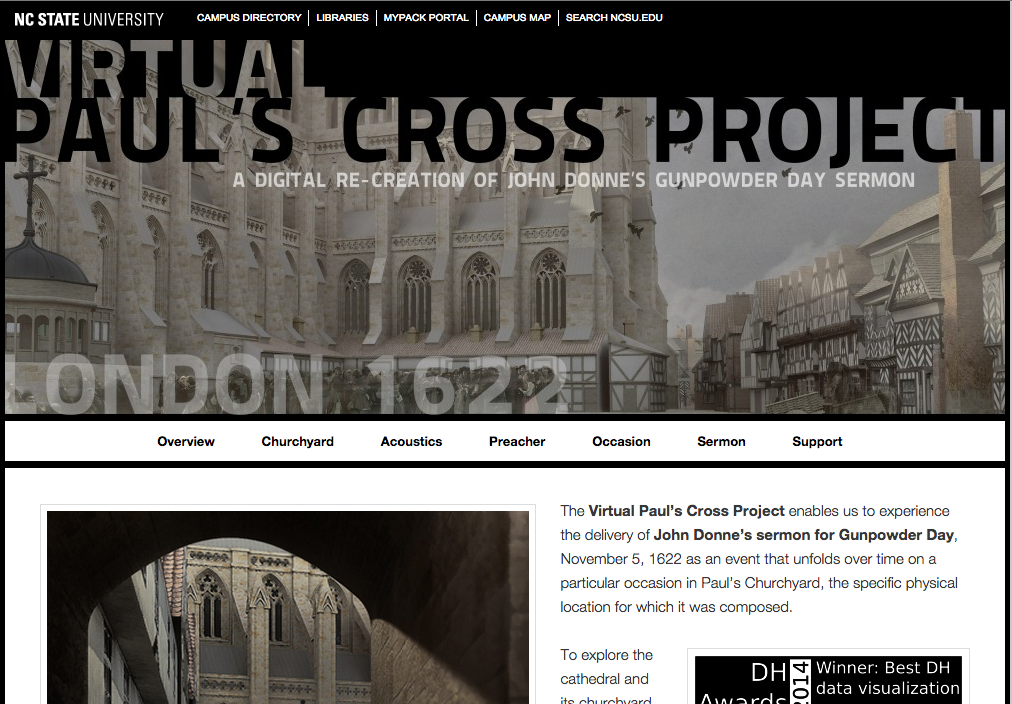
A recent winner for Best DH Data Visualization, Virtual Paul’s Cross Project allows viewers to experience John Donne’s Gunpowder Day sermon as it may have been when originally delivered on November 5, 1622. This project digitally recreates an environment of where the sermon took place through a Visual Model of the cathedral and its churchyard. It also accounts for the audio of Donne’s sermon with full audio files, allowing for the exploration of Paul’s Churchyard as an acoustic space, and providing the audibility of the sermon. Lastly, the project contains other background information on the event, such as the occasion of the sermon, a biography of the preacher and the sermon’s script.
I would categorize this as a historical project, as the header on the website includes the date of the event as occurring in the early 1600s. Displaying the date clearly front and center indicates that this event was a significant moment in British history, worthy of the research and work put into this project.. An immersive development with many interactive user capabilities, this project definitely has some noteworthy attributes. Although it does have some minor facets that could definitely be improved upon, this project has certainly compiled and presented research on a historical event in a new and complex manner.
The Black Box of Virtual Paul’s Cross Project
The information presented in this project was taken from multiple sources. The most prominent source is a manuscript copy of Donne’s Gunpowder Day sermon. Images of various pages of the actual manuscript were taken and displayed within the project under the section entitled Sources for the Script. A full translation and transcription of the sermon’s script is also provided under the section entitled The Script. Additional sources for the research are listed under the Works Cited page, which contains the information for every primary and secondary source the authors of this project used—including various books, essays, and more.
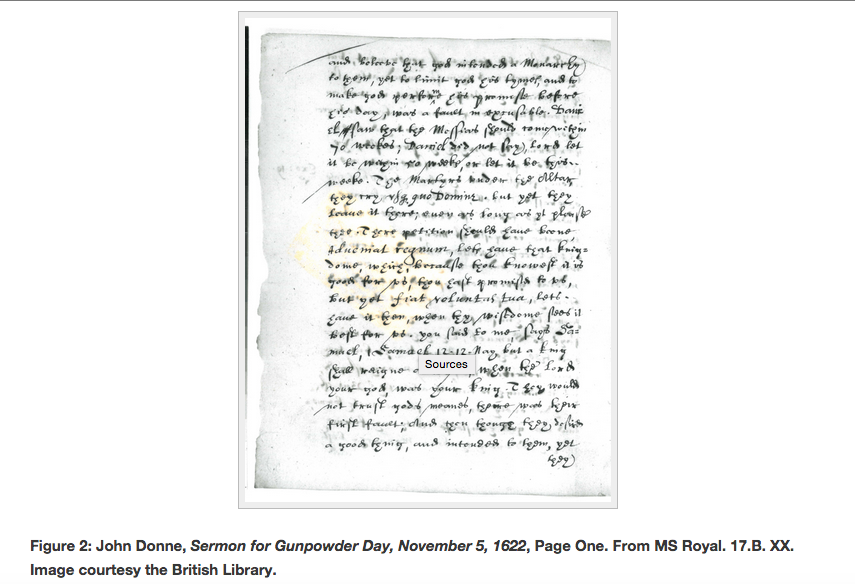
Virtual Paul’s Cross Project encapsulates a number of processes and services with the information and research the creators found. Viewers and users are basically allowed to virtually experience the preacher’s sermon as if they were actually there in London in 1662. 3D visualization models were created and are provided, which allow users to explore the physical layout/environment of the churchyard using zoom and rotate features. The creators also enlisted the help of an actor to record the sermon and sound the way John Donne would have on Gunpowder Day that users can listen to. More digital blueprints and layouts for the structural and acoustic features of the building are provided, along with other relevant images and sketches.
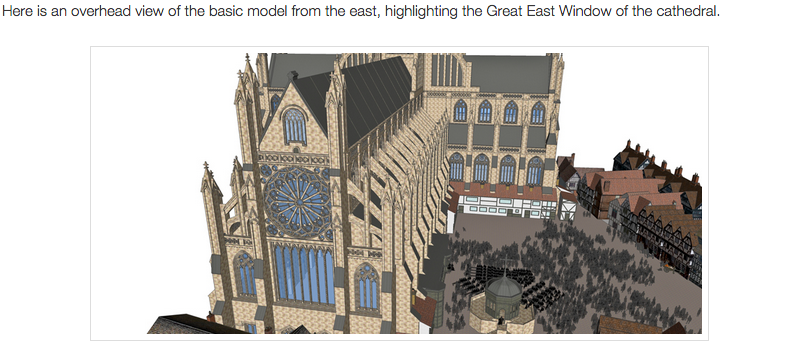
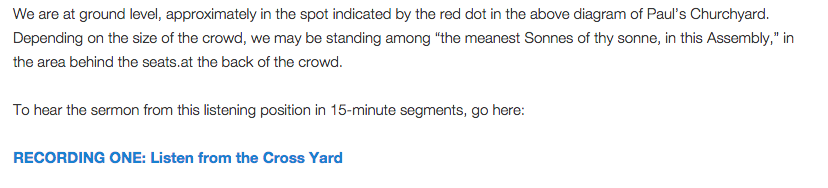
The final presentation of the Virtual Paul’s Cross Project is clearly put into a cohesive website that categorized its different services by tabs and dropdown pages, which lead to easy navigation for the users. The project also has a consistent header with a photo of the church and written text reminding users what they are exploring: “A Digital Re-Creation of John Donne’s Gunpowder Day Sermon.” Lastly, they embed their various visual tools/models within their pages breaking up huge blocks of texts (which may be considered as more aesthetically appealing).
Some minor faults and matters I noticed and disliked mainly just had to do with the project not explicitly saying why what it meant in context to history. Why this particular speech by this particular preacher on this particular day? Perhaps, I just needed to do some more digging to find the answer to that question but I wish it were just easier to find. However, all that aside, I conclusively believe that Virtual Paul’s Cross Project certainly well-encapsulates the three different layers that compose a completely developed DH project and very much deserves the recognition it has been awarded.