The Salem Witch Trials Project is an online archive of primary source material – including documents, maps, notable people, and literature – on the topic of the 1962 Salem witch trials. This archive has collated, transcribed, and analyzed many types of materials to provide a comprehensive picture of this period in history.
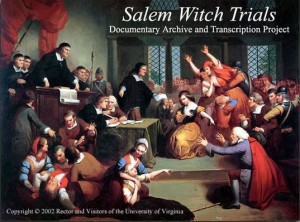
Sources: The project’s sources come from seven different libraries, museums, and archives, such as the Maine Historical Society and the Boston Public Library. The project was headed by two professors: Professor Benjamin C. Ray from the University of Virginia, who supervised the archival process, and Professor Bernard Rosenthal from the University of Birmingham, who led the transcription process. While the exact technical methods used are not clearly evident, the site notes which groups funded which processes; for instance, the grant for digitizing original court documents was provided by the American Academy of Religion.
Processes: Various processes were used to create the final archive of collected and transcribed information. Since a range of material is involved, the project type cannot be exclusively labeled but is rather a combination of being a digital edition, using timelines, mapping, etc. Source material like court records, sermons, personal letters, and diaries, were transcribed and sorted under their respective “Documents” subgroups, but none of this transcribed material includes pictures of the original documents. The Salem Witchcraft Papers seem to be the only transcribed documents that are typed out and also provide images of the source material. Much of the content of the project is scanned materials – like literature, church and court records, and maps – but there are also searchable archives of notable people involved in the witch trials. These archives provide twelve categories by which to group the notable people (e.g. “Died in Jail”), and then clicking on a person’s name provides a brief biography, and potentially other collected data, such as images, a scholarly essay about said person, and/or a courtroom exam. The project has further interactive material like an animated map that delineates the names and locations of both the accusers and accused.
Presentation: Overall, I was quite disappointed by the confusing layout of the project webpage. For instance, clicking on a subject category from the home page like “Documents and Transcriptions” brings you to a list of material that is different from the clickable subcategories (e.g. “Personal Letters”) listed under the overarching category title on the front page. Additionally, the format of the site is clunky, which is evident when trying to look at scanned documents since you cannot click through the images of the pages, but rather must click back to the index of images to see the next one. The site can also feel convoluted since it lacks the constant presence of a sidebar for quick and easy navigation, though the header does have basic links to the home page and other primary categories like “Maps” and “Books & Letters.”
I think many of the problems with this project’s presentation lie in the fact that it is an older one, so its aesthetics are crippled by an outdated website. With a minimalistic layout that lives up to its 2002 copyright year, extremely slow page load times that require multiple refreshes, and a few broken links leading to error pages instead of information, it is clear this site is not actively maintained. Even so, the project utilizes a variety of methods to display and aggregate its information; by conveying information through images, maps, documents, transcriptions, archival lists, and sorting functions, users can choose how they want to see the site’s information. However, as the site is frustrating to explore for modern users that are accustomed to cleaner and artistic websites with streamlined information, I believe this project is less appealing for a casual observer to peruse than it is for a dedicated academic to explore.