Quijote Interactivo is a digital humanities project created by the National Library of Spain that focuses on the novel Don Quixote. The project has aspects of a digital edition, a multimedia narrative, and a text analysis.
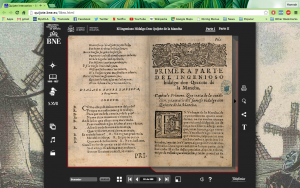
Source: The information in the project comes directly from the original spanish edition of Don Quixote, written in 1605 and 1615 by Miguel de Cervantes. The project also includes descriptions and links to other texts that may have influenced plot elements and literary conventions from the time the novel was written, and another page uses historical texts as sources to detail daily life from the time period. A timeline of the editions of the novel also cites sources of relevant historical events and other textual works.
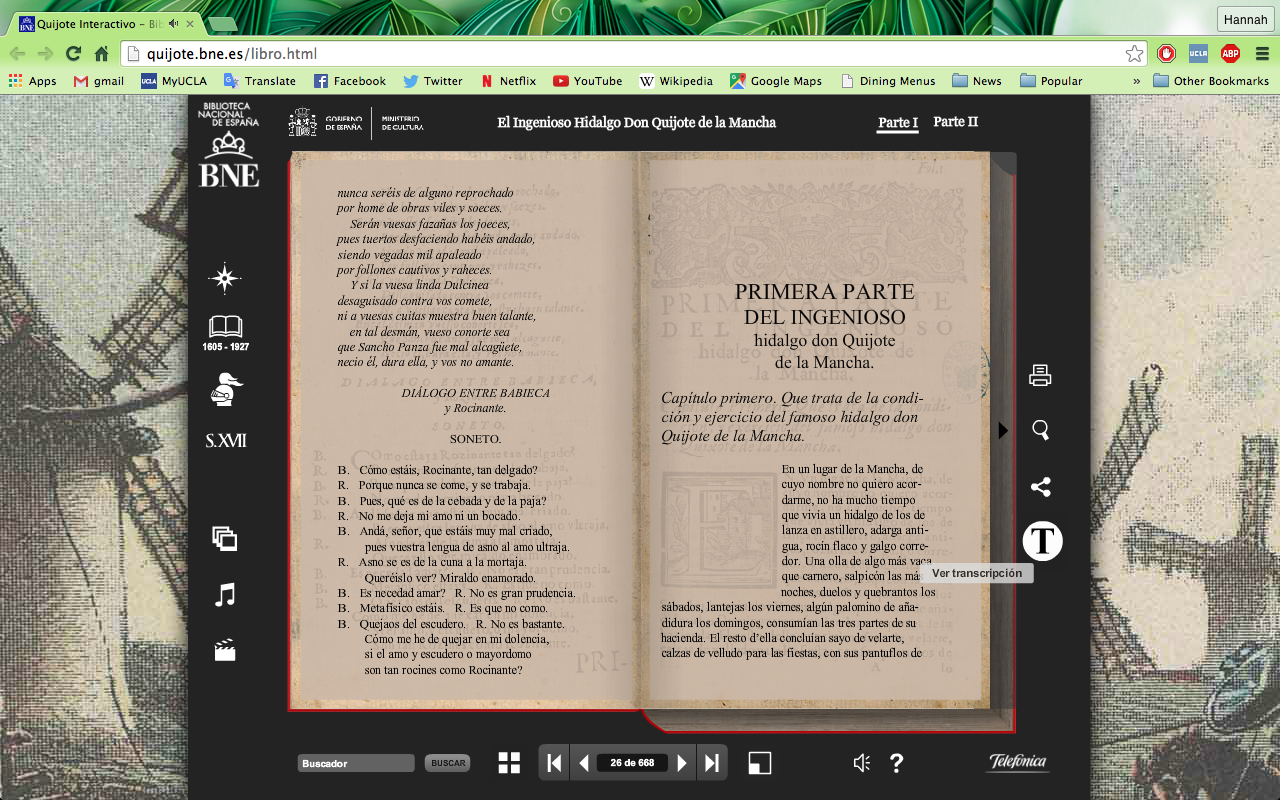
Process: The main focus of the project, the digitization of the text, involved making digital copies of the each of the pages in the original edition, high-quality images that would allow viewers to zoom in. The pages were also transcribed with the text in a more readable font.
The authors of the project sorted through the locations mentioned in the text and matched them up on a map, and put all of the historical sources with the corresponding moments in the novel.
Present: The project is presented in an interactive way that is clear and easy to navigate, even though it is all in spanish. You can search the text, go to a menu of the folios, or choose a specific page to view. You can flip through the text of the novel itself just like you would with a real book.
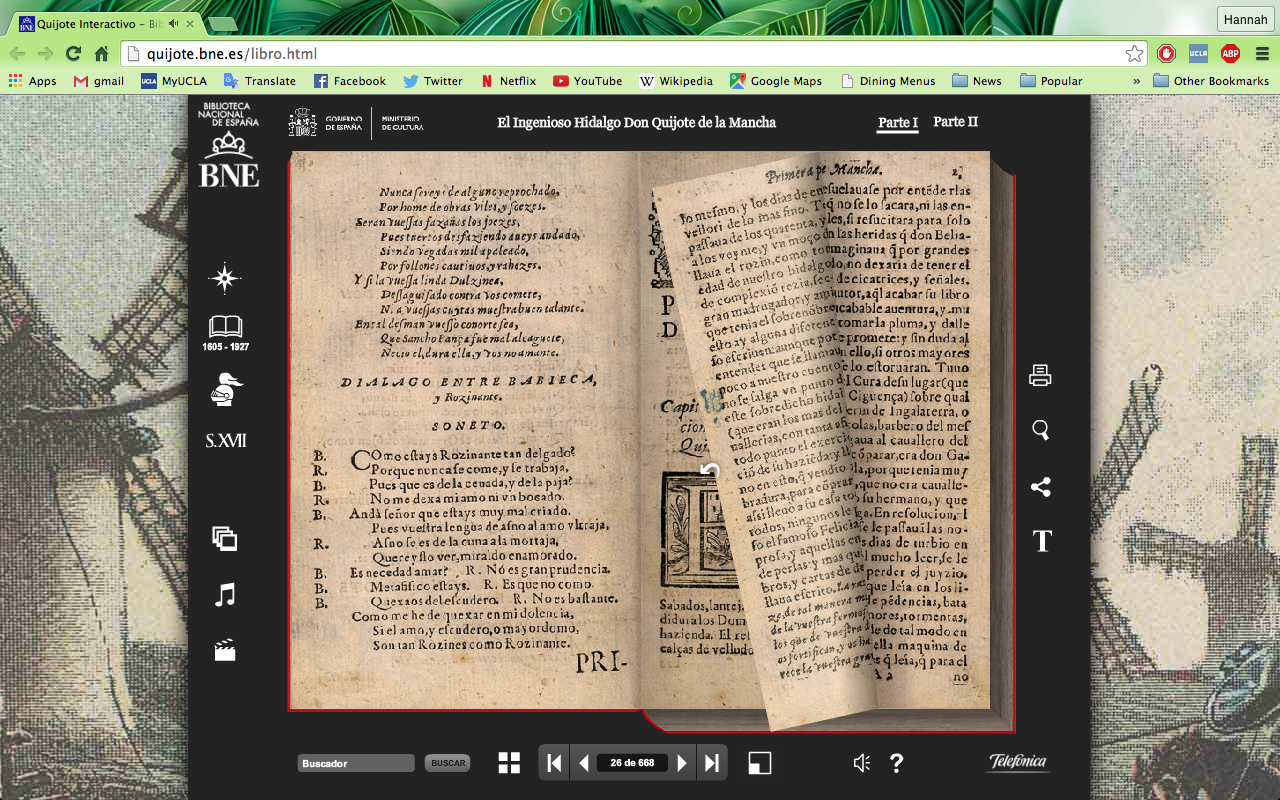
Next to the text, you can click on options that are uniquely modern: printing the page, zooming in, or sharing on social media or email, as well as switching to viewing the transcription rather than the image of the original edition.
The rest of the information on website is divided into a map of adventures, a timeline of editions, source texts, and a guide to everyday life in the 17th century. All of the information on the map and timeline is interactive, with zooming options and descriptions that pop up over the rest of the text. The historical sources are divided into categories and are easy to sort through. Clicking out of all of these pages brings you back to the most important part of the project: the text.
Finally, the project also includes a gallery of artwork that can be sorted into drawings, etchings, and ephemera, as well as list of music and a video that can be played directly on the website.