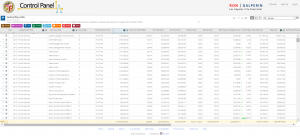
I decided to look at the Animal Pay for Los Angeles, which provide a dataset of jobs enlisted under Animal Services; it is updated on a quarterly basis by the Los Angeles City Controllers’ Office. This dataset presents a variety of data types, including titles for jobs/class, monetary values for payrolls and rates, and timely data (denoting when the data was collected). The site also presents several options to transform the numerical data into visual data, with options for “donut” graphs, bar graphs, pie charts, or tree maps, etc. A record in this data would constitute several components of these data types: year, department title, job class titles, and earnings based on different time periods and types of pay. What I think is most interesting about the dataset is the inclusion of costs, working that particular job/or being working for animal services. For example, the dataset provides values for “average city health cost” and “average city basic life,” which potentially be helpful for those who are interested in these fields (in Los Angeles).
According to my understanding of the Wallack and Srinivasan reading, an ontology is a means to organize objects, and mediating boundaries between different categories to present a classification system. To apply this definition to the Animal Pay dataset, we can see that the dataset relies heavily on payment types and the periods of time allotted per type of pay; this is the classification boundaries that create structure amongst an otherwise nonsensical body of numbers. Hence, this dataset would be most useful to those who are looking for potential careers in the animal services field. It provides a thorough dataset and information on different pays based on time. For example, the “Employment Type” and “Hourly or Event Rate” would most appeal for those are seeking specific jobs with those specific standards. Therefore, such data presented will help them get an idea of how the job will help them financially. Again, the visualization tools the site provides will help them with analyzing these records. Ultimately, this dataset which claims to include the “breakouts for overtime, bonuses, healthcare costs and lump sum payouts” does fulfill its purpose.
However, what this dataset lacks is the description and nature of the work–further categorization of the job titles, since a lot of them repeat. Although this data may describe the logistics and financial aspects of the jobs, it does not capture the human experience or interest (which is out of this particular project’s scope). Since this is a dataset that is based on the cold, hard facts, aka logistics, economics, and finances, if I were to go over this data-collection process, with a different ontology, I would have a different goal that is more “humanities-related” as opposed to this dataset, which is more on the social sciences side. It would be interesting to take the perspective of those who are interested in such employment opportunities. Because there are so many titles that are repetitive, the inclusion of job descriptions or experiences can provide explanations for the numerical values.