Bonnie Cashin has been renowned as one of the greatest designers of the 20th century, and is credited as the pioneer of women’s ready-to-wear fashion, otherwise known as sportswear. Her unique silhouettes, through use of ponchos, kimonos, and various layering techniques, are now considered timeless and can still be seen in fashion trends today. UCLA Library’s Bonnie Cashin Collection of Fashion, Theater and Film Costume Design gives us a unique look into the fashion world of Cashin throughout the decades. Through this database, we are offered Cashin’s sketches, look books, catalogues, marketing materials, front-row fashion show still shots, and movie still shots, all showcasing the designs of the legendary women sportswear designer. As a former intern for BCBGMAXAZRIA, I personally love this collection. Designer’s conceptual materials often do not see the light of day, and the database offers a peek into the creative mind of a huge name in the fashion industry.
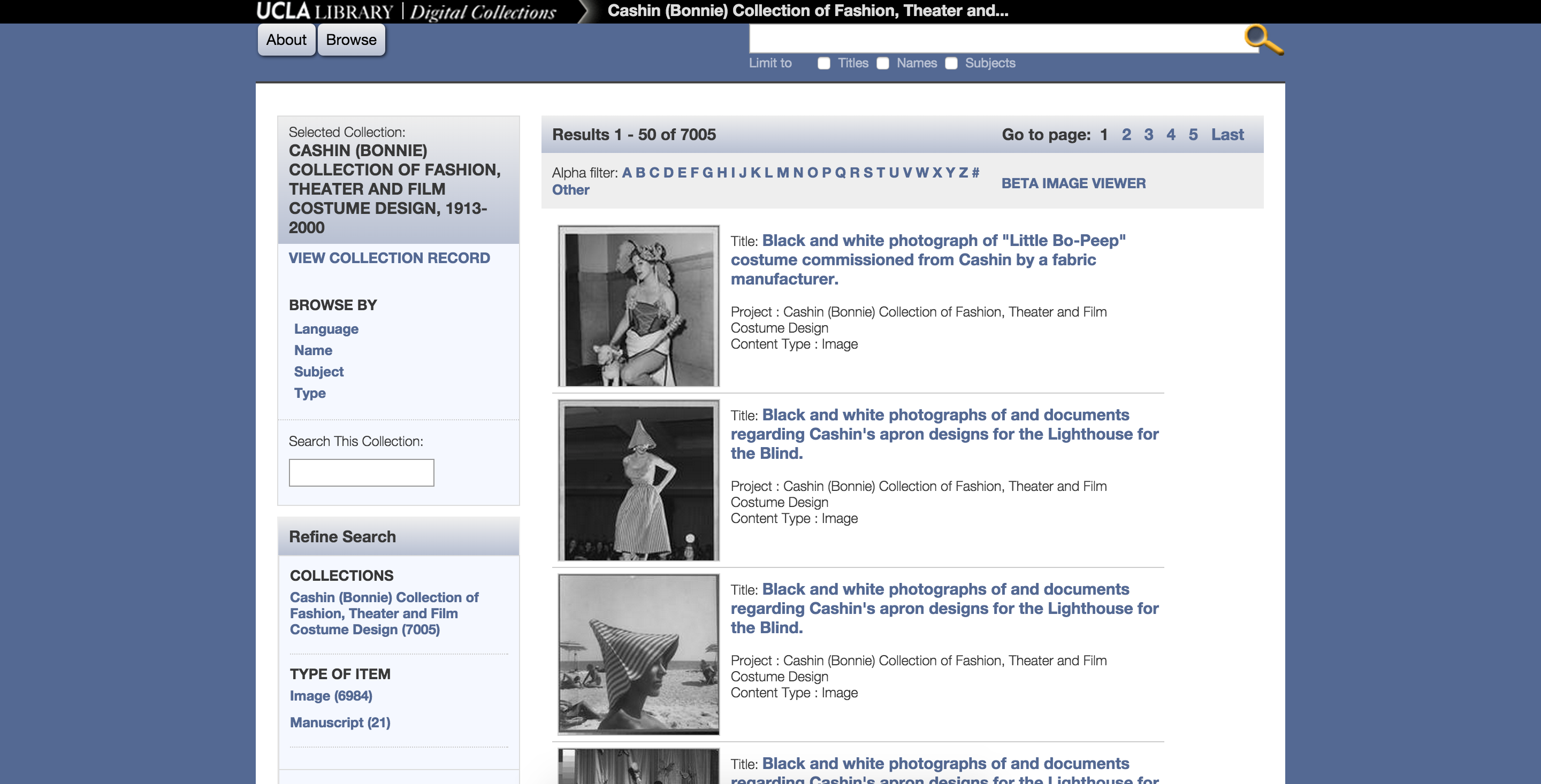
The database contains over 8,000 images from Cashin’s various lines and collections throughout the years, ranging from 1913, on through her late works in 2000. If one were to write a paper on this database, multiple stories could be told. From a fashion standpoint, the story of Cashin’s aesthetic could be told through analyzing the silhouettes of her looks, the materials used, the fabric manipulation techniques employed, the trends utilized (and pioneered), etc. One could further divide this analysis into her work in different fields, such as her film and television costume work for Twentieth Century Fox, her ready-to-wear lines for coat manufacturer Adler and Adler, and her conceptual sketches for fur companies, and even the window displays of her flagship and department store lines. The database could also tell the story of Cashin through an industry perspective, as the collection includes press releases, press clippings, fashion editorials and brochures, marketing strategies, boardroom notes, among others.
Although the database is successful in telling multiple stories from Cashin’s perspective, the collection would not be able to stand alone in telling the story of the fashion world holistically, as Cashin is only one designer in such a large industry. As mentioned before, the Cashin’s looks are consistent and considered timeless, employing silhouettes and techniques that are still seen today; paired with the layout of the database (non-chronological), it would therefore be difficult if one wanted to report on fashion trends representative of these specific time eras alone. To remedy this, it could have been helpful if there were a filter provided to arrange the photos in chronological categories. Furthermore, the database can tell the story of Cashin’s creative mind, but not the story of her commercial success. The database does not provide insight from the consumers’ point of view, as it’s voice is strongly that of the industry’s point of view, evident in it’s showcasing of unedited black-and-white photoshoot proofs, press coverage, etc. To remedy this, the collection could have include sales figures, photos of everyday women wearing her looks as opposed to models, etc., although this may be hard to do as time travel is impossible.