Introduction:
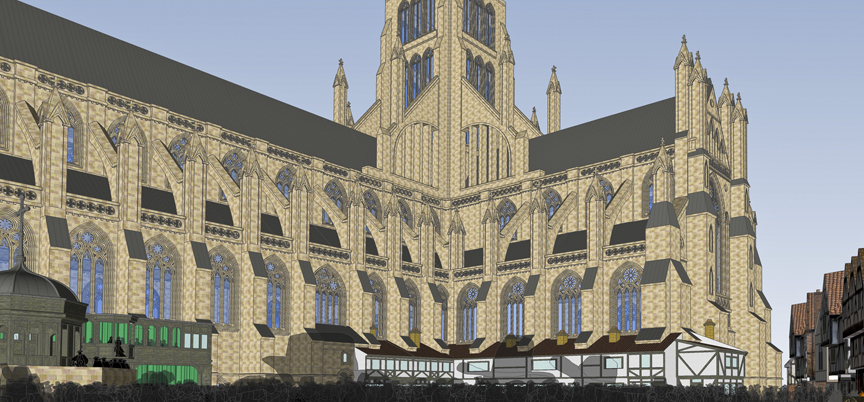
The Virtual Paul’s Cross Project is an award-winning DH data visualization project which enables an interactive experience with a historical event. In particular, this project delivers John Donne’s sermon for Gundpower Day from 1622. The project serves to present users with the live experience of a sermon by digitally reconstructing the physical and acoustic spaces. A virtual representation of the physical space can be seen:
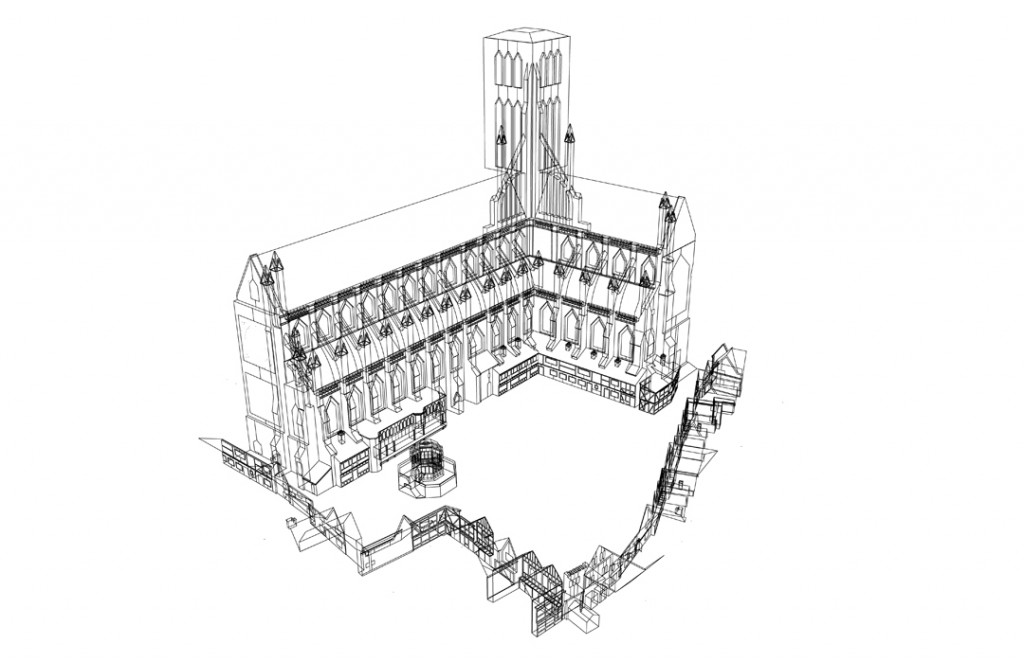
A representation of the acoustic space can be seen:
Sources (assets):
The acoustic model is firmly supported by the first hand sources of the script of the preaching. The manuscript copy of the sermon in 1622 is identified and used with a voice actor to re-enact the preaching. Most of the construction of the acoustic models are based on the resources used to reconstruct the buildings of the physical space. These sources range from excavated models from historical data, or from contemporary sources like 16th-17th century maps of London.
Alongside many primary resources used, the team also relied on secondary resources like scholarly articles and publications to retrieve cultural and historical background. These helped enable the team to accurately recreate the context and experience of the sermon in 1622. The sources were presented between primary and secondary resources, and between individual buildings and segments of the models.
Processes (services):
The project was compiled using 10 projectors and 21 speakers to provide a 270 degree all-inclusive angled images of the physical space and acoustic space. It can be seen that wireframed images were used for the acoustic models to channel the flow of noise and sound that is in imitation of what one would hear during the sermon. The original materials of the building were taken into consideration to trace the pathways of noise – either in absorption, reflection, or dispersion – when they traveled through the physical space. These models were extremely important in providing the ‘ambient noise’ for its acoustic space, enabling real-time sounds like horses, birds, and dogs to be included in the background.
The physical space was reconstructed using measurements of the remains of the structures, and from previously surveyed excavations. For example, it can be seen that the Paul’s Cross Preaching Station is grounded in the excavated drawings of Francis Penrose in the Archaeologica in 1883. Through a range of difference sources, the models seem to be detailed with measurements that agree through historical data. The overall reconstruction of the physical space ranges from the 1500s to 1600s alongside recent images of the structures – evidence is all-encompassing in this project.
Presentations (display):
The display of the project was divided between the introduction, physical and acoustic spaces, and the content of the preaching. The project offered distinctive services for its users – exploring the models, understanding the construction of the models, and presenting the sources and data backing of the models. The user is offered an interactive experience of the preaching but also, is able to understand its technical and cultural context.
The other major part behind the presentation of the website is in the actual content of the sermon. Much work has been put in to retract the original and translated manuscripts of the sermon, and gives the user both a digital and written option of receiving the information. There is also background information that is given in terms of John Donne, his preaching style and contemporary records of these preachings. Most of the information is supplied with data visuals that help explain its sources, giving the user a more visual and interactive experience.