Don Quijote Interactivo
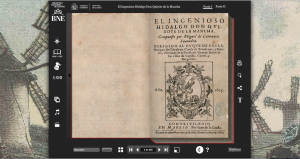
The digital humanities project that I chose to investigate was the Don Quixote interactive project located on the Brain Pickings website. El ingenioso hidalgo don Quijote de la Mancha or as its translated version, The Ingenious Gentleman Don Quixote of La Mancha, was written in 1605 (part I) and 1615 (part II) by Miguel de Cervantes Saavedra. These pieces of literature have become very influential pieces from the Spanish Golden Age and are very popular in many literature cultures and studies. Due to its popularity and importance, an interactive project like this one can facilitate not only in the understanding of the story’s plot, but the lessons, symbolism, and themes can also be fully understood.
The primary source for this website consisted of the book itself, part I and II. Spain’s National Library was a secondary source of information that contributed with general historical information in form of text and video, but also with a collection of essays and articles from different authors. By clicking on the knight’s helmet on the left panel you will be presented with these additional essays (image below). The site also includes music that was gathered by Orphénica Lyra directed by José Miguel Moreno.

The process for this digital humanities project is what I was extremely impressed with. The developers of this project were able to digitize the original version of the book while also, making the modern Spanish language version accessible by clicking on the “T” on the right bottom panel (image below).

In the book, Don Quixote embarks in several journeys where he comes across different individuals. What the developers did to make this an important element of the interactive website was including a map with this pinpointed quests. Colors, numbers, and images within the descriptions of the journeys differentiate the different journeys from the book by clicking on the compass on the top left panel (image below). This was my favorite process because they didn’t just digitize a document from one form to another; they created a visual representation of an important literature element that is missing from the book itself. It becomes a digital aid because it provides the information, and at the end it tells you where in the book to reference it back to.
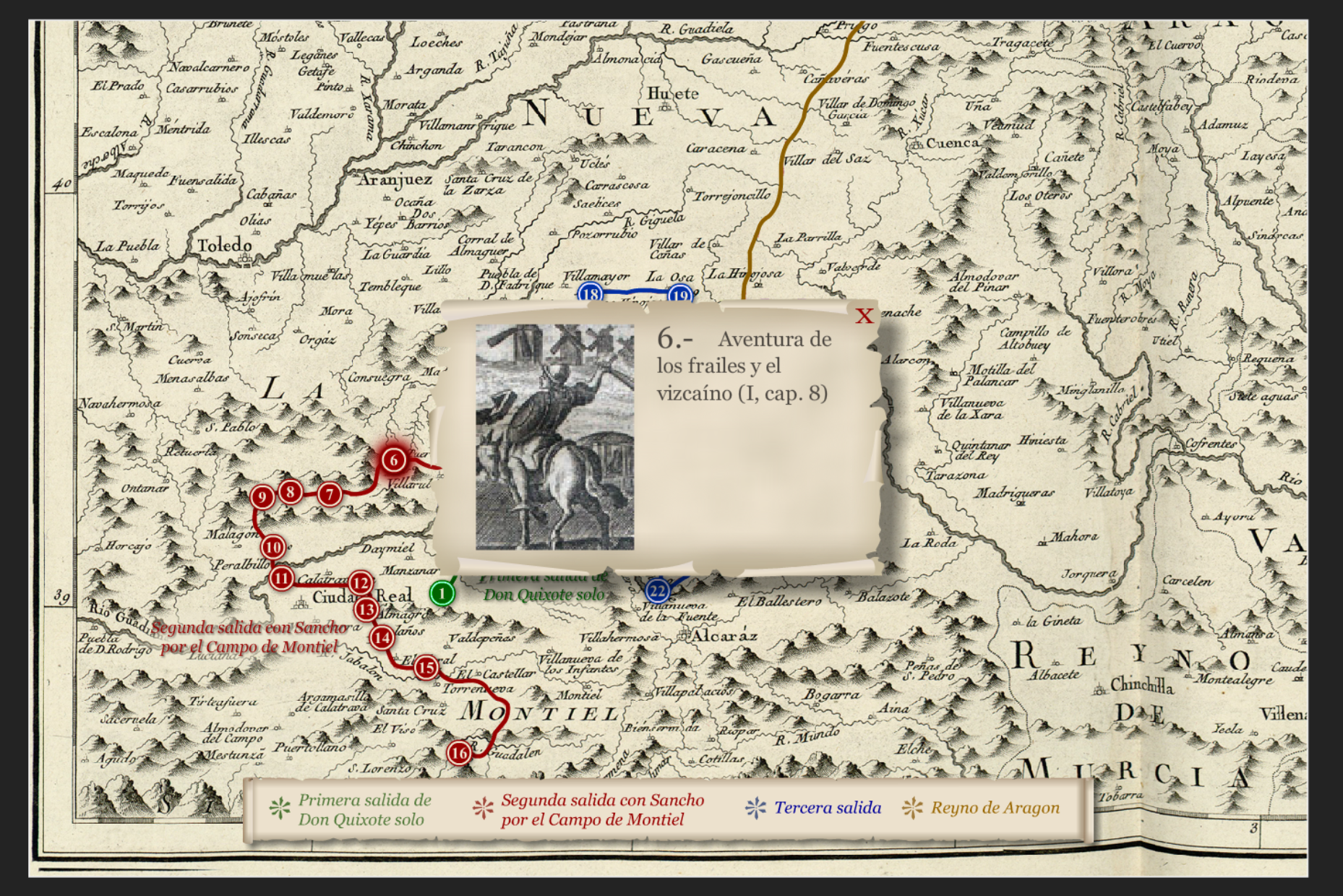
The project also contains an interactive timeline of the book and contains images related to the book or just to the culture in the 1600’s. In all, this project is packed with so much processed content in a digital and interactive form that I would go passed the limited number of words for this blog post.
The presentation of this project is what made it so great. There are many digital projects that have so much useful content, but the way it is presented makes it difficult to appreciate it. This project however, made it easily to navigate. The web –based interactive project was made searchable, printable, and can even be shared through social media web sites such as Facebook. This accessibility makes it easy for you to immerse yourself in the different features, whether it is the videos, the music, the images, the timelines, or simply reading the digital version of the books. It was easy to open and close certain features of the website and it allowed for the users to not get lost in opening so many pages.
My final thoughts on this project are that it was made with the reader in mind. Everything that is included is so that the reader understands the simple plot, but with historical features included, as well as other people’s interpretations through their essays. Because the book can have so many twists and turns, features such as the map can help the reader stay on the same pace of the plot. If there is one thing I would suggest for this project is to simply recreate it in an English version. However, I truly loved this project and since I am in the Spanish and Portuguese department here at UCLA, I am going to share this wonderful project so that it is of benefit for students, TA’s, and even professors.
-Karla Contreras