For this week’s blog, I went ahead and decided to take a closer look at the “Virtual Paul’s Cross Project,” a digital recreation of John Donne’s Gunpowder Day sermon conducted by North Carolina State University graduate students and professors. The site recreates all aspects of the sermon, which took place on November 5, 1622 in Paul’s Churchyard, London. When I say all aspects, I really mean all aspects–from basic aspects such as the physical layout of the courtyard, the sermon’s manuscript itself, to details such as the weather on that day, to the acoustics of the physical space, and (assuming) reenacted audio recordings of the sermon with varying audience sizes. The site truly serves as an interactive model for users to explore and immerse themselves in the event–creating an almost vicarious experience.
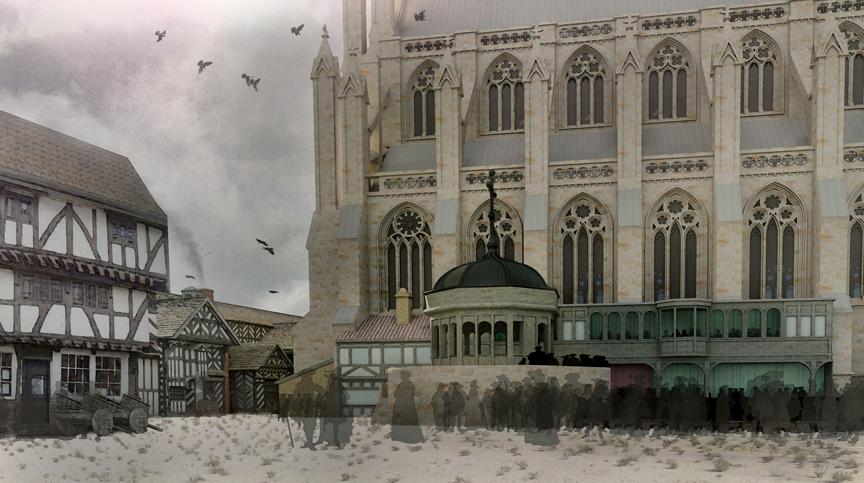
Sources: First and foremost, the site sources from the original manuscripts of the sermon. This serves as the base of the project itself. From there, the site uses various pictures, sketches, surveys, and paintings to recreate the physical space where the sermon took place (the actual church burned down). For details such as the weather and other historical context, they sourced various published scholarly works to fill in any informational gaps present.
Processes: It’s definitely evident that the site utilizes Google SketchUp or some similar program to create a 3D model of the physical space. The modelers used sketches, maps, and photos as the framework for their model, and filled in the details by using textures and overlays typical of the 17th century. The acoustics were processed by sound engineers, who were able to create audio recordings of the sermon given various perspectives in the courtyard and audience size. I also believe the manuscript was made digitally available not the site as well.
Presentation: The project manifests itself in this website where the user can interact with the 3D model, essentially walking through the physical space (digitally of course). The site also gives some (I’ll explain why only “some” later) context to the projects findings by giving secondary sources and proving anecdotes to the research process. The user is also given Youtube videos of different perspectives within the courtyard to experience both the visual and the audio of that day.
Critique: I love that the site focuses around the 3D model (its amazing, and if anyone has ever used Google SketchUp before, they’d know how much work it takes to get a model to look like that with so much detail). However, the organizational structure of the site is lacking. It’s very confusing to navigate through the tabs when looking for specific bites of information. Furthermore, the site skips over providing historical context in terms of what Gunpowder Day even is and its significance… and why the sermon was given in the first place. (If I missed this, feel free to tell me, though). Furthermore, I feel that the site looks a bit dated, aesthetically.