I chose to look at a digital humanities mapping project called Exploring the Vilnius Ghetto: A Digital Monument. Also called reVilna, the project compiles a thorough account of what life was like in the Jewish ghetto of Vilnius, Lithuania from its creation in 1943 up until its liquidation two years later.
The project presents a map of the ghetto alongside a timeline, a description of the events, and photos of the places or people described.

Life in the ghetto is divided up into stories, and each story is divided up into a chronology with the events marked on the map and with photos to click through. You can press a “play” button that will take you through the events and places, or you can click on your own.
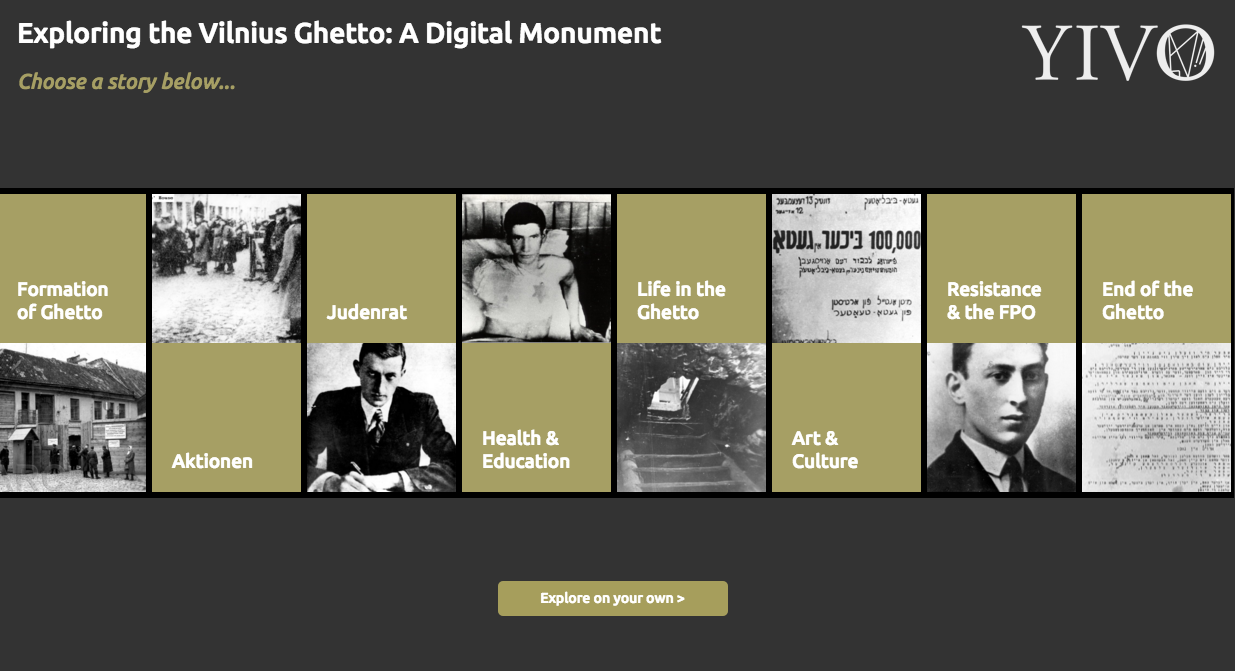
The project is very thorough and makes an effort to outline what real, everyday life was like for the people living in the ghetto. The project’s detail and easy-to-use interface makes it understandable for any viewer, but the project contains very little besides the map itself. It assumes that viewers have background knowledge of Jewish ghettos or World War II, and I think a little more context on either the home page or on a separate page could be useful.
It would be interesting to see how the Vilnius ghetto compared to other ghettos around Europe. The project reveals the surprising richness of day-to-day life, including details about governance, education, sports, and theater, and I wonder if this was especially unique to Vilnius or not.
Since this project was so thorough, its hard to imagine an alternate map. I think incorporating the photos of building onto the map itself would be interesting, kind of like how the Egyptian architecture project we looked at at the beginning of the quarter did. Another idea could be to have a different kind of story that would focus on a day in the life of a member of the ghetto. Since the project uses things like memoirs and oral histories as sources, I think it would be interesting to follow the story of a specific person who lived there. This would really underscore the project’s goal of understanding how the residents of the ghetto lived.