Category Archives: Uncategorized

Week 3: Your Profile Picture and Your Identity

good-avatar1bad-avatar

There were so many points that It’s Complicated: The Social Lives of Networked Teens by danah boyd made that really puts into words what we may all be thinking about our identity on the internet. When it comes to our presence online, profiles on any social media platform can give us the opportunity to paint ourselves to be the person we want to be. Like boyd mentioned, that particular identity can change from one platform to another. She gives the example of a girl who is an avid One Direction fan. She shares her love for the band on Twitter, but not necessarily when she’s with her friends. Social media has given us an easier way of expressing ourselves to the world, and it connects us to people we may not know in real life, but fan girl just the same as we do over our favorite bands.

One of the most important aspects of identity online, I believe, is our profile picture (or avatar). What is so important about these photos? Well, it is what instantly identifies us to other people on the internet. If you’re looking for someone on Facebook, they can identify you from all the other “John Doe” profiles based on your photo. It automatically helps someone identify you and say, “Oh yeah, that’s him!”
It isn’t very uncommon to hear nowadays the phrase, “Making it my profile pic!” Millennials, in particular, seem to put a great amount of time and thought into choosing their pictures. We would never make our worst pictures of us profile pictures because it makes us look bad or it gives us a negative online “identity”. I recently came across an article shared by The Washington Post that gave a brief overview of a study done on how people react to certain profile pictures. Turns out, if you’re wearing a hat or have short hair, people will more likely have a negative response to your photo. Isn’t that interesting that we can measure relatively you’ll get more likes on one photo than another? It makes sense as to why many of us (but definitely not all) take time and effort to choose the best photo we want to represent our best self. Because the opportunity to do so is there, I don’t see why we wouldn’t take that chance. I think everyone wants to present their best self because we live in a society where those that do so are rewarded. The reward? Likes and comments full of compliments, of course.

Context Disconnect

This week, Danah Boyd’s “It’s Complicated: The Social Lives of Networked Teens” discusses issues stemming from the online personas of today’s youth on social media. One issue she tackles which resonated with me was the issue of “audience” and how teens curate their online identity to fit a certain audience’s expectations. In the text, Boyd argues that “teens often imagine their audience to be those that they’ve chosen to “friend” or “follow,” regardless of who might actually see their profile,” and therefore, curate their social media’s content accordingly, restricting certain content to certain audiences.

Although this is slightly embarrassing that I’m writing my blog on this, this week, the reading reminded me of my own habit of filtering content in order to build an online persona separate from my own. I stumbled across an old Facebook post from one of my friends, where he makes fun of my Instagram account.

Screen Shot 2015-01-20 at 11.27.07 AM

My Instagram tells the truth—my life really is dull. With school and work and dance being the only things dominating my schedule, there really isn’t much time for me to go out and socialize as much as I would like; but as he puts it, I curated my social media content to show “pictures of hella friends and adventures.”

The reasoning for this, however, is well put by Boyd; “the intended audience matters, regardless of the actual audience.” I used to have a large follower base on Tumblr and Instagram back in my freshman and sophomore year of college, to the point where people began to recognize me in public from time to time. It was weird, considering all I did was post photos of myself (and my friends, because I’m not a narcissist) and recount my days of schoolwork, dance, and the occasional traveling. Over time, I let pseudo-internet popularity consume me and I began to change my habits online, resulting in the disconnection between my social media activity and my reality. My Instagram account now (because I deleted my Tumblr this past summer) caters to an audience—my Tumblr followers who initially followed me for my “adventures”—as opposed to my friends and family, and as a result, when taken out of context, my life looks a lot more interesting on my Instagram account than it really is.

Aside from problems arising from my friends never knowing my true whereabouts at certain times due to my Instagram’s misleading geotags and occasional #latergram sans the hashtag, Boyd further discusses challenges from how searchable social media accounts can be, acting as a trail of breadcrumbs, so to speak. “Social media introduces additional challenges, particularly because of the persistent and searchable nature of most of these technical systems. Tweets and status updates aren’t just accessible to the audience who happens to be following the thread as it unfolds; they quickly become archived traces, accessible to viewers at a later time.” From this, I fear that one day my Instagram will get me in trouble with my professional life if taken out of context.

It’s a somewhat lame connection, I know, but the reading reminded me of my own social media habits, and I’m glad I’m not alone, to be honest.

Understanding Misunderstanding and Identity

Since digital communities hadn’t fully arisen until the early 2000s, their formation and popularity has divided the population into two distinct groups: those who understand the nuances and subtleties of the way the communities operate and those who do not. This split in understanding can be thought of, more generally represented, as a division in age. A division between young individuals who grew up with and incorporated these digital communities into their social life, and the older population whose adolescence was not predicated on the existence and use of digital social platforms. In Danah Boyd’s “It’s Complicated”, she discusses reasons as to why digital communities inevitably become grounds on which younger individuals escape parental supervision and create more nuanced social techniques and understandings to “properly” interact with one another, a disconnect that Danah Boyd believes propagates misunderstanding and misinterpretation. It is this disconnect between the younger and older individuals, usually understood as being the children and adults, that engenders this misunderstanding. But where does this misunderstanding stem, and what ideas does it concern? In what I’ve gathered from the reading I believe that this misunderstanding between younger and older individuals is a result of differing ideas and concerns regarding context and perceptions of private and public space. Though an adult may view an online social community as a single interactive entity operating under a single set of rules, this is not the case for the adolescent individual. For the teen, a single digital space or community can be more accurately translated into multiple distinct physical spaces that lend themselves to a variety of rules. For instance, Danah Boyd tells of a younger boy who voices his frustration with his sister who continually abuses her ability to comment on posts that he thinks shouldn’t include her. Though he understands the conversation as being more of a private one between individuals that he views as being relevant, his sister understands the posts as a public interaction, and an invitation to join in. Here Danah points out the complex way in which individuals perceive the various spaces that digital communities provide. Individual ideas concerning private and public space dictate the ways in which actions within social digital communities are read. For some, digital communities represent a private space composed of family and friends, a place in which anything can be shared. For others, digital communities remain a part of the bigger structural system of the Internet, an incredibly public space where all information is accessible and shareable.

Because of the inhuman qualities of the Internet, the process of composing an identity, for the adolescent, has become more abstract. Instead of having one’s identity tied to a sort of physical being, it is constructed through the use of digital devices that produce nontangible extensions of the self. It is the sort of peer-to-peer driven nature of these online communities that creates an identity for the individual. No matter how the teen views his/her digitally fabricated self, whether it is in a serious or joking manner, that version of the self becomes an indicator of how that individual aspires to be understood in a specific social context. However, as the lines distinguishing between the real and digital self become more and more blurred, one must be careful not to become too heavily invested in any form of online socializing. Since the structural apparatus supporting these communities are rigid, an individual obviously cannot interact socially with something that is, utterly, non-human. An affordance that comes with social digital communities, which must be recognized, is their inherent non-human structural qualities and restrictions that ultimately shape the way users interact with one another and form any semblance of an “identity”. What I’m trying to say is that Identity shouldn’t be confined or attributed to a digital, non-real space, but rather something that permeates all realms of “existence”. A perspective that I believe would allow for a more healthy understanding of the self.


Week 3: Can We Auto-Correct Humanity?

Danah Boyd explains in her novel, It’s Complicated: The Social Lives of Networked Teens, that there is an inherent difference between technology addiction and overuse. In today’s society, the term addiction is thrown out without second thought by concerned parents whose teens are seemingly consumed by technology and emerging digital cultures. Although I want to believe that I maintain a balance between my online and offline lives, I am aware that my online activity is taking up an overwhelming amount of my day, and creating excuses to put off face-to-face interaction. I’ve noticed that I shy away from confrontation and rather submit to a technological interaction to solve problems. This isn’t a healthy way to live life. Where is the personal growth and development? This is what concerned parents should be worried about: how technology is a limiting agent to offline interactions and is beginning to replace traditional forms of communication, instead of monitoring their children’s actions are online.

In the YouTube video, “Digital Insanity: Can We Auto-Correct Humanity? Why I Refuse to Let Technology Control Me,” user ‘Prince Ea’ communicates the importance of social interaction in our world today, amidst our obsessions with our virtual lives and personas. “The average person spends four years of his life looking down at his cellphone,” he poetically declares.

However, as a member of this ‘new youth culture’, I’ve recently noticed that this decade is developing a proactive culture. The beginning of the new millennium saw the development of Facebook and other emerging social networking platforms. As the progression of these technologies have slowly incorporated themselves into our everyday lives, people have begun to realize and react to the technological “addiction” and have created movements, like ‘Prince Ea’s,’ to facilitate more real-world experiences, in place of virtual ones.

I have witnessed, first-hand, that this new decade is more aware of this idea and is speaking out to prevent others from ‘missing out on life.’ Peers are now seeing the importance of putting down their mobile devices and are becoming more PROACTIVE instead of REACTIVE about their technology use. By no means has this proactivity stopped or solved the problem with technology overuse, however, it is an important step in slowing down the apparent dependence adolescents have on technology today.

Week 3: Social Media Contexts

This week, I had company (for the record, my work friend Chelsea) while doing my Digital Humanities reading and I found myself constantly sharing points that I found interesting or surprising. Most of my fascination was with danah boyd’s discussion of different social contexts as determined by specific social media platforms. I was just really intrigued that the conventions of each community, from the choice of username to the perceived audience could be analyzed so accurately. Although my surprise was repeatedly met with a “Yeah, Jordan, that’s hardly a secret,” I do not think it is exactly general knowledge that humor fuels much of a millenial’s social media presence or that young people will switch between modes of communication based on the content of their conversations rather than convenience.

I later realized my surprise was due to the fact that many conventions on social media do not come naturally and require a lot of exposure to the platform before they can be understood, so it’s interesting that boyd managed to figure out so many as someone operating (assumedly) from outside. However, she is not the first person to demonstrate an unexpected amount of knowledge about the use of each social network. Last week, I discussed some unfortunate social media campaigns, but my focus this week is on one quite unassuming brand and their strangely successful Tumblr account. Denny’s does not have an exactly youthful image, but the brand’s approach to social media has won them plenty of exposure with millenials. Where many public figures end up troubled by the weird interactions they have on social media, Denny’s, with the direction of 23-year-old consultant Amber Gordon, has managed to embrace the weird energy of the blogging platform by establishing three goals: capitalizing on trending topics, engaging with humor, and community interaction.”

Although a lot of the brand’s content appears campy, especially when viewed altogether, it clearly demonstrates some knowledge about what young people are doing online and specifically how that activity differs by platform.

The Use of “Addiction” in Reference to Social Media

In Danah Boyd’s Its Complicated: The Social Lives of Networked Teens, the author examines youth and online use, further exploring topics such as identity, privacy, and addiction. One of the chapters that stood out to me this week was the chapter about internet addiction, “What Make Teens So Obsessed with Social Media?”.

In this chapter, Boyd describes the history of “addiction”, the word itself, and how it has evolved over the years. Boyd explains how years ago “addiction” used to describe an interest or hobby such as gardening, then the meaning of the word began to change to alcohol and substance abuse, and then to impulse-control disorders.

She then explains how nowadays, someone who is “addicted” is described to engage “in a practice in ways that society sees as putting more socially acceptable aspects of their lives in jeopardy” (177). With this definition, parents now label their children as “addicted” to the internet because they may choose to be in an online chat room or lose sleep to be active online.

When reading this chapter, I kept being reminded of an image I had seen before of different social media site names that were written on syringes. This image shows the contrast of what has been seen as “addiction” in the past and how teenagers are being labeled as “addicted” now. When one usually would see a syringe that is displayed in the image, it is associated with serious drug addiction—however in this image, it is being associated with Facebook, Youtube, and Tumblr. I feel like this image is striking because it really shows how blown out of proportion this “youth addicted to social media/internet” has become. I do understand that it can be described as addiction in some cases and that the image is dramatized on purpose, however comparing social media websites to drug abuse like that image does seems unnecessary and over the top. I feel that this image really illustrates the complications that come with constantly labeling youth as “addicted” to social media.

Screen Shot 2015-01-20 at 10.53.20 AM

Coming of Age Without Agency

Boyd brings up in chapter three of her book a dilemma that seems to be becoming very common in our society. She titles this section of the chapter as “Coming of Age Without Agency,” and explains the idea of youth “come of age without having to take on the full responsibilities of adulthood” (94). G. Stanley Hall believed that this was necessary in order to protect kids from their vulnerability and ensure that they fully mature before entering the real world. This adolescent stage of maturing is very liminal, seeing that youth are not looked down upon as children, although not treated as adults either. For the most part, I would agree that this stage of transformation is necessary, but the idealized thought of maturing and being able to act as adults all happening at once appeals much more to me. I understand that it may be very overwhelming and difficult for some youth to receive and handle responsibility just as they learn and grow in the life, but the idea that they lack agency bothers me. Agency should come with aging, and if not, I believe it could be very damaging for vulnerable youth.

ritchie link

Director Richard Linklater (right) with cast members

Last week, I talked about the movie Boyhood a little bit and how the main character deals with the advancement of technology. Although I can relate the movie to my focus this week, I will try to steer in a different, although near, direction. Not too long ago, I remember my mom sent me a link to an NPR “Fresh Air” interview with Richard Linlkater, the director of Boyhood. Terry Gross asked him various questions about the film, especially the process of filming, although Linklater focused on a particular sequence in it that he felt very important to the story. The sequence is a crucial part of the main character’s coming of age, which is the center of the entire film, although, in this case, loss of innocence is the center focus. The main character, Mason, middle school-aged, listens to a couple of upperclassmen  speak poorly about women and one of his friends in a demeaning and masochistic way. It is morally clear that the high school students are wrong, although Mason is unable to confront them or oppose anything they say. Linklater highlights in his interview that most males and females probably can relate to this, and that the scene, although possibly uncomfortable is very realistic, which I myself can verify. Coming of age without agency, or simply loss of innocence without the ability to act, leaves youth unable to act accordingly and simmer in the pains of growing up. Although taking on responsibility at a young age could be more harm than good, youth should be able to act with agency in order to mature into a proper adult.

The Repost Diary

repost

As I began to read, It’s Complicated, by Danah Boyd, I couldn’t help but reflect my online identity as a teenager. Freshman year of high school marked the prime years of Myspace; the first platform where HTML became an everyday accessory, with the ability to morph a simple background into a personal profile ready for the best friends, class hotties, and fellow classmates, to discover, learn, and explorer users individual style. It was required to have your best friends on your top friends list, which was a grading scale of friendships, aka a major entity of everyday friendships. Although, most of the my personal happenings on this site stayed between friends, there were still instances where my mother believed it crossed the age appropriate boundary. There was one situation that still radiates with me. I was a very naïve user; one evening, I had read a post on my grandmother’s computer located in the back room of her house. The post described a story of a young women who was abused and raped, and if it was not reposted then that same man would come find me and do the same, as if being in closed in wood paneled dark room wasn’t frightening enough, now sitting in my conscious I am sensing a huge man searching to steal me, so naturally I repost. My mother, friends with me on Myspace, found the post to be extremely inappropriate and disgusting, she could not understand why I would share that under my name. Within 24 hours of the repost, Myspace account was deactivated. My mother wanted me to be able to express myself on the Internet, but she believed the site to be having a negative effect on me. At the time, I believed she was just being unfair, she did not understand my fear in the moment, and I had no problem with deleting the post, but it had crossed the line for her as a parent and my superior authority figure.

Thinking back on this now I can see why she responded the way I did, however in my thirteen year old mind, I felt completely misunderstood, like how could she not understand why I was scared? It felt as though I had no option and was almost forced in a way to repost this story placed out there only to scare users just like myself. Boyd discusses some of the social cost of posting, and often times during adolescence these cost can be thrown of balance. It is difficult enough time, but not this platform a platform has been added to further show fellow classmates and friends just how “cool” you are. Although, that repost was not out of coolness, I was afraid, actually afraid of what could happen, what if somehow they could find me over the Internet, I felt extremely vulnerable all because I stumbled upon a wildly terrifying story. It was a very complicated situation, and relates to some of the experiences Boyd uses to show how technology is in some ways redefining, and further muddling the already confusing years of adolescence. Have any of you had a similar experience with a parent or authority figure when you first were given the ropes to social media?

The World Is Not Falling Apart

http://www.slate.com/articles/news_and_politics/foreigners/2014/12/the_world_is_not_falling_apart_the_trend_lines_reveal_an_increasingly_peaceful.html?wpisrc=obnetwork

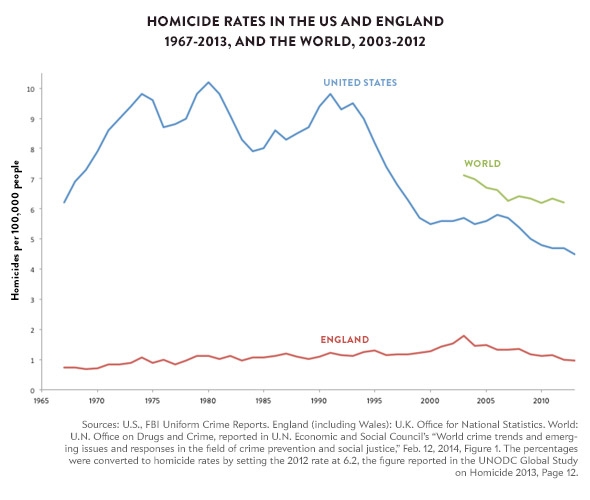
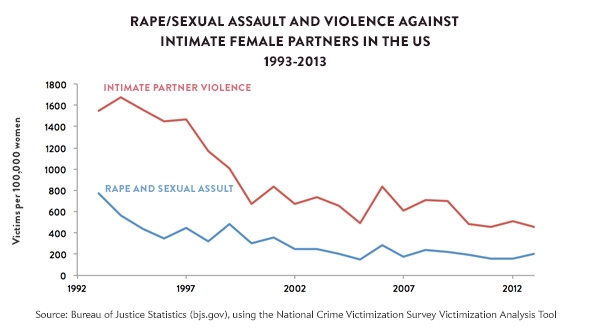
While reading I particularly enjoyed the section that focused on parents and their fears of the world children live in today. In the book there were excerpts from parents saying that they don’t let their children out of sight. One interesting statistic that was brought up in the book was also the change in transportation means in how children get to school. What was once the standard of walking or riding a bike to school has not turned into most kids being dropped off and picked up by a care provider. From my understanding of the reading, parents believe the world is a worse and more unsafe place than it was when they were teenagers but the reality is quite the opposite.

While many parents argue that they go to sometimes extreme measures to keep their children safe, the reality is that we are now living in a more safe world than ever. One of the reasons there is this constant perceived terror that the world is a bad and unsafe place is that our access to information is more than plentiful. With news and media available at our fingerprints we are able to read about what is happening all over the world at any minute. Not only that but our news feeds are updated to the minute as well. Breaking news alerts pop up on my phone moments after an event happens. When I wake up in the morning and turn my phone on my lock screen is filled with news alerts from around the world. We also have to be honest with ourselves though, the majority of the things we see, read, or hear on the news are usually negative events that spark fear, worry, sadness, and even terror. I believe that it is our easy access to news outlets that dominate this popular sentiment that the world is unsafe. Worst of all is that if parents feel this way now, imagine what they are distilling in their children.

I have posted some images in regards to how the world has improved in regards to safety. Though the popular perceived reality is not actually the truth, it is hard for me to imagine parents softening up anytime soon to the idea of their children being more independent about spending time “out of sight”.

AT&T’s New BBF Phone Plan


baby's first phone

baby’s first phone

I just want to start this by saying AT&T is a horrible company and they charged my dad 700$ for four days of using free wi-fi in a hotel in Mexico, but it is this news that brought me to the ad I would like to discuss before you. 

In” It’s Complicated” we read about identity and how adolescence is a period when people want to figure how they fit into a larger context like the world. Technology and social media has given them a playground inside their own homes.

Parents of today tend to find the world more dangerous and so they have moved their children from playing outside until dusk, to leaving them in the structured confines of a mall, to today pretty much micromanaging what their kids do and restricting them from going out when they want to.

At AT&T I saw an ad and I should have taken a picture of it, but I was just starting ch. 3 and it was only when I got home that I was like, “WOAH that ad makes SO MUCH SENSE NOW.” I couldn’t find a picture on the Google, so you will have to go on a journey and imagine with me:
you see two very young tween-type looking girls, one sitting on a couch and another on the floor both gazing into the first phones. The text said, A plan for your       BFF      . I personally felt like the kids were too young to have phones but these days it’s quite normal for kids in grade school to have them. The main point is that the selling point is the ability to talk to your friends. The phones offered were not high tech, some were flip phones or slide phones… very old school. The fancy multitasking phones were pitched towards older adults with jobs and such. And so, as Boyd said, for young people it’s not about the equipment it’s about the ability to communicate with peers.

For many young kids phones and computers are the only way to have a little privacy. For some reason reading the addiction chapter led me to looking into instagram since I’ve always wondered how certain people get so many hundreds and even thousands of followers when the content they post is honestly useless. I looked up apps like MagicLiker and a few other apps that promise to get you hundreds of followers. Basically you have to follow 2 people to get one person to follow you back. There are coins and incentives all sorts of other things. Most of the images and people asking for likes were young girls posting low quality selfies. I would later see they had 1.7K followers when they only have about 5 pictures. They pretty much spend hours on end or all their money paying for followers or getting them 2 for 1 fold.

Anyway, I just wanted to let you guys know I stepped into that world and it was weird. A lot of people seem self-obsessed. I did get 100 likes (you get 100 to start) and used it for a picture of me doing a music video and I have to say the number made my picture feel like it was a little cooler than it actually is. But I wouldn’t waste any time on it.

It was interesting though how fake and calculated instagram can be. I always thought it was an honest place but I see how anyone at all can get anyone to follow them if they have the same goals in mind.