Nishant Shah and Sunil Abraham’s report Digital Natives with a Cause?: A Knowledge Survey and Framework poses, explores, and argues directed research questions concerning the “Digital Native”. Shah and Abrahams working definition of the Digital Native identifies, “children born after 1980s; youths significantly affected by the rise of the Internet technologies; an emerging global population growing up with digital technologies central to everyday functioning…a generation who relate to digital technologies differently and live in a markedly different way that preceding generations” (7). Without knowing the scholarly name of the Digital Native, I have been thinking about this identity for a while now. A couple of quarters ago, a programming professor asked the class if anyone remembered a point in their childhood without the Internet. A couple of people raised their hands, but the majority of the class did not remember a time without at least dialup.
An interesting point that counters the general opinion towards Digital Natives and activism that Shah and Sunil Abraham discuss is the argument that they are “agents of e-change”. The example that immediately came to mind during this reading is the concept of “Slacktivism”. There is a looming sense surrounding the subject of the Digital Native that because there is this easily accessible, immediate catalyst for communication, this generation is lazy, disconnected and/or “apathetic to political participation” (23). However, Shah and Abraham counteract that “this alarm rises from evaluation Digital Natives activities based on a pre-digital understanding of politics and engagement; and from concentrating on actions rather than the conditions of change that Digital Natives create in which they mature” (23). This is an illuminating take on the Digital Natives’ political action. It’s refreshing to hear – but I’m not so sure I’m sold.
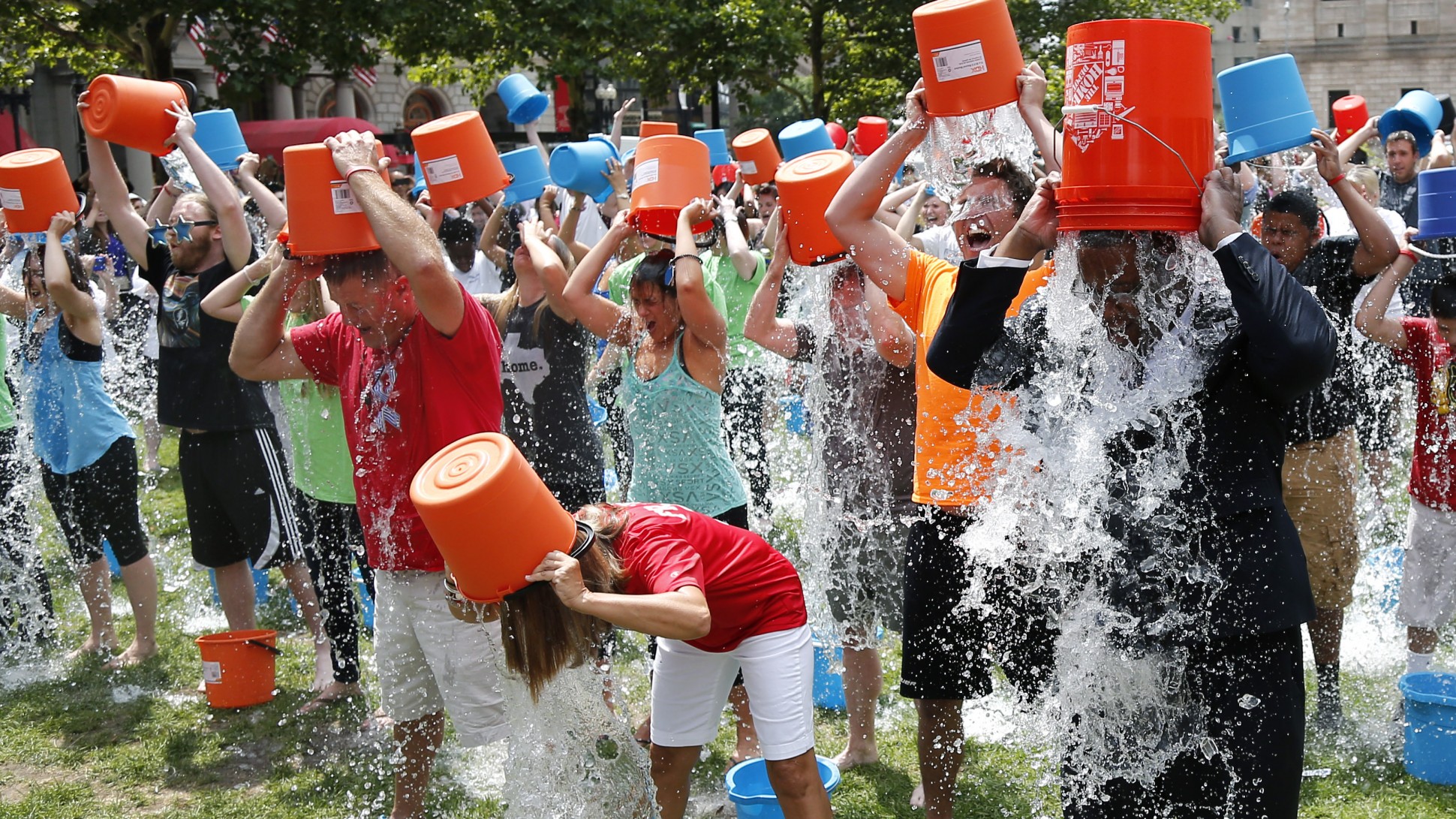
The concept of Slacktivism speaks to Shah and Abraham’s report. On one hand, I think of the ALS ice bucket challenge. This example is maybe even more active than other examples, such as posting petitions or articles with short opinions of support or disagreement. However, the ALS ice bucket challenge had a serious viral impact. The cause received a lot of critique for its failure to really contribute to the actual cause – it did more “talking” than “doing”. But on the other hand, I think of Black Lives Matter. Many of the protests were organized online, through the Facebook group and its members. Here, we can see the slippage between Slacktivism and the use of technology for critically impactful movements.
I agree with Shah and Abraham’s perspective that Digital Natives are agents of change – but only by knowing the affordance of the proposed technology. With the example of the ALS ice bucket challenge, there was the option to donate to the ALS Association. However, because of the way the campaign was composed, it resulted in so many people (through tagging/nominating) just pouring ice over their heads. There is arguable value in bringing the conversation of ALS to the table, but in terms of true activism, the campaign fails to understand the power/affordance of technology.
I believe that the source of the problem of everyone dumping buckets of ice water on the heads for the awareness of ALS rather than donating money or spreading actual awareness is not related to Digital Natives directly, although the virality of it could. I remember when it was a big deal last summer, but I don’t actually think I learned anything about the disease.