Coming of Age Without Agency

Boyd brings up in chapter three of her book a dilemma that seems to be becoming very common in our society. She titles this section of the chapter as “Coming of Age Without Agency,” and explains the idea of youth “come of age without having to take on the full responsibilities of adulthood” (94). G. Stanley Hall believed that this was necessary in order to protect kids from their vulnerability and ensure that they fully mature before entering the real world. This adolescent stage of maturing is very liminal, seeing that youth are not looked down upon as children, although not treated as adults either. For the most part, I would agree that this stage of transformation is necessary, but the idealized thought of maturing and being able to act as adults all happening at once appeals much more to me. I understand that it may be very overwhelming and difficult for some youth to receive and handle responsibility just as they learn and grow in the life, but the idea that they lack agency bothers me. Agency should come with aging, and if not, I believe it could be very damaging for vulnerable youth.

ritchie link

Director Richard Linklater (right) with cast members

Last week, I talked about the movie Boyhood a little bit and how the main character deals with the advancement of technology. Although I can relate the movie to my focus this week, I will try to steer in a different, although near, direction. Not too long ago, I remember my mom sent me a link to an NPR “Fresh Air” interview with Richard Linlkater, the director of Boyhood. Terry Gross asked him various questions about the film, especially the process of filming, although Linklater focused on a particular sequence in it that he felt very important to the story. The sequence is a crucial part of the main character’s coming of age, which is the center of the entire film, although, in this case, loss of innocence is the center focus. The main character, Mason, middle school-aged, listens to a couple of upperclassmen  speak poorly about women and one of his friends in a demeaning and masochistic way. It is morally clear that the high school students are wrong, although Mason is unable to confront them or oppose anything they say. Linklater highlights in his interview that most males and females probably can relate to this, and that the scene, although possibly uncomfortable is very realistic, which I myself can verify. Coming of age without agency, or simply loss of innocence without the ability to act, leaves youth unable to act accordingly and simmer in the pains of growing up. Although taking on responsibility at a young age could be more harm than good, youth should be able to act with agency in order to mature into a proper adult.

The Repost Diary

repost

As I began to read, It’s Complicated, by Danah Boyd, I couldn’t help but reflect my online identity as a teenager. Freshman year of high school marked the prime years of Myspace; the first platform where HTML became an everyday accessory, with the ability to morph a simple background into a personal profile ready for the best friends, class hotties, and fellow classmates, to discover, learn, and explorer users individual style. It was required to have your best friends on your top friends list, which was a grading scale of friendships, aka a major entity of everyday friendships. Although, most of the my personal happenings on this site stayed between friends, there were still instances where my mother believed it crossed the age appropriate boundary. There was one situation that still radiates with me. I was a very naïve user; one evening, I had read a post on my grandmother’s computer located in the back room of her house. The post described a story of a young women who was abused and raped, and if it was not reposted then that same man would come find me and do the same, as if being in closed in wood paneled dark room wasn’t frightening enough, now sitting in my conscious I am sensing a huge man searching to steal me, so naturally I repost. My mother, friends with me on Myspace, found the post to be extremely inappropriate and disgusting, she could not understand why I would share that under my name. Within 24 hours of the repost, Myspace account was deactivated. My mother wanted me to be able to express myself on the Internet, but she believed the site to be having a negative effect on me. At the time, I believed she was just being unfair, she did not understand my fear in the moment, and I had no problem with deleting the post, but it had crossed the line for her as a parent and my superior authority figure.

Thinking back on this now I can see why she responded the way I did, however in my thirteen year old mind, I felt completely misunderstood, like how could she not understand why I was scared? It felt as though I had no option and was almost forced in a way to repost this story placed out there only to scare users just like myself. Boyd discusses some of the social cost of posting, and often times during adolescence these cost can be thrown of balance. It is difficult enough time, but not this platform a platform has been added to further show fellow classmates and friends just how “cool” you are. Although, that repost was not out of coolness, I was afraid, actually afraid of what could happen, what if somehow they could find me over the Internet, I felt extremely vulnerable all because I stumbled upon a wildly terrifying story. It was a very complicated situation, and relates to some of the experiences Boyd uses to show how technology is in some ways redefining, and further muddling the already confusing years of adolescence. Have any of you had a similar experience with a parent or authority figure when you first were given the ropes to social media?

Representing Networked Publics | On Noah by Patrick Cederberg and Walter Woodman

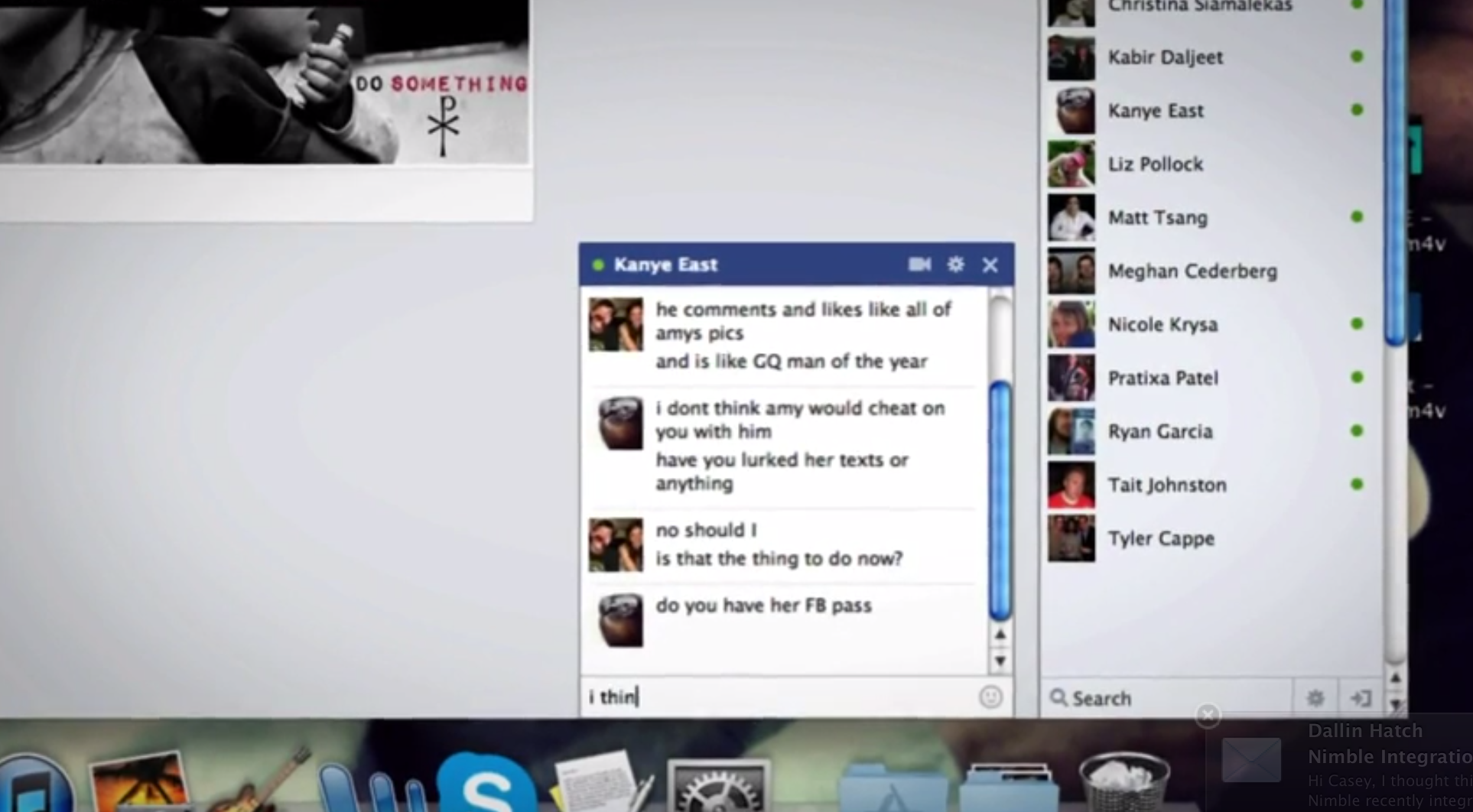
Screenshot from Noah.

Has anyone noticed this annoying trend in films and TV: if a plot’s conflict could be solved by a quick phone call to the police, for example, the character’s cell will either be conveniently “out of service” or (even more stupidly) the character will not even consider whipping out their phone at the crucial moment. In the heavily networked world of the modern age, these features of storytelling are jarring, to say the least.

However, in the past couple of years, I’ve noticed that screenwriters have become a lot more open to incorporating digital media and telecommunication into the show’s narrative. For example, the above screen shot is from the indie short film Noah, which takes place entirely on a teenager’s computer.  (I’ve embedded the film below, mildly NSFW.)

Without spoiling the events of the film, I can say that all of the communication is digital, with the main action taking place on Facebook. Conventional wisdom would argue that this emphasis on textual interaction would underwrite the emotionality of the film—after all, there are very few “typical” markers of emotionality (body language, prosody, etc.) that critics of new media argue are necessary aspects of communication.

However, Noah does a good job of illustrating that digital communication isn’t emotionless. We’ve adopted a method of textual interaction that does not (and, arguably, cannot) mimic IRL interaction, and have adapted to adjust to the constraints of digital media in order to express ourselves in meaningful ways.

Screenshot from Jane the Virgin.

My point, I guess, is that digital media has become a part of everyday life, with our participation in networked publics forming the backbone of modern human interaction. As Danah Boyd points out, these new networked technologies has altered the way we communicate and has impacted the social dynamics of our relationships. It would, therefore, be nice for traditional media to do a better job of accurately illustrating the role digital media plays in modern communication without also demonizing it.

In recent years, traditional media seems to have realized this. Award-winning TV shows like Jane the Virgin (pictured above) and cult favorites like Faking It (pictured below) have used clever stylistic choices to demonstrate how new media is actually used in everyday interaction.

I think we still have a bit of a way to go before the representation of new media usage in film and TV accurately reflects the way new media is used IRL, but the way networked publics are represented in the media these days has definitely improved over time.

Screenshot from Faking It.

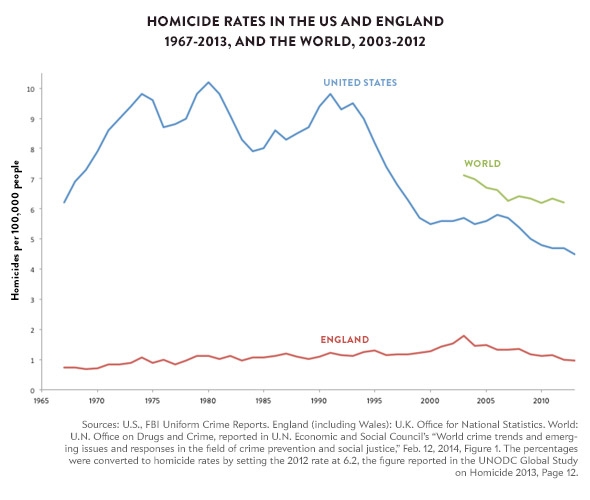
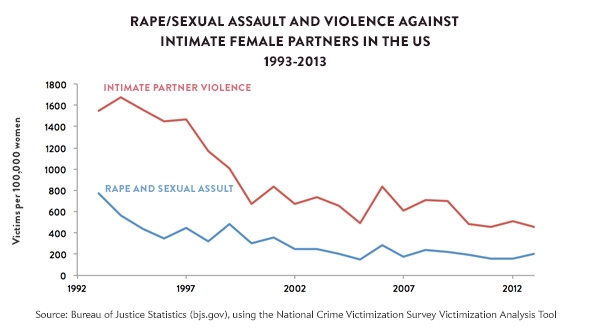
The World Is Not Falling Apart

http://www.slate.com/articles/news_and_politics/foreigners/2014/12/the_world_is_not_falling_apart_the_trend_lines_reveal_an_increasingly_peaceful.html?wpisrc=obnetwork

While reading I particularly enjoyed the section that focused on parents and their fears of the world children live in today. In the book there were excerpts from parents saying that they don’t let their children out of sight. One interesting statistic that was brought up in the book was also the change in transportation means in how children get to school. What was once the standard of walking or riding a bike to school has not turned into most kids being dropped off and picked up by a care provider. From my understanding of the reading, parents believe the world is a worse and more unsafe place than it was when they were teenagers but the reality is quite the opposite.

While many parents argue that they go to sometimes extreme measures to keep their children safe, the reality is that we are now living in a more safe world than ever. One of the reasons there is this constant perceived terror that the world is a bad and unsafe place is that our access to information is more than plentiful. With news and media available at our fingerprints we are able to read about what is happening all over the world at any minute. Not only that but our news feeds are updated to the minute as well. Breaking news alerts pop up on my phone moments after an event happens. When I wake up in the morning and turn my phone on my lock screen is filled with news alerts from around the world. We also have to be honest with ourselves though, the majority of the things we see, read, or hear on the news are usually negative events that spark fear, worry, sadness, and even terror. I believe that it is our easy access to news outlets that dominate this popular sentiment that the world is unsafe. Worst of all is that if parents feel this way now, imagine what they are distilling in their children.

I have posted some images in regards to how the world has improved in regards to safety. Though the popular perceived reality is not actually the truth, it is hard for me to imagine parents softening up anytime soon to the idea of their children being more independent about spending time “out of sight”.

Week 3: Struggles of Social Media Addiction

            are you addicted to social media

In It’s Complicated: The Social Lives of Networked Teens, Danah Boyd tackles issues of identity, privacy, and addiction within the realm youth online activity. Using numerous accounts, encounters, and examples of teens and their use across multiple online networking platforms, she draws conclusions of internet use amongst one of the most pivotal generations. While reading about Boyd’s studies on addiction, I was reminded of one of the many lists that I have seen on the popular site, Buzzfeed, which houses various social, online content relevant to today’s world. The list, entitled 26 Struggles of Being a Social Media Addict, seems to be a suitable and pertinent, albeit humorous, take on the issue of internet addiction that Boyd discusses in her writing.

The Buzzfeed list includes various situations that can arise for those people who are “addicted” to different social media outlets, the likes of which include Facebook, Instagram, Twitter, or even just texting. It uses different pictures and GIFs of references to popular culture that illustrate these struggles. The list has a light-hearted and sarcastic tone/feel to it, exaggerating and poking fun at these ridiculous “first-world” problems of people who are obsessed with online social media. Yet, it is one of the more popular lists because many of these situations are completely relevant to today’s time. I, myself, am definitely guilty of experiencing some of these social media struggles, like having an ideal following-to-followers ration, tweeting about my anger, and using an unnecessary amount of #hashtags.

In terms of relating to Boyd’s discussion of addiction, this list can be seen as exemplifying the oddities Boyd mentions about the use and abuse of the Internet. As she explains, the definition of addiction includes an “overuse” or “misuse” of a behavior, which in this case, is social media. The dangers of such an addiction are illustrated in this list, which conveys the shallowness that can arise from the overuse of these outlets. It might be seen as silly to be referred to by your Twitter/Instagram handle in real life, or to rather have a conversation online rather than face-to-face or on the phone. Yet, these are the realities for much of the teen generation that is so enveloped this type of online activity.

However, I really can’t be one to criticize. I’m one of those people who can’t put a self-timer or blocker on my computer/phone, preventing me from using social media during finals or other busy times. While I know that isn’t super healthy or ideal, I feel like I do so because I agree with Boyd’s point that humans are social beings and desire to be constantly connected with other people and their surroundings. However, because “addiction” has a negative connotation, there are some thin boundaries and dangers we must be aware of as the teen generation continues to move along and advance in this technological society.

download

AT&T’s New BBF Phone Plan


baby's first phone

baby’s first phone

I just want to start this by saying AT&T is a horrible company and they charged my dad 700$ for four days of using free wi-fi in a hotel in Mexico, but it is this news that brought me to the ad I would like to discuss before you. 

In” It’s Complicated” we read about identity and how adolescence is a period when people want to figure how they fit into a larger context like the world. Technology and social media has given them a playground inside their own homes.

Parents of today tend to find the world more dangerous and so they have moved their children from playing outside until dusk, to leaving them in the structured confines of a mall, to today pretty much micromanaging what their kids do and restricting them from going out when they want to.

At AT&T I saw an ad and I should have taken a picture of it, but I was just starting ch. 3 and it was only when I got home that I was like, “WOAH that ad makes SO MUCH SENSE NOW.” I couldn’t find a picture on the Google, so you will have to go on a journey and imagine with me:
you see two very young tween-type looking girls, one sitting on a couch and another on the floor both gazing into the first phones. The text said, A plan for your       BFF      . I personally felt like the kids were too young to have phones but these days it’s quite normal for kids in grade school to have them. The main point is that the selling point is the ability to talk to your friends. The phones offered were not high tech, some were flip phones or slide phones… very old school. The fancy multitasking phones were pitched towards older adults with jobs and such. And so, as Boyd said, for young people it’s not about the equipment it’s about the ability to communicate with peers.

For many young kids phones and computers are the only way to have a little privacy. For some reason reading the addiction chapter led me to looking into instagram since I’ve always wondered how certain people get so many hundreds and even thousands of followers when the content they post is honestly useless. I looked up apps like MagicLiker and a few other apps that promise to get you hundreds of followers. Basically you have to follow 2 people to get one person to follow you back. There are coins and incentives all sorts of other things. Most of the images and people asking for likes were young girls posting low quality selfies. I would later see they had 1.7K followers when they only have about 5 pictures. They pretty much spend hours on end or all their money paying for followers or getting them 2 for 1 fold.

Anyway, I just wanted to let you guys know I stepped into that world and it was weird. A lot of people seem self-obsessed. I did get 100 likes (you get 100 to start) and used it for a picture of me doing a music video and I have to say the number made my picture feel like it was a little cooler than it actually is. But I wouldn’t waste any time on it.

It was interesting though how fake and calculated instagram can be. I always thought it was an honest place but I see how anyone at all can get anyone to follow them if they have the same goals in mind.

How China Deals With Internet-Addicted Teens

Danah Boyd grapples with the use of the word addiction in reference to teen’s online activity, and unrolls a few attitudes towards the dominantly adult anxiety of children’s overexposure to media. In her book, “It’s Complicated: The Social Lives of Networked Teens”, Boyd references dozens of interviews and examples of teens who share their story of online activity in an effort to catalogue healthy and unhealthy use of online communities. In the chapter about addiction, we learn that most clinical discussion surrounding addiction of any capacity is derived from an “overuse” or “misuse” of given behavior.

I discovered a video recently, revealing a institutionalized response to “Web Junkies”, or those who are addicted to the internet in China and it brought up several issues that Danah Boyd touched on, in psychological analysis of online addiction. The video is a bit disturbing at times and shows extreme institutionalized treatment facilities that wouldn’t be allowed in the United States for many reasons. Yet, even in my discomfort of viewing there are moments that I find myself agreeing with the intention of a treatment center.

Tao Ran, the addiction specialist at the treatment camp, works with kids who strategically wear diapers as a way to avoid using the restroom during binge gamming episodes. Every kid shown in the video shares a similar story of being brought by parents against their will, parents are still encouraged to stay and learn from Tao. Perhaps the only part in this video that Danah Boyd would remotely agree with, is when Tao explains the addiction as a manifestation of loneliness.

In our reading, Danah discusses the challenges of teens freely hanging out in person as a result of fearful parents and a dangerous society. This I understand firsthand as my parents were very protective and wouldn’t allow me to bike to my friends house “because something may happen”. So in an effort to appease my parents, I would stay in and satisfy my social desires online.

Teens are inherently social beings, and Danah Boyd makes a good point that, “being ‘addicted’ to information and people is part of the human condition: it arises from a healthy desire to be aware of surroundings and to connect to society.” However I think the teens depicted in this video have a lot more than just an addiction to gaming that needs to be sorted out, attention on healing a personal sense of connectedness may be the most important step.

My Mother is My Biggest Fan on Social Media. Yay?

I found myself intrigued with this week’s reading of danah boyd’s It’s Complicated: the Social Lives of Networked Teens. I feel like she has taken the time to truly understand this community online and has brought to light real issues that I, being fresh out of my teenage years, can say really happen. One of these issues is the disagreement between adults and teens about personal privacy online. “Although many adults believe that they have the right to consume any teen content that is functionally accessible, many teens disagree” (58). As a teen, my mom had a rule that I couldn’t have a Facebook account unless she was my friend. She was open and honest with me, saying that she wanted to help me learn how to navigate having a social presence online. She did a great job at teaching me what was acceptable and unacceptable to post online, and I am definitely grateful for that. But I still never really got comfortable with the idea that she could read my posts. Like boyd was able to identify in many teens, it wasn’t that I had content I felt the need to hide from my mom. It was just that I wasn’t comfortable with her having full access to my posts directed towards my friends; it felt like she had a lens into my social life and therefore had the right to analyze it. I overheard her talking with my dad a few times about my online activity, whether she was speculating if I liked the boy who was in a picture I posted or if she was judging the online content posted by my friends that she was curious about. While I learned to shrug it off, knowing that this helicopter-parenting would end once I got older, I am starting to wonder if it is a permanently established norm now since I am an adult and she is still pouring over my social media accounts. When I got an Instagram last year, she made one just to follow my sisters and me (I accepted her follow request only after a few weeks of her complaining about how I hadn’t yet). Now I write for an online magazine for college women called Her Campus (http://www.hercampus.com), and I feel so uncomfortable every time my mom tells me that she read my latest work. It’s a website for college students, so a lot of the content has to do with dating, fashion, partying, etc. It’s meant for a specific audience, and that is the audience I have in mind when I write for it; not my mother. I feel like my freedom of expression is gone now that I have to filter what I write knowing my mother reads my work and shares it with her friends. I love my mom, and I agree that parents should be involved (to a certain degree of course) with their teenager’s social media presence, but when do we draw the line for online surveillance between parents and young adults?

The Moral Panic of Being a Parent

We see the idea of moral panic heavily reviewed and criticized in the text by Boyd. This ‘moral panic’ that parents face, not only takes away from a child’s social understanding but also could curb them later on. While it is the natural instict of a parent to protect their child, often times this can be exaggerated.  We can see in today’s world since the prevalence of Apple, that the use of Apps in relation to social media can be restricted, hidden or even turned off.

I decided to simply ‘google’ devices for monitoring child Internet activity. I was astounded by the amount of apps that parents have readily available to them these days. This website caught my attention:


http://www.hongkiat.com/blog/parental-control-apps-android/

It highlights 8 free apps for your smartphone to monitor your child’s activity within the Internet. The article highlights that we should not shut out technology together from a child’s life completely but we should be able to have the ability to control it. Control: however can be defined in many different ways. Throughout Boyd’s texts her accounts with many teens and the way their parents control or conform there Internet usage spreads along a wide range. For example we see the use of secondary devices like apps or websites that let parents check their child’s text messages, website streaming history, as well as their social media networks. One site, very popular among parents is the site Teensafe.com. The website locks the user in with keywords life: safe, and child. But what they are really doing is looking into the private conversations and lives of teens and children.

“What if we told you that modern technology has made it easier than ever for us to know what our kids are up to and keep them safe?  

This exclusive infographic illustrates that, while the threats of the digital world are real, they’re no match for an equipped parent.

TeenSafe brings protective parents and smartphone tech together to safeguard what we all value most, the great kids that depend on us.”

15937856471_a3ce5561d8_o


While there are dangers of the Internet the dialogue of children trying to survive in a virtual world may be curbed. We see the example Boyd gives of a nerd-like boy from the “ghetto” that changed his Myspace profile to represent gang signs, when his college application was set to end gang violence. While he may not support gangs, he did what he needed to survive within a social situation. This applies to life before the computer as well in different social circles. As parents are not there for every real life conversation their child/teen has, it should not mean that they should be tracked and their conversation should be analyzed. I am not saying that parents should not keep track of what their child is doing and not play an active role in their life, especially when it comes to the internet, but I do believe independence and forming your on social life is part of being a child and adolescence.

Impression Management and “Controlled Vocabulary” on LinkedIn

The concept of impression management stood out to me in this week’s readings. Described by sociologist Erving Goffman as “the social rituals involved in self-presentation”, the impressions we make on others are “a product of what is given and what is given off”. Throughout the article, references are also made to the way that teens can pick and choose their identities online, whether for privacy, humor or otherwise. These ideas are relevant for social networking sites like Facebook, but they seem to occupy a different meaning in the context of professional networking sites like LinkedIn.

As I go through recruiting for summer internships, there has been such a heavy emphasis on boosting my resume (and digital resume) to make myself appealing to prospective employers. Rather than taking steps to ensure privacy and avoid misrepresentation like I would on Facebook, I find myself seeking strategies to make myself more accessible to recruiters. This entails my regarding social media as an opportunity for personal branding and marketing, and constructing my identity in a way that appeals to employers- but even then, a good image might not be enough for employers.

For particularly saturated and highly competitive industries like investment banking and management consulting, I’ve been told that they search cover letters, resumes and LinkedIn profiles for a set of “key words” that point them toward applicants with the right skill set. Given that such a “controlled vocabulary” exists, it is discomforting to imagine ourselves as just another dataset or as a small portion of a vast, easily searchable database. It is even more uncomfortable to think that your profile and experiences might not be considered by employers, regardless of your qualifications, if you fail to include key words in your resume and your profile does not show up from their “controlled vocabulary” searches.

Impression management in this context therefore becomes an issue of distinguishing yourself and standing out, rather than preserving a positive image simply by virtue of omitting or concealing questionable information on your profile. We are now concerned with how others process and interpret the information on our profile, but in a way that encourages endless scrutiny of the way we present ourselves on networking sites.

As we ride a wave of increasing ease of integration of multiple social media platforms (you can use Facebook to sign in to almost everything), I am curious to see how our social and professional lives might converge, and if so, whether a consistency in identity across platforms is necessary. Failing which, I am curious to explore how discrepancies can be managed to avoid misrepresentation and misinterpretation. While it is a lot harder to navigate privacy in cyberspace, we are ultimately on the losing end of any such misinterpretation, making it necessary to hold ourselves accountable for our conduct on social media.