Category Archives: Uncategorized

Who are we Generation Y?

images

Who are we? When I read todays reading I kept thinking this. This research attempts to define us, characterize us as ignorant, dumb, distracted, scattered, and addicted, but I am here to say that is a misunderstanding. I think it is easy to write us off with these adjectives, hell I even see why and how they could develop these terms, but I do not think they see the power within these digital natives, and these article seemed a bit bitter if you ask me. My generation, or Generation Y, have seen and experienced the Birth of the Web, the beauty and curse of anonymity, the labor of Web 2.0, and so much more! As the researchers state, we were born digital; one report mentioned that we are in “ a state of constant distraction powered by multitasking and gadgets that demand our attention”(15). But what does that really mean? Yes, we do have personal computers, smartphones; we now have access to honestly I don’t even know how much information, and right at our finger tips; Shah and Abraham state that we have fallen to wiki culture and that of copying and plagiarism, but I am still left with the question as to how to digest all of this. Here is a group of researchers categorizing, and limiting my people, my classmates, my friends, my siblings, into frame worked subsections, and I assume with a subjective purpose.

This blog is meant to serve as a backfire, or a counter piece to their research and claims. People may call us “screenagers”, but honestly let them say what they will; I think this shift has positively impacted not only our perspectives but also the way the world is seen. Our world is changing with technology, and I don’t see this modern culture dying down anytime soon, if anything there will be more growth and more development, and with that a new approach to the worlds daily tasks, normal issues, clashing cultures, and abstract phenomenons. I hope with todays discussion we will be able to better define ourselves, there is some truth to what they are saying but the identity that they are thrusting onto us makes the works and ideas we have developed, less impactful, I mean I personally would never categorize us as dumb, if anything our world has become so much more complicated, there is much more on our plate, many more people to care about, so many things have now become person issues. I think the beauty of the 90s kids come with the power of our voice, and the way in which we can say things. We have seen the differences, variations in our world, and the deviations in every profile, blog, and website. We thrive in society, and in our communities. I would say we are more self aware, and because of this misunderstood. People write off things that can not understand. This is a new branch of adolescence, we are digital natives, and our voices will make an impact I am sure of it.
Twitter Users as Social Justice Police

This week’s reading, “Digital Natives with a Cause,” described a growing concern for this current generation’s lot of “Digital Natives.” Digital natives are defined as a population that are interpersonally inept, socially inept, self-centered, and ignorant, among other negative aspects. These negative qualities are credited to the overconsumption and misuse of technology and the internet. However, in “Digital Natives with a Cause,” authors Shah and Abraham brought to light an interesting point:


“Youth are often seen as potential agents of change for reshaping their own societies. By 2010, the global youth population is expected reach almost 1.2 billion of which 85% reside in developing countries. Unleashing the potential of even a part of this group in developing countries promises a substantially impact on societies.”


This week, I wanted to argue with the critics of this generation’s ignorance level online. Ironically enough, I stumbled upon this article form Complex Magazine while at work, which reported on E! Fashion Police’s Guiliana Ranic’s culturally ignorant remarks of Disney’s Zendaya on her chosen hairstyle at this weekend’s Oscar Awards.


The article goes onto report that Twitter was used as a channel of frustration towards Guiliana—from fans, Oscar watchers, and Zendaya herself. I feel like this aspect of the situation reflects that this generation is not as ignorant as older generations may think. In fact, in some regards, this generation is even more socially aware of racism and ignorance from the older generation. Guiliana is not within the age range of the “Digital Natives.” It’s kind of funny how this article to me combats the critic’s argument on ignorance.


With so many cases of social media being used to stand up for causes, to call to action and mobilize, and to criticize anything politically incorrect, it’s hard to agree with critics on the “problem” of the Digital Natives population. Perhaps this is even more evidence of a generational gap between millennials and the older generation, and it makes me wonder even more whether or not the older generation studying and reporting on Digital Natives are overly critical on different behavior as opposed to negative behavior. Rather than trying to find actions that defines a so-called growing problem, perhaps these people should try to connect causation and action to understand rather than define. If this generation, as Shah and Abraham point out, is “shaping the world,” assuming only the negative aspects is totally the wrong approach.

Kickstarter and the Politics of Funding

“The Politics of Funding” in 3.3.5 of today’s readings were interesting to me, considering the use of numerous crowdfunding platforms as a way of conducting online community fundraising. The idea that it is “necessary to think of a funding model that offers incentives, financial assistance and support to ideas without the usual mechanics of funding and scholarship” is basically the idea that drives Kickstarter. However, there is a minimum threshold that must be observed to effectively accomplish any serious goals or to mobilize activity- lest it end up fulfilling the prophecy set out by the “Cute Cat Theory of Digital Activism”. This theory suggests that people are not interested in using the Internet for activism- they would much rather surf pornography or lolcats.

Projects like this one on Kickstarter, where the initiator raised $55,000 for potato salad, demonstrates the entertainment value and troll effect that Digital Natives are undeniably influenced and oftentimes motivated by. Since the internet is a platform for recreation as much as it is for rather serious campaigning, the potato salad Kickstarter reflects the viral nature of the Internet that compels Digital Youth to support projects that are otherwise pretty professional.

In contrast, there are several examples of what a successful Kickstarter campaign (that is also aligned with social justice) might look like- take the Reading Rainbow project that raised $5 million on Kickstarter, for example.

But like any activist project, it takes a good marketing strategy to engage Digital Natives. Similar to the success of the Reading Rainbow campaign, the All of Us Mental Health campaign launched by a couple of offices in UCLA student government might be considered an effective use of media to convey activist causes. The particular strategy used here was to use photographs with a unifying theme that were photographed in the same fashion, then released at the same time. Part of this process tacitly recognizes a couple of things- such as the potential virality of releasing many photos at once (leading us to consider what might or might not be a good strategy to make content viral), and the use of profile pictures as a way of garnering attention (as opposed to simply sharing a post).

Whatever it is, the burden of proof seems to lie in the creators- so while it might be true that people consciously seek out pornography and lolcats over going fishing for an important social cause to donate to, they are evidently more than happy to support a well marketed and properly supported cause, the success of which is dependent on the creators. For me, this in no discredits users- it is human nature to gravitate toward an entertaining more than serious cause.


week 8

In the article for this week, Digital Natives with a Cause?, Nishant Shah and Sunil Abraham discuss this idea of the term “digital native”. The typical “digital native” is kind of this category that is shed in a negative light. The population considered to be “digital natives” are people whose youth has been significantly governed and changed by the internet, so children born around the 1980s. This group of people is described to have poor interpersonal and social skills, self-centered, and ignorant. All these qualities they believe stem from the overuse of the internet. These are some of the main qualities that were highlighted in the article, however they are generalizing these.

I think these ideas really related to some of our discussion talks, and about how parents feel that their children are losing some of their qualities from overuse of the internet. I found a CNN article that describes just this, where it is directed to parents and discussing whether children who would be considered “Digital Natives” are using the internet too much and whether it is dangerous for their development.

CNN bring up the ideas that the teen years are a time for exploration and experimentation and that the internet might hinder that because it is so public, but it also describes how it could be useful if used in the right way.

I feel that the internet and youth has this negative light around it, and this idea almost that children who use it too early are ending up later in life to be more “robotic” in a sense. But we still have yet to see the “Digital Natives” really grow into adults, and whether any of these hypothesis are true. I feel like these concerns will remain to stay until the “Digital Natives” generation has grown into their mid-20s and people can see really what “effects” the internet has had on youth. http://www.cnn.com/2012/05/21/opinion/clinton-steyer-internet-kids/

Difficulties in Understanding the ‘Digital Native’

Though much of the information that Nishant Shah and Sunil Abraham use to present a structured and detailed understanding of the ‘Digital Native’, there is a lack of distinction within the term ‘Digital Native’ which could serve as a helpful way of teasing out the different types and forms of interaction that take place between the ‘Digital Native’ and the digital. In Shah and Abraham’s analysis they seem to overlook the fallacies inherent in generalizing. Here, Shah and Abraham impregnate their study with binary language, a historically patriarchal and systematized means of structuring thought, which ultimately detracts from their unbiased and objective understanding of the ‘Digital Native’. I think there should be more of an internal-analysis of the disparate geo-political factors that possibly influence socio-cultural modes of interaction for the ‘Digital Native’. Thus a more specific deconstruction of the term and idea ‘Digital Native’ is required in order to further progress Shah and Abraham’s analysis.

On the most simple and basic level of analytical understanding, one can explore the differentiating nature of digital interactions within the broader ‘Digital Native’ group through internal distinctions made using geo-political affiliations. This spatially oriented way of understanding differences within the ‘Digital Native’ population can point to greater distinctions in the digital population relating to socio-cultural and political uses of technology, further specifying interactions with the internet. This sort of analysis could structure and sort through the different political uses of the Internet and their correlation to actual physical intervention or action. This more detailed analysis could grasp at ideas concerning the passivity of human interaction with or through the digital.

Another variable that is not given enough attention is age. The foundation of the language for Shah and Abraham’s study is based in binaries predicated on age. However Shah and Abraham’s intentional decision to ignore and not address the more ambiguous questions of age within the ‘Digital Native’ population is what makes their study more simplified and basic. Age has never been more crucial than it is today. Using age as a determinant of socio-cultural uses of the digital would prove incredibly helpful in better understanding the ways in which human growth processes relate to digital interaction and digital ideology.


“I gave Birdman a one star review”

Last weeks discussions, seeing that we dealt a lot with gender and race, involved the question of equality online. Although many people initially saw the Internet as a space of freedom, equality, and anonymity, as we have somewhat come a consensus, this assumption is incorrect because problems such as racialization and bias, especially when it comes to formulating algorithms and structure, continue to exist. Inequality is very visible on the Internet, and “it is necessary to promote research that grasps that not all Digital Natives are equal,” state Nishant Shah and Sunil Abraham in their survey “Digital Natives with a Cause?” This idea within Shah and Abraham’s work seems very obvious to me, maybe because I fall into the identity of Digital Native myself, or maybe because of what we have learned in this class; although, as an active and former participant on various social networks, I have noticed the inequality surfaced through artistic elitism, ethnic exceptionalism, and hierarchical systems established on or off the online space before taking this class.

Recently with my study of the online community of Letterbox’d, I have noticed certain hierarchical trends. Although this site does a good job at eliminating issues of race and gender through minimizing profile description to only one box, which most users use to describe their interest in cinema, rather than their age, gender, occupation, or other details concerning identity. Although the personal is not the focus of this site, their remains inequality through hierarchies that establish via popularity created on and off the site. Users who review on other websites are more likely to have more followers therefore more likely to have more people reading their reviews and also more likes on their reviews. The establishment of this hierarchical system is closely linked with popularity, although users who rate their films on a harder scale , rather than rate all films they watch positively, tend to also be respected more because of their esoteric taste. This means that users who rate films “easier” or that fall into the category of mainstream tend to have a small following. Despite that this hierarchy is established in more appropriate ways (rather than gender or race), it still highlights the illusion of equality online.

#20beautifulwomen and the Compassion of Digital Natives

Ever since the concept of “the teenager” came into existence, it seems to have become the bane of society. Teenagers are quick to adapt new trends and technologies faster than older generations, and unfortunately the moral panic associated with the unknown of these new tools is transferred to these kids. This generation’s “Digital Natives” are no different. Harsh criticisms fly at them left and right about their use of the internet and its “negative effect” on their characters. Some complaints are that they have become too self-centered, increasing their ignorance, poor social skills, lack of citizenship, etc. I was guilty of this too (though not as extreme since I am technically an older Digital Native myself) when I began my ethnography about teenage girls on Instagram. I expected to see a lot of self-centeredness, negative comments, group photos that made others feel left out, and other typical things you hear about networked teen girls in the media. I was surprised to find quite the contrary as I immersed myself into a community of friends on the app. These girls surprised me with their positivity and support they showed one another on Instagram. Even though there was the occasional selfie, a good majority of posts were made to express their appreciation of a friend. And on those infamous selfie posts, the feedback the girls gave each other was also very encouraging and uplifting.

One of the trends that went through this community of girls during my study was the #20beautifulwomen campaign, modeled after Saba Tekle’s book 20 Beautiful Women, which shares the inspiring stories of twenty women on their road to self acceptance, transformation, and the common bond of sisterhood. When a girl is nominated through a tag in another girl’s post, she must post a picture of herself in which she feels beautiful in, then tag twenty new girls in her own post and challenge them to do the same. The ultimate goal is to raise confidence and self-esteem among these women by getting them to see that they are beautiful. The media was quick to jump on this campaign, arguing that it could do more damage than good. “It just promotes self centeredness,” “what if a girl doesn’t get tagged by a supposed friend?,” “this is just an excuse to post a selfie and receive more likes,” “this will be a cyber-bully’s favorite trend of the year.” But the girls I followed proved these grievances wrong with flying colors: they wrote inspiring messages of support to boost confidence in the description and the comments and they would extend this challenge to all their followers no matter if they were tagged or not (some didn’t even tag). I don’t think the media understands a typical teenage girl’s struggles with self-esteem, it only understands promoting the idea of teens as self-centered. This campaign addresses this drop in confidence that occurs in teenage girls; it allows them to know that their struggles are heard and that their peers are there to support them through it, not tear them down.


Rock The Vote?

Millennials and Generation Y seem to be the topic of much discussion in today’s society. In particular, they are strongly associated with modern technological advances, which is when the term “digital native” comes into play. Shah and Abraham, in their report entitled “Digital Natives with a Cause?”, define and identify the various characteristics and perceptions of these digital natives. Providing working definitions, a digital native is thought to be a “youth significantly affected by the rise of Internet technologies” or part of an “emerging global population growing up with digital technologies central to everyday functioning” (7). There is both much criticism and much applause over digital natives, as mentioned in the report. Many consider digital natives to be self-centered and to be “consumers rather than citizens.” In other words, there is concern that this generation of people is using the Internet more for gratification, without much awareness or sense the political/social environment (17). However, others believe that the digital tools have promoted group mobilization/participation, information dissemination, and political engagement. This article on Elite Daily, “Rock The Vote: 5 Reasons For This Generation To Vote in the 2014 Midterms”, speaks against the various criticisms aforementioned and defends the power of this generation.

In particular the article points out how savvy Gen-Y is because “millenials have been equipped with the information, tools and technology needed to solve problems quickly and creatively.” The article even uses the term “digital native” to describe how 90% of Millenials are constantly online and on their phones, and thus to things differently. Due to the pertinent and permeating presence of digital natives in today’s technological society and the mastery of social media, they possess considerable influence in consumer habits, social behaviors, and political results.

The political aspect brought up in Shah and Abraham’s article reminded me of the popular “Rock The Vote” campaign that pops up every election season, encouraging younger generations to vote and make their voices heard. Celebrities are used to endorse the campaign and reach out to this sector of the population. Social media and the Internet becomes certainly becomes relevant, as it plays a big role in the digital native and the ultimate influence they can possibly have over matters like politics.

Youth & Media at a Crossroad with Adulthood

Within reading the article this week by Shah and Abraham, I felt like the term Digital Native was explained and broken down, however the tone carried a slight sense of worry.  This digital age we are in becomes a sort of limbo of information.  We, the digital age, are seeing things from a new perspective and in a new light then those not of the digital age.  They have a sense of worry of the unknown, but I feel as if our age has more of a sense of wonder and curiosity towards the subject matter.

“The term ‘Digital Natives’ (Prensky, 2001) is slowly becoming ubiquitous amongst scholars and activists working in the youth-technology sector, especially in emerging Information Societies. The phrase is generally used to differentiate the generation that was born after 1980 – who has an unprecedented (and often inexplicable) relationship with information technology. It is a term used to make us aware of the fact that these people are everywhere”

‘Aware of the fact that these people are everywhere”… it almost makes Digital Natives sound like a bad omen.  Instead I agreed more from this section of the text,

“Digital Natives are sensitive and thoughtful; it is time to listen to them and their ideas, and to focus on their development as responsible and active citizens rather than on their digital exploits or technologised interests.”

Digital natives should be embraced and accepted in a society where they are most prominent.  However, I do not think we should punish or discriminate against adults who are not open to the group of digital natives.  This is because our ways of ‘growing up’ were very different what we have is so different than what we had 30 years ago.  Time increasingly changes perspectives of generations.  In 30 years who knows maybe we will have evolved to a different set of technology and us as digital natives will be a thing of the past.


I came across a blog by Harvard summer Interns that highlights the experiences of being born in a digital age. Small teams of interns formed video interpretations and presentations from out of their own perspectives and experiences, as well as the ways in which the topic intersected with being a Digital Native.

http://blogs.law.harvard.edu/youthandmediaalpha/publications/videos/borndigital/


Digital Natives and Slacktivism

boston-e1408567034546-1940x1091

Nishant Shah and Sunil Abraham’s report Digital Natives with a Cause?: A Knowledge Survey and Framework poses, explores, and argues directed research questions concerning the “Digital Native”. Shah and Abrahams working definition of the Digital Native identifies, “children born after 1980s; youths significantly affected by the rise of the Internet technologies; an emerging global population growing up with digital technologies central to everyday functioning…a generation who relate to digital technologies differently and live in a markedly different way that preceding generations” (7). Without knowing the scholarly name of the Digital Native, I have been thinking about this identity for a while now. A couple of quarters ago, a programming professor asked the class if anyone remembered a point in their childhood without the Internet. A couple of people raised their hands, but the majority of the class did not remember a time without at least dialup.

An interesting point that counters the general opinion towards Digital Natives and activism that Shah and Sunil Abraham discuss is the argument that they are “agents of e-change”. The example that immediately came to mind during this reading is the concept of “Slacktivism”. There is a looming sense surrounding the subject of the Digital Native that because there is this easily accessible, immediate catalyst for communication, this generation is lazy, disconnected and/or “apathetic to political participation” (23). However, Shah and Abraham counteract that “this alarm rises from evaluation Digital Natives activities based on a pre-digital understanding of politics and engagement; and from concentrating on actions rather than the conditions of change that Digital Natives create in which they mature” (23). This is an illuminating take on the Digital Natives’ political action. It’s refreshing to hear – but I’m not so sure I’m sold.

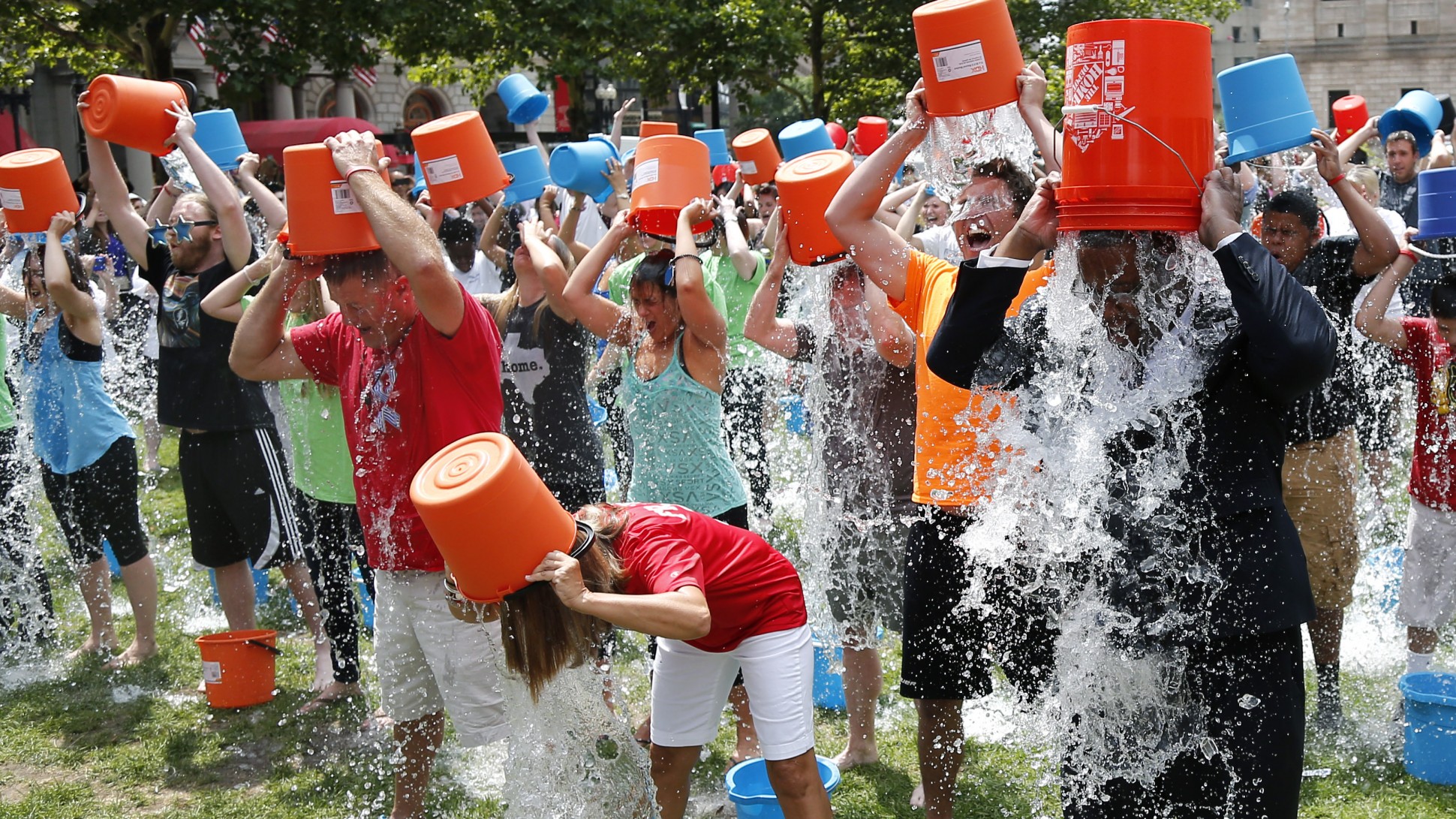
The concept of Slacktivism speaks to Shah and Abraham’s report. On one hand, I think of the ALS ice bucket challenge. This example is maybe even more active than other examples, such as posting petitions or articles with short opinions of support or disagreement. However, the ALS ice bucket challenge had a serious viral impact. The cause received a lot of critique for its failure to really contribute to the actual cause – it did more “talking” than “doing”. But on the other hand, I think of Black Lives Matter. Many of the protests were organized online, through the Facebook group and its members. Here, we can see the slippage between Slacktivism and the use of technology for critically impactful movements.

I agree with Shah and Abraham’s perspective that Digital Natives are agents of change – but only by knowing the affordance of the proposed technology. With the example of the ALS ice bucket challenge, there was the option to donate to the ALS Association. However, because of the way the campaign was composed, it resulted in so many people (through tagging/nominating) just pouring ice over their heads. There is arguable value in bringing the conversation of ALS to the table, but in terms of true activism, the campaign fails to understand the power/affordance of technology.