I chose to explore and break down the Chicana Diasporic website. Since the website is a Scalar site, I was first directed to an introductory page that explained the content of the site. According to the site, the Chicana Diasporic, A Nomadic Journey of the Activist Exiled is a media rich, annotated research hub that highlights a political and ideological journey of the women of the Chicana Caucus of the National Women’s Political Caucus from 1973 to 1979. This research hub defines the Caucus’ history, structure, purpose, and their national impact.
The sources for the project are historical documents: speeches, correspondence, event posters, photographs, and filmed interview clips. Further they note that the materials used are provided from the Chicano Por Mi Raza Memory Collective, which is a digital archive of oral histories, material culture, correspondence, and rare out-of-print publications. They note that this research hub is the first scholarly hub created from this archive.
How it was processed, or organized, is meant to be random and simultaneous. There are several topics or themes that revolve around one element of the Chicana experience. For instance, there is a page named “The Side Eye and La Movida” which discusses and uses photographic material to explain the concept of La Movida. This Chicana concept is further explained on this page, then you are led to Emergence: a scientific phenomenon in connection to Chicana activism. Other pages showcases Chicana poetic works, or historical accounts. Thus, the materials are segmented by a certain Chicana experience or idea. Photographs are used in connection with certain Chicana concepts and oral histories are digitally accessible in written form.
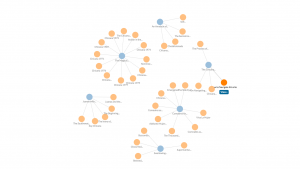
How the project is presented reflects the way it was processed. On the Navigation page, there is a network graph showing 6 six pathways that lead to several secondary pages with varying and diverse themes. The idea is that all these elements of being Chicana are interconnected to each other and there is no static pathway or development, but differing experiences and ideas of what it was to be a Chicana activist. They encourage the visitor to create their own pathway/narrative, rather than explicitly direct the visitor in a particular direction. So, in a way, the materials were strategically process to be disorganized yet interconnected with every other element. So, the project is made to be interactive and presented in a museum collection format. The visitor is free to roam the varying themes and ideas of collection.
Very insightful, Aitana!