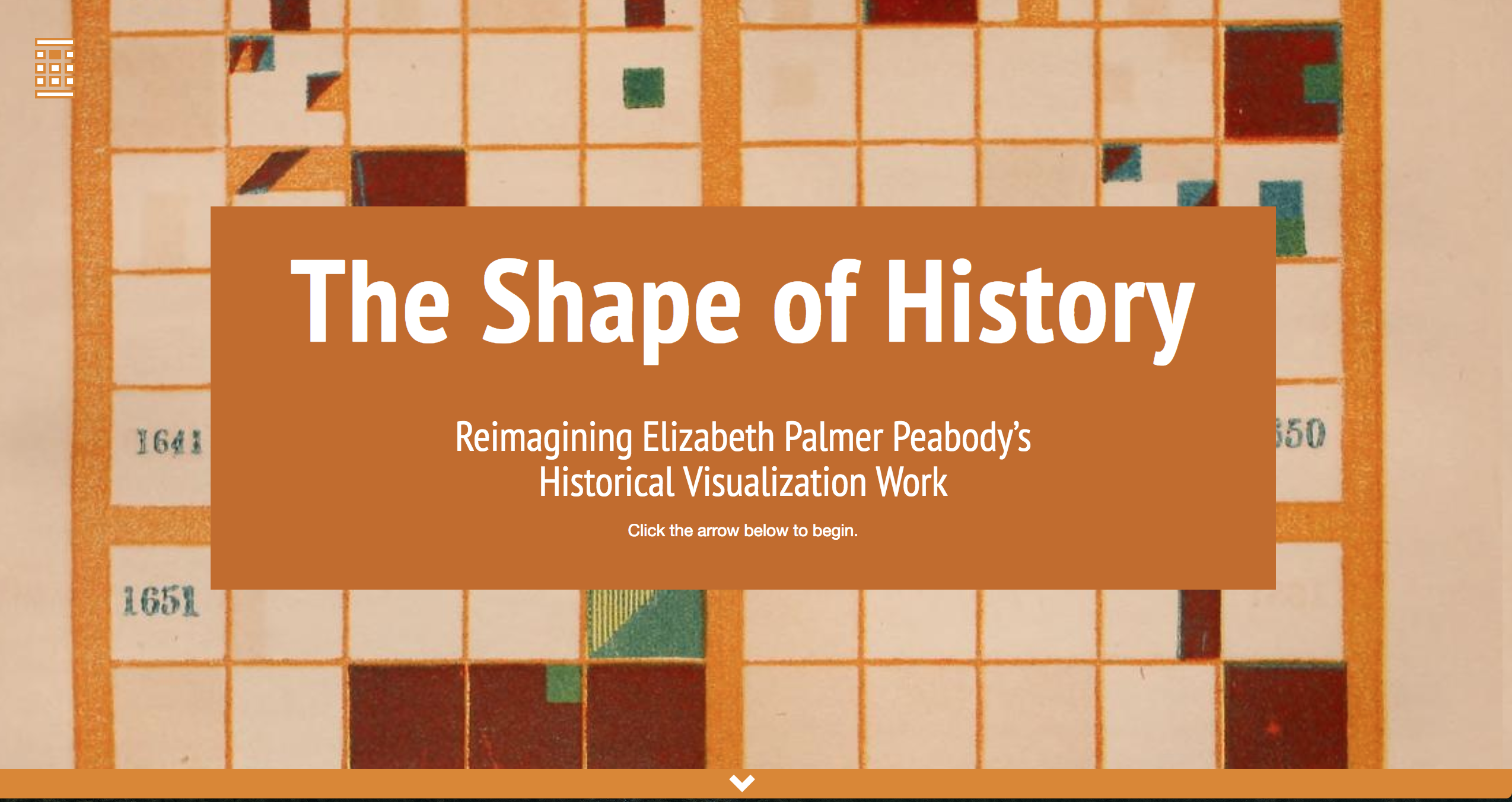
 I chose to reverse engineer a digital humanities project called The Shape of History: Reimagining Elizabeth Palmer Peabody’s Historical Visualization Work. This project was created to visualize and make sense of data collected by Elizabeth Palmer Peabody and turned into grid chard to show the shape of history to the world. Her desire was to appeal to the mind’s eye so that people could understand history in a different way. This project placed events in different squares, creating a grid chart and each square contains different information about events and the countries where they occurred. It is very easy to navigate through the interactive project, and one of the squares gives you a small tutorial and “how it works”.
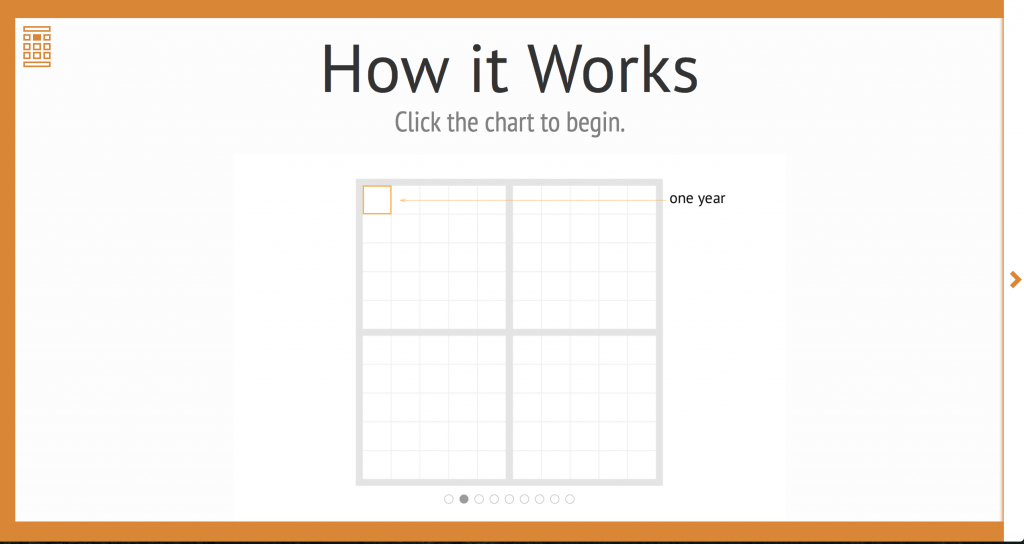 The information and data were gathered from online databases, readings on Peabody and the data she gathered, and open source libraries like D3.js, jQuery, and two.js to provide this project with its sources. This project was created with HTML5, CSS, and Javascript. You can easily navigate through the project by scrolling, clicking on the arrows or simply clicking on the main map to the top-left side of the website and choosing the square you’d like to navigate to. It’s very interactive and some parts allow you to type out and create a box chart.
This project helped visualize the data with the colorful and interactive grid chart because Elizabeth Peabody’s goal was to create a more interesting and creative way of visualizing data.
I also analyzed “The Shape of History” and agree with your experience with the site. I found the project to be very intuitive and self-sufficient in telling a complete story of Elizabeth Palmer’s work. I like how you interpreted the creator’s appeal to the mind’s eye, and I definitely think the project allows users to understand history in a different organizational context that allows for meaningful connections between events. I think Palmer had a difficult topic to organize but did so in such a way that allows us to learn a large mass of information while organizing and compartmentalizing it in a way that is comprehensible.