With David Turnbull ideas on how effective maps are perspectival and suggestive in mind, I chose to look at Locating London’s Past to see how the website uses its London maps. The website overall allows us to look at London from the 18th and 19th century using different DH resources. According to the website, the results are mapped out on a GID compliant version of John Rocque’s 1746 map. It is a representation of the metropolis to the first accurate map of London, to a modern Google Maps.The data provides us records of crime, poor relief, taxation, elections, local administration, plague deaths, and archeological finds on the map. The map is interactive so you can move the yellow person to see different newer street views on the map. It is very interesting because it provides you with a visual representation of the location of previously mentioned events.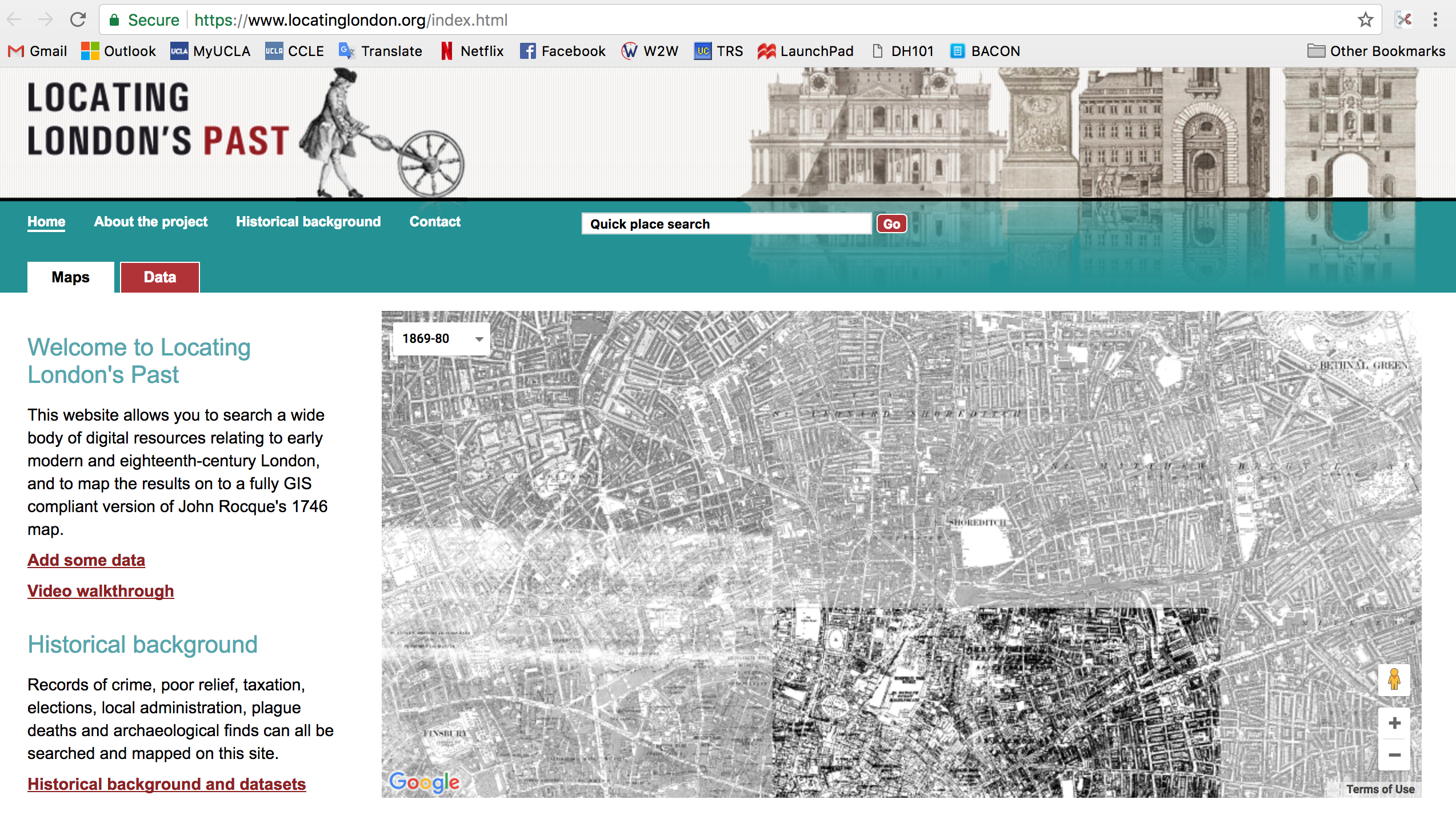
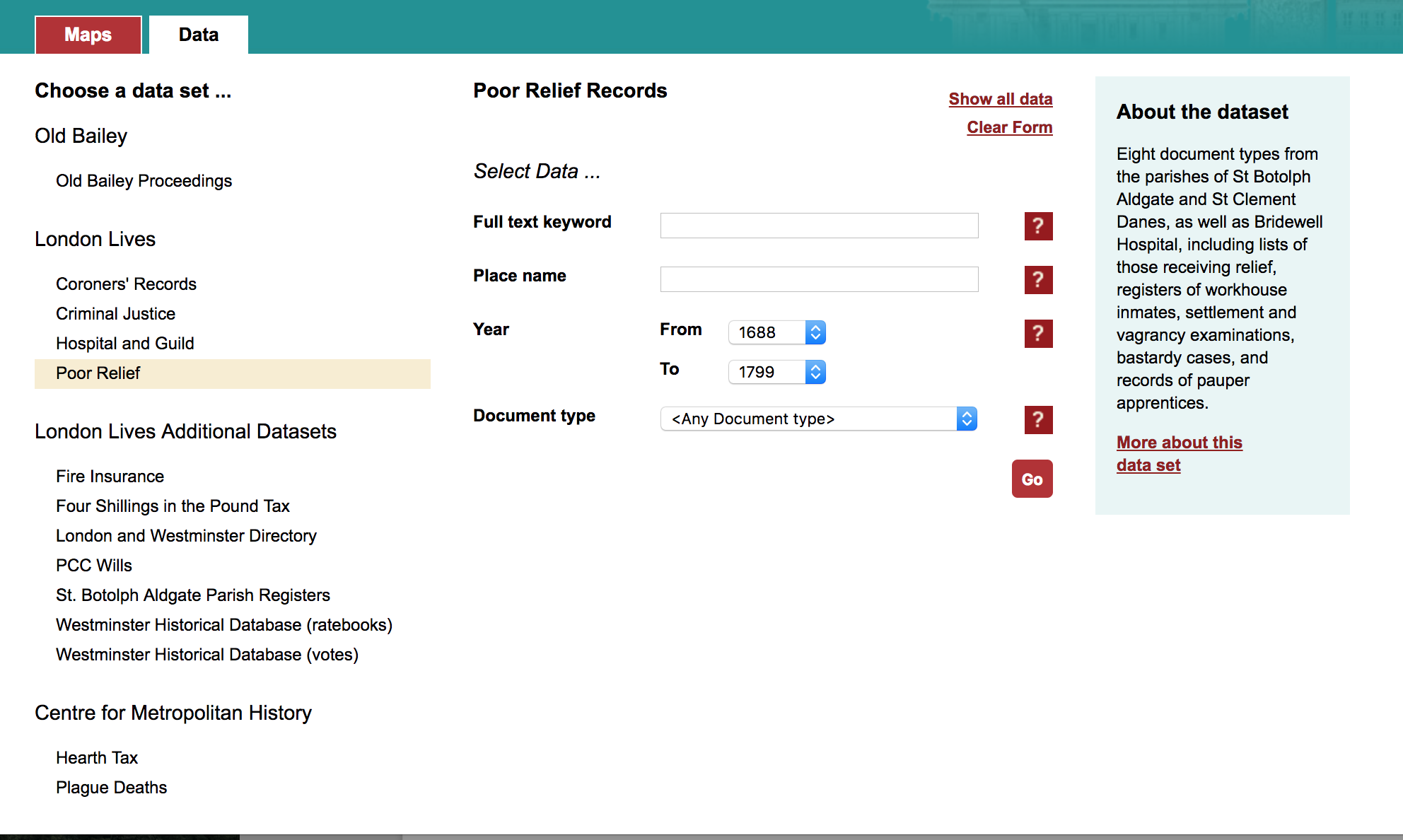 Although the map and its data are informative, I believe it is made for people with high level of education and a great amount of knowledge on London and its past. It provides the user a great deal of London’s history but that is not quite enough to fully understand the map and register it as very useful to someone without a good historical background. I think it would be useful to historians and people studying London’s past because the map creates a connection between the historical events and their geolocation and see how those events have impacted the location by comparing it to different versions of the London map. A different map could bemore focused on explaining London’s past as the user interacts with the map without having to switch out of the map to understand what is going on. Mentioning social and political events that relate parts of London to the data when you hover over a specific part of the map could also help give a better understanding. Becuase the map reveals a great amount of information that is accessible and interactive, the only thing I’d like to see different is for it to be also as informative to a bigger group of people.