The data set I chose is from the 1906 San Francisco Earthquake and Fire Digital Collection, which compiled thousands and thousands of photographs and personal accounts of the historical event. As this was an extremely devastating occurrence, it affected a wide range of people who lived there and so the information in this collection provides a lot of details about how people were impacted and the aftermath of results. Although it was definitely hurt a lot of people’s lifestyles, disrupting businesses and destroying homes, the photographs also document how people were still able to push on, work together, and stay resilient.
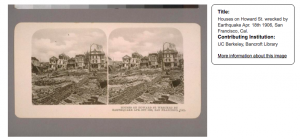
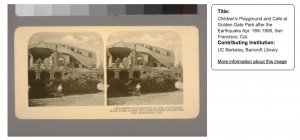
Photographs such as the ones above are able to illustrate the full extent of how terrifying the natural disaster was. From these visual examples, we can partly reconstruct an idea of how scared people must have felt, seeing their favorite places become so warped and damaged. The lack of people in these photographs is also evident of just many groups were disrupted, forcing them to evacuate to somewhere safer. The ensuing silence must have been deafening, and terribly lonely too, for the photographers who still tried to document everything. If one were to just base their narrative off of these photos though, it still would not be able to fully capture the experience of the earthquake and fire compared to, say, interviewing someone who lived through it.
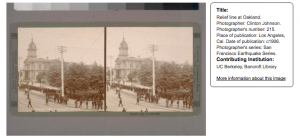
Though the photos tend to show the worst parts of the fire and earthquake, there is also some emphasis on relief efforts and reconstruction afterwards. People tried to help each other through the worst of times, and still look out those less fortunate even though everyone was struggling. The photo below shows one example of those relief lines and ways in which people were doing their best to recover.
I think newspaper articles and more concrete facts and statistics would definitely help improve the narrative constructed from this data set – if there were numbers for the amount of people displaced or the total radius/surface area impacted by the earthquake it can give a better idea of the magnitude of damages. News articles would have been essential in getting out information to people who may have lived farther away, prompting them to come and help with relief efforts (especially with government aid) and not portraying it as such a hopeless situation. So if there were still records of newspapers and diary entries/letters from people back then that could also help with the narrative.
If an event like this happened today, there would also be many recordings posted on the internet and shared through social media, broadcasting even more direct insights/commentary and getting news out faster about the disaster. However, misinformation might also spread too, which is why it’s important to understand all sides of the situation and construct an objective narrative of it before jumping to conclusions.
I really appreciated how you included some examples of the photographs in the collection in your post. I also completely agree that while photographs are very powerful on their own, newspaper articles or letters from those affected would greatly strengthen the narrative constructed from the data set. The point you brought up about misinformation being spread is also extremely accurate. Everyone and anyone can be a reporter, and social media sites like Facebook and Twitter disseminate information at a rapid rate. The recent shooting in Las Vegas is the first thing that pops into my mind when I think about how social media is changing news reporting.
I like that you included visuals to better illustrate the archive and to provide examples for the sources you noticed in the project. Also, it was helpful that you included the background history of the fires and the importance of the archive. I also argued in my blog post and agree with you that having more first person chronicles of the events would better the archives because otherwise there are significant stories that are not included.