During World War II, Japanese-Americans were incarcerated and relocated into internment camps in fear that they would have connections with the Japanese enemy. Activities and entertainment at Heart Mountain Relocation Center Photographs, 1942-1943 is a collection that contains 11 photographic prints that depict seemingly average daily activities that the internment camp inmates partook in.
Looking at the photographs by itself, one may think that life inside the camp wasn’t too bad afterall. There are photographs of smiling girls chopping down a Christmas tree, men playing a game of Goh, calligraphy, dancing, and wrestling – all normal activities that exclude any hint of resentment towards the Japanese.
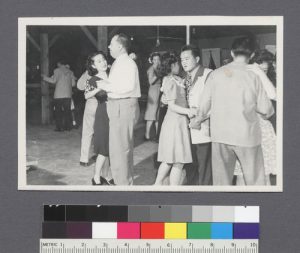
However, knowing the actual history of what went down in Japanese internment camps, it is clear that the photographs presented in the collection are just propaganda to make it appear that the Japanese were still allowed to have their culture while slowing integrating American culture, dismissing the fact that the relocation of Japanese-Americans was one of the most glaring violations of civil rights in history.
From the materials in this collection, I can tell the narrative that the Japanese-Americans worked in the fields for labor but still had the opportunity to relax and have fun, whether it be dancing or playing Goh. However, they still lived an isolated life from the rest of society, living in a large and desolate environment away from the busy cities.
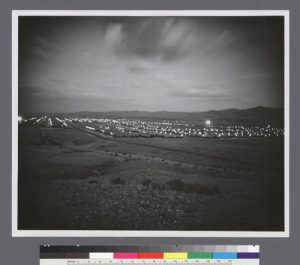
But because the collection only consists of photographs, it is easy to skew the reader’s perception of what actually happened. There are no sources that describe how the people were feeling, what actions the authorities made, what the Japanese-Americans actually did on a daily basis, and what kind of living conditions were present. Primary sources like historical documents and newspapers/articles would be needed to understand what actually happened in the internment camps and how the people were treated. Documentation of interviews, personal journals, and recordings would also be the most direct way to understand the sentiments of the people at the time. Secondary sources like textbooks and scholarly journals can help teach us about the general occurrences.
Variation in a collection is key to painting the most accurate description of an event. Given that this collection only consists of photographs taken by the internment camp authorities, it is easy to only take on the perspective of them, not the incarcerated Japanese-Americans.
This is a lovely little essay. You do a really nice job contextualizing the photographs and explaining both their shortcomings and their historical value.