During WWII, Japanese-Americans were relocated into internment camps across the US in the fear of local retaliations. Activities and entertainment at Heart Mountain Relocation Center Photographs, 1942-1943 collection captures some of the cultural events that took place in the internment camp.
But do these 11 photographs accurately represent the experiences of the Japanese-Americans?
First, let’s explore what this collection is about. Most of these photographs were taken by Tom Parker, who have taken pictures in other internment camps as well. It seems like Parker has visited one camp to another to record the daily life of the Japanese-Americans. Surprisingly, unlike the typical image of an internment camp, the pictures in this collection depict festivities – including dancing, sumo-wrestling, and theatrical folklore. These pictures tell us that the newly formed communities at this camps were not devastated, but rather enjoying their stay.
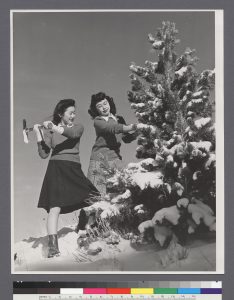
Japanese culture was clearly not forbidden, and there was no resentment towards America as they continued to indulge in American culture. The emotions expressed in these pictures go against our images of internment camps – but which is the real story?
Without the context or the narratives behind these pictures, it is hard to deduce what has happened during the internment days. Pictures only capture the exact moments, never the story that comes with them. If we were to base our opinions on these pictures alone, then we can never understand why the government awarded restitution payments to the camp survivors. Starting from elementary, all the way up to college, we learn that relocation of Japanese-Americans has been of the worst violations of civil rights; however these pictures only capture festival and holidays. Daily schedule, weather condition, ration portion, quality of life, social tension, personal opinion – all of these are missing from this collection. Without these stories, these pictures are just propaganda that try to conceal the truth about Heart Mountain Relocation Center.
In order to extrapolate the whole narrative, we need acquire additional sources. Primary sources such as personal interviews with camp survivors, materials used during the internment, or newspapers and articles that regard Japanese-American can all help us explain the stories at that occurred at these relocation centers, and allow us to relive those moments. Secondary sources such as textbooks, lectures, open editorials, and others educate us and help us shape our views and opinions on these pictures.
Accurate recollections are necessary to prevent unnecessary silence. If this collection of Heart Mountain Relocation Center was presented by itself, it would create false images of the internment camp experiences that have negatively impacted the Japanese-American communities. I believe that we should make an effort to preserve our own history for future generations.