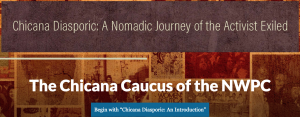
Image 1: First page that appears on the website.
I chose to reverse engineer the Chicana Diasporic project. This project serves to educate the public about the Chicana Caucus of the national Women’s Political Caucus that existed from 1973 to 1979. The author, Linda Garcia Merchant, describes the journey as an ideological diaspora, which is defined as the journey of people from a native space to a foreign space that results in exile from the original space. The Chicana Caucus exists at the intersection of feminism and Chicano power. Prior to 1973, there was no space for cultural and political ideas of Chicano women. The Caucus is the result of the expulsion from two ideological communities, which are the Chicano movement, and the white feminist movement.
The sources used in this project are the result of an eight-year recovery project called the Chicana Por Mi Raza Digital Memory Collective. The sources include speeches, correspondence, photographs, filmed interview clips, event posters, an introductory narrative, and a timeline that defines the Caucus’s history, structure and purpose, and the national impact on the 1970s second wave of feminism.
The processing of the sources entailed scanning archives and collecting and transcribing oral histories. Video interviews and interview transcriptions from the Chicana Por Mi Raza Digital Memory Collective were used to createa narrative. In addition, the photographs and event posters from Chicana Por Mi Raza Digital Memory Collective were reposted on the Chicana Diasporic project by downloading the images and reposting them. Initially, these images didn’t exist digitally, and had to be scanned and uploaded.
The presentation of the sources is incredibly unique, and is self-identified as a “Scalar research hub.” Scalar is a Chicana concept, where every element is connected to every other element, and all of the elements coexist on the site at once. There are 6 separate webs displayed, and each web has a center, which displays the title of the web. There are branches connected to the center, each of which details a different aspect of the center topic. For example, one of the centers is titled, “Juanas with Beer and Curses.” When you click on this circle, it displays a “view” button, which, when pressed on, will lead you to a title page for this topic. A button titled “Begin with ‘Juanas and the Chicano Movement'” appears at the bottom of this page,and when pressed, it leads you to one of the branches of the web titled, “Juanas and the Chicano Movement.” At the bottom of this page, another button appears, which will lead you to yet another branch of this topic. This continue until you have clicked on all of the branches, at which point a button which says, “end path and continue to An Amateur Love,” is displayed. This cycle is repeated with each web, and when you finish viewing each web, a button asking you to begin viewing the next web one appears, thus creating a cyclical presentation.
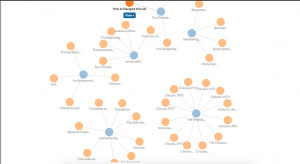
Image 2: Screen capture of the interactive webs displayed on the website.
I appreciated you describing how the website worked. Upon first glance, many of these project sites seem complex and confusing to navigate; I always feel as if I’ll miss a section, and it is easy to feel lost and overwhelmed with information. The way you explained the project and how you presented it part by part, made me feel more at ease with visiting and navigating it. Thank you!