Course blog

Week 5: Moodstats, a Realist Data Visualization

moodstats06

moodstats07

moodstats05

http://www.cubancouncil.com/work/project/moodstats

Moodstats is a program made by Toke Nygaard and Per Jørgensen in 2000. It’s a personal diary where you can record notes on the day’s events and the changes in your mood, creativity, stress, and three more customizable variables. The data can be displayed either as a line graph or a stacked column chart.

The data visualizations that this application produces are good examples of what Johanna Drucker would characterize as an observer-independent, realist visualization of qualitative experiences. It is analogous to her example of a “standard map with a nuanced symbol set,” except the symbol set isn’t even nuanced. The programmers did not see data as capta when they made this program, and the structure of the visualizations is not based on interpretive, co-dependent relations of observer and phenomena. Each variable is rated on a scale from 1-10, a reductivist approach that eliminates uncertainty and ambiguity, and the axis for time is linear and homogenous. The parametrization of data is scientific, and the graphic design reinforces the cuteness of how silly it is to represent your mood with such precision and certainty. Still, the rhetoric of objectivity is attractive when considering the possibility of finding patterns in your mood and identifying triggers to mood swings. Sometimes you want a detached observer or method of observation to get a more authoritative perspective on emotional matters.

Looking at the experimental graphical expressions of interpretation in Drucker’s article, it is clear that they would be much more effective at representing a person’s daily mood changes. Crises and their self-conscious interpretation would be more apparent and revealing if they were shown “as a factor of X.” The subjective experience of time could also be represented by expanding, contracting, and warping the timeline. However, maybe it would be hard for a computer program to make graphical expressions automatically. It seems like producing graphical expressions involves a lot more thought and work than regular graphs and charts (which isn’t to say that data visualizations are easy to make). The word “expression” implies human subjectivity, and the visualizations in the article look sophisticated and for lack of another term, artistic. Can graphical expressions be made in about as practical a manner as realist data visualizations?

At the end of her article, Drucker refers to Edward Tufte’s book “The Visual Display of Quantitative Information.” She contrasts that model of information design against the humanities approach to graphical expression that she proposes. Just to put this program into context, Tufte’s book was originally published in 1983, and it become popular at the turn of the century. Maybe the design of Moodstats would have been different if it was made after Drucker’s article was published.

Week 5: Program Relationships


Logic Pro X

Although relatively short, I found the “With Criminal Intent” article to still reveal significant information.  Put briefly, the article discusses a way of datamining through the use of three online resources: the Old Bailey Online, Zotero and TAPoR.  Together, the narration uses the programs to research various data pertaining to criminal cases to uncover particular information.  I did not find the overall process to be all that intriguing but I did find the combination of several programs to reach a goal to be very fascinating.  Using the three resources in conjunction not only allowed for a denser and more thorough research, but expanded the capabilities that one could do alone.

Often, there are various items or programs that ultimately serve the same purpose but vary in their strengths and weaknesses.  We have to then weigh the pros and cons of each product and commit to the one we find best suited.  In the case provided from the article, there is unification between the programs that allows for cohabitation and a process that efficiently goes beyond the scope of each individually.

Similarly, this example is very similar to the Digital Audio Workstations (DAWs) used for audio engineering.  As mentioned, certain programs may have aspects that the others do not offer or allow for secondary purposes that are not capable through another program.  In the case of DAWs, a method known as Rewire allows there to be communication between different software. For example, by using Rewire, an audio engineer can use Logic Pro X with Live (both DAWs) and increase functionality.  Through this process, a wide array of musical instruments and mixing capabilities become available along with an efficient workflow.

While others may not find my example to be relatable or significant, the mere fact that two separate programs can be bridged together to increase efficiency and expand upon their individual capabilities should be.  Furthermore, allowing for a proficient linkage between programs may lead to greater and speedier developments.  As we continue to gravitate towards a technology-rich world, cohesion between programs will become even more important to promote a sense of seamlessness.


Sources:

1. http://criminalintent.org/%20%20getting-started/

Week 5: Why Categorize by Race?

what race are you?

http://www.sodahead.com/living/what-race-are-you/question-1919271/?link=ibaf&q=&esrc=s

Race is a classification system that has affected many people simply because of their skin color or country of decent. “Invisible Australians” states that early twentieth century Australia identified itself as a white man’s country and enacted discriminatory laws and policies against the non-European people that lived there. These people were basically denied their place as Australians.

“The Real Faces of White Australia” shows faces of men of non-European decent, people who lived in Australia but faced discrimination because of their skin color. A link is provided below and if you click on one of the portraits, you will find a record stating that that individual was forced to leave Australia for a certain number of years (most said three) and if they returned before that time finished, they would face consequences. Could you imagine being forced to leave the country you call home just because of the way you look or your decent? Even in recent years, people here face forms of discrimination based on race.

I intern at a psychiatrist’s office and one of the young ladies that works there is mixed Black and Guatemalan so as a child, she hated answering what gender she was when it came to school forms because of one time when she marked herself as Hispanic, resulting in the school placing her in a class for children who spoke English as a second language. She ended up having to take a test to prove that she could speak English fluently. Her school functioned with the notion that race defined whether she spoke English fluently or not.

People of mixed decent are not as uncommon as they were ten years ago making it seem like the notion of race is outdated, and for the most part, it is except for when it comes to a person’s health. Categorization of Humans in Biomedical Research: Gene, Race, and Disease says that “The human population is not homogeneous in terms of risk of disease. Indeed, it is probably the case that every human being has a uniquely defined risk, based on his/her inherited (genetic) constitution…” In this sense, it is important to categorize people based on their decent because of health risks that may have been passed down by an allele. Categorization does have its negatives because of the social impacts that it can have on a group of individuals, but it does have its use and purpose for protecting them as well.

Work Cited

http://invisibleaustralians.org/

http://invisibleaustralians.org/faces/

http://www.biomedcentral.com/content/pdf/gb-2002-3-7-comment2007.pdfThat

Stealing Methods of Graphical Expression

Reading through “Humanities Approaches to Graphical Display” I was slightly taken aback by the thought that humanities should develop their own methods of display and analyzing graphics. While it would be great to have designs built with digital humanities in mind, the role of a researcher is not to design technology but to research. The presence of the technology is a bonus that allows us to further explore information we already have and present it in a fashion the public is already familiar with. An example I thought of would be methods of survey in archaeology. Almost every method was developed for another purpose be it geology, military, or geography. GIS, metal detectors, GPR (Ground Penetrating Radar) and others were never meant to be used for archaeology and yet they are adaptable to our field (https://www.utexas.edu/courses/denbow/labs/survey2.htm.) Archaeologists use these technologies but do not spend time inventing materials of their own; that is the job of computer scientists and statisticians.
Another possible problem with creating digital visualizations of our own is that the public user may not be as familiar with the format as they are with others. The current designs in existence take marketing and public interest into account more often than do researchers designing tools for themselves. The point is, any visualization tool designed for digital humanities scholars will never be truly meant for everyday users.
Academia is essentially nothing but borrowed ideas manipulated to fit our study and improved upon. I would argue that current methods of visualization are still valuable as they present a basis from which to work off of and possibly improve.
“Humanistic methods are counter to the idea of reliably repeatable experiments or standard metrics that assume observer independent phenomena.” This definition of the humanities struck me as rather odd. While the author is arguing that the humanities are not the sciences and should be kept as human as possible, I would like to point out the irony of putting these human concepts in computers. What is digital humanities but the combination of the humanities and science? Experimental science also lends validity to concepts brought up through theories. Visualization and data analysis are scientific approaches to understanding humanistic data. It would seem rather possessive for the humanities to remain only with the social scientists. We have to admit that there is a possibility of realizing new ideas through the application of scientific methods. Research should not be limited to one area or department but can be combined with other disciplines entirely different from our own.

Data as Capta: A Post Processual Approach

Johanna Drucker, “Humanities Approaches to Graphical Display,” Digital Humanities Quarterly5, no. 1 (2011)

New Stone Age TSA

http://structuralarchaeology.blogspot.com/2011/11/archaeo-toons-secrets-of-stonehenge.html


Johanna Drucker’s article focuses on the concept of data as capta. She argues that because all data is taken through observation and then interpreted, none of it is “given as a natural representation of pre-existing fact.” In other words, that knowledge is by default constructed, simply based on our interactions with it. She argues effectively that the traditional data visualization is a tricky and often murky issue. The traditional charts and graphs which present information so clearly and succinctly are often taken at face value as knowledge, when in fact so many decisions and assumptions are included in the visualization. She gives the example of amounts of men and women in certain countries at a certain time. The resultant bar chart is clear, and one can easily make the snap judgement that these are the final statistics pertaining to this question. However, as Drucker delves deeper into the prior assumptions and decisions made by the visualizer, the picture becomes much less clear. She begins with a discussion of the non-binary nature of gender, as well as how socio-cultural norms can effect these statistics – such as when a woman is only socially considered to be (and therefore recorded statistically as) a woman once she is of reproductive age. She goes on to consider how the interpreters have dealt with (or not dealt with) populations crossing national boundaries, skewing the entity of the “nation” represented on the graph, or transient populations which could skew the temporal component. She notes that while the traditional graphs are extremely useful, especially in the case of determining the location of a cholera outbreak, we have to be careful with the information we assume to be knowledge. It may be more useful to humanists to create more complex, messy visualizations that treat our prior assumptions and interpretations of the data up front.

A very similar debate can be found in the field of archaeological theory. In the 1960s, the processual school rose to dominance. This type of theory stresses scientific methods of hypothesis to create general, systems-based explanations for important cross-cultural themes such as the emergence of the state. These incredibly systematic solutions were meant to be diagnostic regardless of the context, and generally removed any focus on the specific culture or human agency. In the late 70’s and 80’s, a reactionary school called postprocessualism arose which was focused much more acutely on individual agency and were incredibly context specific in their analysis. These scholars, in much the same tone as all data being capta, believed that the material record could not be treated outside of its specific context and social interpretation.

Week 5: Avoiding Assumptions

Screen Shot 2014-10-31 at 7.21.53 PM    Screen Shot 2014-10-31 at 7.28.18 PM

A theme that resonated with me from this week’s readings was information loss, both through miscommunication between reader and content, and through lack of a voice in history translating to lack of a voice in documentation – which can also be switched to say that a lack of voice in documentation leads to an assumed lack of voice in history. I thought it was important that Drucker mentioned in “Humanities Approaches to Graphical Display,” that “the history of knowledge is the history of forms of expression of knowledge.” This to me meant that history is only as much as how it was documented and interpreted, and the miscommunications through information loss become very dangerous in this sense. This week we’ve been learning about different data visualization techniques to use in our Final Project, and these readings emphasize the importance of being smart about our techniques and tools. The first step is our data – choosing what to gather, how to gather it, then gathering it, and then thinking about how the reasoning behind why we gathered it can translate into knowledge through a visualization. Our data for our project is metadata about the most popular LA food trucks, looking at categories such as common words, food types, ingredients, names, and prices. We want to take this metadata, visualize it, and then use it to prove and analyze our findings about success and trends of food trucks. One of the first steps of visualizing could be done through a word cloud that makes common words bigger, and then links them to words that they are most commonly paired with. This would give insight into the main items or catchphrases that food trucks are using the drive business, and would also give insight into what consumers are consuming the most of. From here, I would take the most common ones and do further analysis on them, in order to get specific, accurate, detailed data. This could be a timeline, incorporating time frames into the visualization to show the rise of trucks and when the trends proved in the word cloud were realized. I think two different types of visualizations would allow for flexibility and accuracy with our data. It would also encourage the readers to interact with the data more and figure out how the two relate to one another. Of course, this could be a problem in itself. To make sure the readers don’t assume too much, our graphs would have short descriptions for accuracy, and then a further detailed “about” paragraph. In addition, we would address any data that doesn’t quite fit into the map. For example, uncertainties. In addition to addressing visualizations, Trucker’s article also points out some faults with “data.” Data assumes that it is a black and white fact that can be plotted onto a visualization, when in reality there are many uncertain pieces of data that don’t quite fit in. In order to not have to omit these pieces of data – which would result in the reader thinking they just don’t exist – a visualization tool has to be created with these humanities issues in mind. How our tool expresses the data, defines it. The representation of knowledge is just as important as the knowledge itself.

Week 5: Mistakes are Inevitable in DH

When I read the description behind the website The Real Face of White Australia, it struck me how it explained the shortcomings of their use of a face detection script. While they have tried to weed out most of the inconsistencies, faces of white people have managed to escape their notice. I was eager to see if I could spot one, and sure enough, after a few minutes of scrolling and exploring, I came across a Customs documentation portrait of a white man named Tom Solomon Toby. Even research projects of this extent have deficiencies in their data visualization. The problem does not lie with the data itself, it has to do with the computer’s processing of the data. Like we have learned in class, the world of the humanities is too complex to be completely and fully processed by that of a computer, and this serves as an example of how this issue can transfer into problems with Digital Humanities projects.

This reminded me of what Francesca warned us about in lab on Friday. The data visualization programs we learned about (Many Eyes, Tableau, and Palladio) may not correctly process our data. Therefore, we must be on the lookout for inconsistencies between our data and its visualization, and be prepared to either find a way around it or explain why the irregularities have occurred.

The inconsistencies between an item search on a website and the wide variety of products that come up serve as an example of discrepancies between what is listed in the database and what is represented in the visualization of that data. For example, on Etsy, an online marketplace for independent merchants, when one searches for a “computer case,” many different items pop up. You can see the results for this search here: https://www.etsy.com/search?q=computer%20case&ref=auto1

In addition to actual laptop cases; laptop stickers, messenger bags, cosmetic bags, travel tags, and even a faux-crocodile handbag came up as search results. There is nothing wrong with Etsy’s database; it is the means of processing this data with a search engine to visualize it on its website where problems come into existence. Etsy can use a controlled vocabulary to better streamline the representation of their database with search engines; minimizing the use of ambiguous terms like “computer case” and thus streamlining their searching process. Again, computers process things in a very strategic way that leaves out the potential of processing people’s tendencies for multiple vocabularies and complex ideas.


Law and the Human Condition- How to Represent and Extrapolate Controversial Data?

http://demonstrations.wolfram.com/TheAppealsCourtParadox/

http://demonstrations.wolfram.com/ThePersuasionEffectATraditionalTwoStageJuryModel/

A comment raised in the Data+ Design article that really stuck with me was the notion that “data is around us and always been” and that “only recently have we had the technology to efficiently surface these hidden numbers, leading to greater insight into our human condition.” Given that the human condition features what is perceived to be an unalterable part of humanity that is tied to our tendency for error and fallibility, it is interesting to imagine instances where we might conceivably quantify such intangible concepts- let alone provide insight into such a topic. This standpoint is notable especially given the general aversion of the humanities toward the need to quantify everything in the world and see it in black and white.

This reminded me of the computational knowledge system Wolfram Alpha, which “takes the world’s facts and data” and computes it across a range of topics”. I went to their demonstrations website (where people can showcase the projects they have been working on), and found an interesting collection of projects, including a fair amount in the legal field. These include the projects linked above- The Appeals Court Paradox, in particular, takes into account the probability that each judge votes correctly, and factors in whether the judge votes independently, to determine the likelihood of a “correct” ruling being delivered.

The projects demonstrate a more pressing/ overarching issue in legal rulings and procedure, where judges’ bias, however reprehensible, is first difficult to identify and allege, and seems to be an inescapable part of the decision making process. Especially in the Hobby Lobby case and recent decisions that have been split 5-4 or 4-5, we now understand decisions also as a product of judges’ personal ideology or political affliation. This has resulted in a notable drop in confidence of the public toward the supposed objectivity that the judicial system is expected to deliver, such that the ruling system seems more a result of chance, rather than law.

Ignoring the assumptions made in deriving any such numbers for the initial calculation, the Wolfram Alpha project therefore seems capable of reconciling the need for grey areas/ in between spaces (as opposed to black and white) and statistics by calculating probability.

Then again, there seems to be something unsettling about basing the present on the past-gathering data from past occurences and extrapolating that to predict the future. Problems also arise as the data set of choice is conceptually fuzzy- what is the “correct” decision in relation to the law? If the notion of correctness is associated to our personal beliefs, how then might we represent that in an empirical data set?

At present, although data can be useful in representing non-contentious information, it remains to be seen whether it can assist us in illuminating controversial topics in the realm of ethics and law, both of which are underpinned by the human condition.

The Function(s) of Clothing

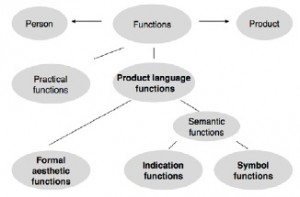
Product Theory Image


Since when did a coat become more than just a coat?  When scholars and researchers begin to unpack and explore fields of nascent inquiry, we are presented with information seen through a different lens.

The nexus described above highlights the distinctions of functions of an article of clothing.  The function of a product, such as a coat, is twofold, according to Dagmar Steffen, practical functions–for warmth, protection from rain, chemicals, etc–and product language functions–style, aesthetics, fashion statements, etc.  What Steffen explores and explains is the function of language and how we interpret  categories.  A coat falls under the broad category of clothing.  Under the ambiguous, yet somewhat specific category, we fall prey to losing traction as we know coats could also be categorized under particular seasonal lines: fall, winter, spring, and summer–nominal data.  Michael Castello clearly simplifies the ways in which data collection, databases, and visualizations are conceptualized and visualized.  The free online “guide” lays out the “how-tos” to the “ta-da, we’re done.”  What he explains with an analogy to a supermarket and food, is how we measure data with categories such as nominal, ordinal, interval, and ratio.  I mentioned nominal earlier when I said fashion lines by seasons.  The seasons are nominal data.

ch02-01-percent-basket


Similar to the grocery food categories, the coats under each season could be calculated as percentages and not averages to gives us a representation.

Why do we visualize data?

Here’s the background: I am an art history major whose hobby is to collect interior design and craft project pins on Pinterest, as well as a marketing and branding enthusiast who holds certificates in market research and marketing with concentration in social media and web analytics. I am highly design-and-user experience oriented and analytical, and I love to teach and explain the concepts in a visual manner. That has led me to become an aspiring brand designer and a creative director whose forte is in strategic and analytical background. That being said, I am not a designer, or at least yet. Working as a marketing strategist and brand manager in a number of startups with great ideas and lack of manpower, I’ve taught myself how to use Photoshop, Illustrator, InDesign, Muse, Final Cut Pro, iMovie, and even Microsoft Office Publisher to create images and concepts that are vivid in my head into tangible works. It takes a great deal of time and frustration for a strategist to deal with highly detail-oriented design works, and that’s the reason Data + Design grabbed my attention like no other.


The concept of learning data visualization is fascinating. With an ever-growing amount of data, there is a necessity to fill the gap between collecting and analyzing the data and explaining and creating results with it. As complicated as data can be, backed with statistical sources full of numbers and graphs, the most efficient way to explain it has been visualization of the data and information such as infographics and interactive web design. Based on my personal experiences, the communication gap between data collectors and graphic designers is often too large, leaving both parties in assurance that they belong in the opposite poles of the world, lost in translation. Data + Design in collaboration with Infoactive (whose landing page had an error and I couldn’t conduct a research on) provides simple steps of collecting and analyzing data and building a visual summary of it, which will be a quintessential guide to any data scientists or designers alike; and its format as an open source site and the growing size of the community only proves the need for the combination of data and visual sources in today’s world.


Reference:

Data + Design: A Simple Introduction to Preparing and Visualizing Information