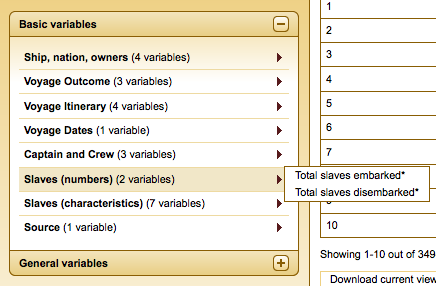
In Companion to Digital Humanities, Stephen Ramsay asserts that: “The design of [databases] has been a mainstay of humanistic endeavor for centuries; the seeds of the modern computerized database being fully evident in the many text-based taxonomies and indexing systems which have been developed since the Middle Ages.” This analysis, coupled with Emory University’s Trans-Atlantic Slave Trade Database got me thinking about the origins of my own family in California, and ultimately the United States.
Back in 2001, I took a trip to New York with my mom and dad on vacation. Unsurprisingly, we visited Ellis Island in hopes of discovering our long-lost relatives names on one of the ship’s manifests. If my memory serves correctly, I was able to find several passengers on my father’s side that emigrated from Ireland during the fin de siècle era.
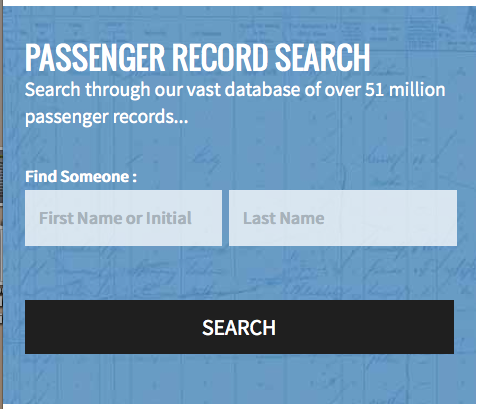
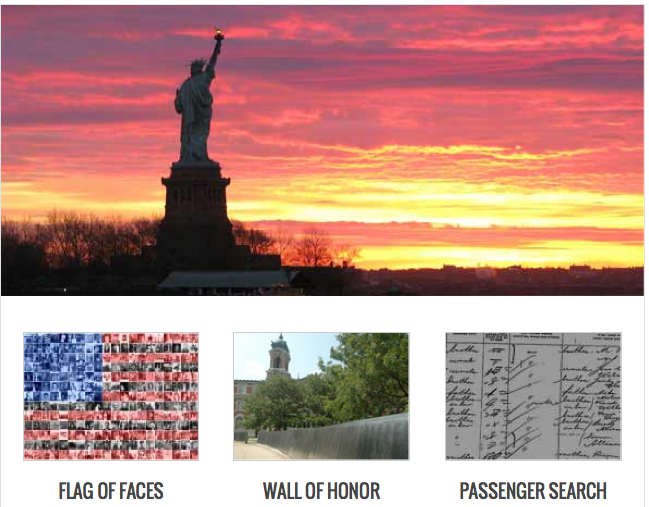
After exploring the Emory database this weekend, I got curious not so much about the content of registry at Ellis Island, but how this data is displayed online today in comparison with that of the Trans-Atlantic Slave Trade Database. I registered myself as a user at http://www.libertyellisfoundation.org/. Obviously both databases seek to tell the story of demographic historical shifts, however the presentation of information on both reflects the starkly different story told by the journeys reflected in the data. The Ellis Island database projects color, imagery and an aura of excitement through its user interface, while the Emory database limits photos and presents African passengers in a much less human light than the stories highlighted in the former.
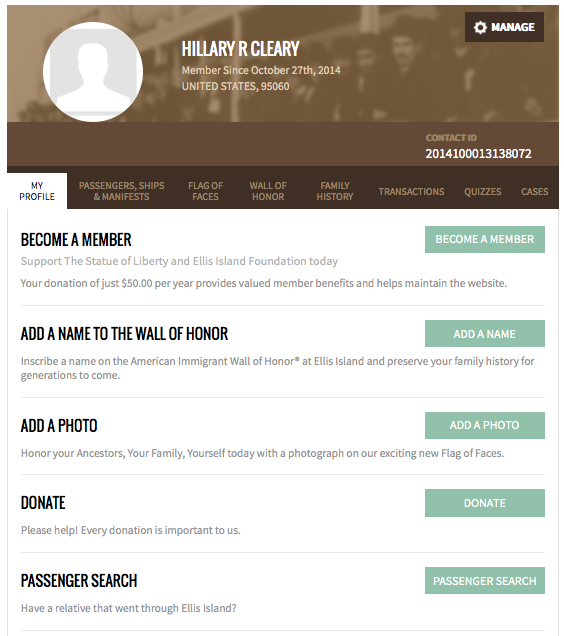
After I signed up, the Ellis Island database asked me to “Become a Member” by contributing just $50.00 per year, and adding a photo in order to “Honor [my] Ancestors, [my] Family and [myself].” The rhetoric of honoring my family and the very personal connection the database attempts to make with its audience contrasts starkly with that of the Emory database.
The very function of searching someone by name, a crucial component of many immigrant’s stories and identities who entered the U.S. through Ellis Island during the early 20th century is not even an option within the Trans-Atlantic Slave Trade Database. In the basic Ellis Island search there isn’t even another input field other than first name, initial or last name! I find it fascinating how today we can access and view information through digital databases that still overtly reflect the historical period or population on which they are based.