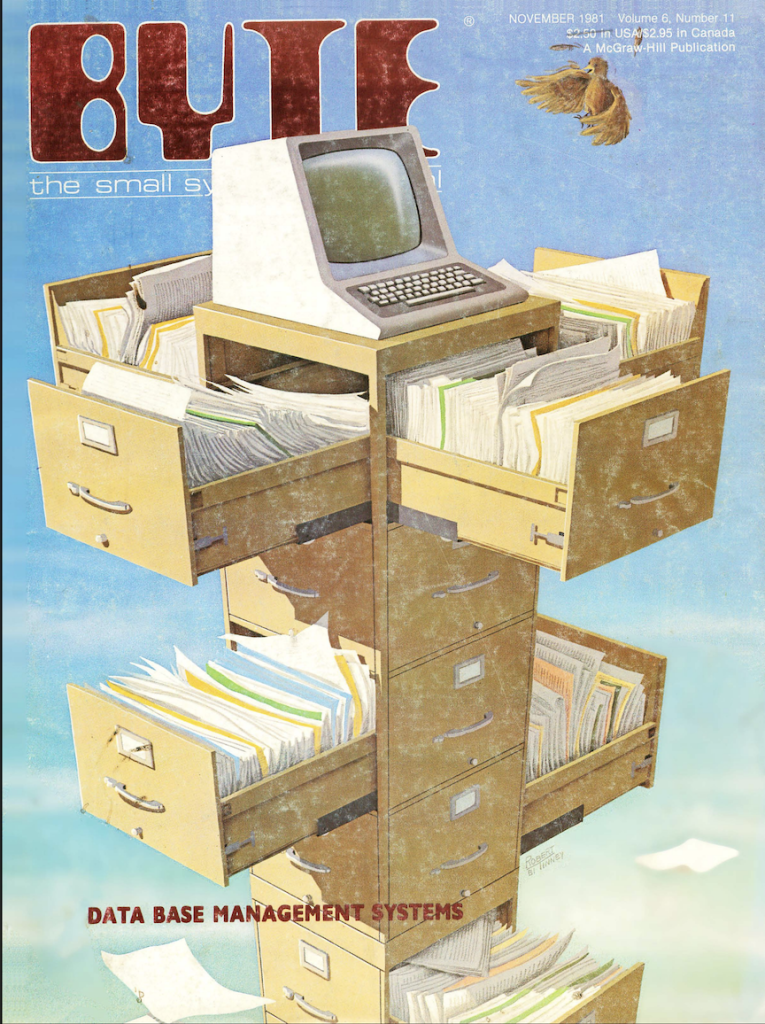
In recent years, we’ve seen an explosion of important scholarship about data: the units of information that increasingly affect every aspect of our lives. But what about the database: the system that stores that data?
After all, the particularities of a database make a difference in how information is connected, how it’s recorded, how it can be retrieved—even the physical space it takes up. That has to matter, right? But how does it matter? How do we think through the effects of data storage and organization on history, politics, and culture (and vice versa)? We need some theory!
In this class, we’ll read chronologically, from the paper ledger to the massive, cloud-optimized databases of today. We’ll pay particular attention to the assumptions database designers made about how the world works, and about how to connect information to serve that vision.
We’ll also talk about how historians can analyze technical documents, software manuals, sales brochures, and trade publications—even if they’re initially intimidated by the technical language. As social scientists and humanists, we have so much insight to bring to this discussion. First, though, we need to figure out how to enter it!