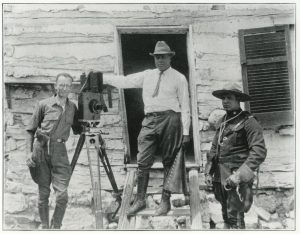
I chose to deconstruct the project concerning “Early African American Film“. This project focuses on the history of silent race films from the period of 1909 to 1930 that were primarily intended for African American audiences.
The website starts with a slideshow and a link that says “click to explore” which sets the tone early on as there are snapshots of major components of the website. The user is then able to explore the website through the table of contents and quickly gain an overview of the website’s intent and purpose by selecting on “What is Race Film?”. This option is interesting as it allows the reader to choose whether to explore the history first or just learn the definition of race film. The options are heavily aided by a variety of rich sources that are hyperlinked into their descriptions. This is helpful as it makes their presentation more interactive as one can quickly watch “Birth Of A Nation” or further read up on a concept that they are interested in, as exemplified by them hyperlinking phrases or vocabulary. We soon learn that the purpose of the project is to not only enrich people with knowledge of early African American films but to also create a database that consists of a variety of primary and secondary sources.
The database they created contains specific information regarding the people and production companies for these early race films such as titles, dates, genres, etc. They relayed this information through a display called Airtable that is easy to navigate and allows one to make specific detailed search options. Furthermore, they even included a data dictionary that further breaks down the specifics by people, films, and sources and allows one to feasibly cite the data. This is important as it further develops the user-friendliness of the website while also allowing for accurate credibility.
The website also provides an abundant amount of background on how they sorted and researched the data regarding films, people, and production companies. These data entries consists of bar graphs, network diagrams, and interactive maps. Specifically, the “explore the people” option allows the reader to be informed on how to create their own network diagram which is helpful as it explains the displays that are less well-known. The “explore the production companies” option also includes a geographical map that shows the location of the companies displaying the idea that most of these films are centered around the eastern and southern regions.
Lastly, the website does a thorough job of listing all the sources they used by not only citing the source but by also providing a description. The user-friendliness of the website is further exemplified by the tutorial link that shows how to make maps and interact with the data.
I liked the thoroughness off this post. The step-by-step walkthrough of the project was really helpful, and created a good starting point. I also enjoyed how you added your own insights each step of the way, such as when you found it interesting that there are different approaches users can take to the project. You mention how the project is user-friendly, and I think it’s great that you did that. UX is an important factor in digital projects, and should not be overlooked. Overall, this was a really good post.
I like how this post describes the many different ways in which the data is represented and can be interacted with on this website. The different representations for the different topics related to the films allows for a better understanding of early African American film as a whole. I also like how you mentioned the importance of hyperlinking information, and how this allows for the user to delve further into the subject matter.