One of my most memorable museum experiences was at the Van Gogh Museum in Amsterdam. Initially, I knew very little about the artist let alone his artwork. By the time I reached the last collection, however, my heart was aching as I witnessed Van Gogh’s beautifully depicted agony strewn into his final paintings. I believe this is precisely what the museum envisions for its visitor experience: it places visitors in his shoes as they learn to appreciate the fullness of his artwork and visualize toiling through the intense struggles and emotions he faced during his life.
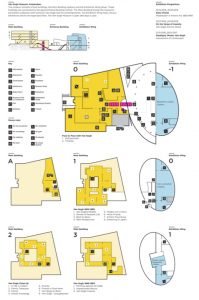
The building has five levels (A, 0, 1, 2, and 3), but the real story begins on ground 0. Here, self-portraits are shown alongside a timeline of the artist’s life to give the visitors a contrasting representation between the subjective and objective Van Gogh. From there, floors are categorized chronologically: level 1 depicts his lifework from 1883 to 1889, including paintings from peasant life to modern art inspired by Paris and Japan, while level 3 depicts those from 1889-1890, including natural artistry and artwork from artists inspired by Van Gogh. However, this museum is unique in that between these two life stages is a collection of his personal memorabilia. Thus, this floor plan’s design was constructed with the intent of giving the visitors a more comprehensive understanding of the artist himself. While the first floor emphasizes Van Gogh’s maturation as an artist and relays the technical artistic functions of each piece, the tone is different as the visitor experiences the humanness of his intimate letters and exchanges with family and friends on the second floor. By the time visitors enter into the third floor, these tones come together as the technically orchestrated paintings are interlaced with inspirations from significant people in his life. In this way, the museum attempts to make rational sense out of Van Gogh’s life by putting everything in the order that it happened and trying to create an immersion of empathetic experiences.
An alternative way of designing this museum might be to categorize pieces by the major styles of artwork, for example by landscapes, portraits of people, portraits of objects, and florals. The personal memorabilia would then be placed near paintings that are closest in relevance and historical significance. This in turn would shift the vision from one that exemplifies Van Gogh’s life story and his personal attributes to one that highlights the deeper technical artistry of his collections.
I loved this museum as well and found it interesting that it was laid out by the periods in his life. I think your alternative way of categorizing his paintings would have been the most obvious way of displaying his work but the Van Gogh museum does a great job in depicting his life and inner struggles through his art. This is only possible because it focuses on one artist. However, I remember that there were a few works that were not his own in several aspects of the gallery which could have been labeled better. Thanks for sharing!
Your visit to this museum sounds like a great experience! It is really cool that they chose to categorize this collection in terms of stages in his life to create a really personal connection for visitors. I think this method of categorization would leave a really strong impression on visitors and that definitely accomplishes the museum’s mission of telling his story through his artwork and other memorabilia.