Last Saturday, I went to the Getty Center with my friend. It was the first time that he had ever been there so it was great to come back to the space and look at the pieces he really wanted to see. It made me happy to see that it was more crowded than I imagined it at 6pm on a Saturday without a special event hosted by the museum. There were several applied technologies throughout the museum which I had never become fully aware of until now. When thinking about the Getty, I couldn’t remember any technology in the space. I was pleasantly surprised and content with how they incorporated the technology within the exhibits. The technological elements were, in my opinion, used appropriately without being too overwhelming or out of place.
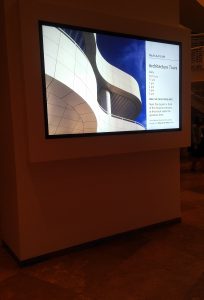
When we walked through the door, we were immediately greeted by a screen with changing slides indicating the different tours, talks and special installations that were available.
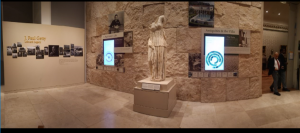
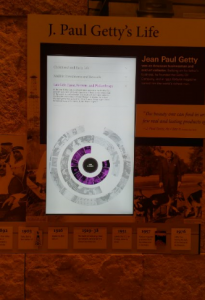
Our first stop was a small segment of the life and legacy of J. Paul Getty. They had interactive touch screens where museum goers were able to toggle through and look at J. Paul Getty’s life more in depth. It was set a little higher on the wall so the children there were not able to reach it. I saw a couple look at the screens and weren’t sure if they could touch it. There was no indication that users were free to explore the content on their own so some just walked by without stopping to use it. Better signage or a call to action could have potentially helped. Either way, it was a cool addition that I didn’t notice before. It was exciting to use and I believed was a great way of conveying more information about the life of the collector.
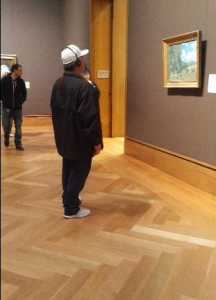
As I walked through the different rooms, I noticed museum goers with audio sets while simultaneously listening and looking at the art work. Although most museums had these sets, a high number of people used them at the Getty. I love this idea because it allows people to look at pieces for a substantial amount of time (more than the 3-5 seconds that they usually do). Each audio snippet was dedicated to a particular piece which was indicated on the wall captions next to the art work.

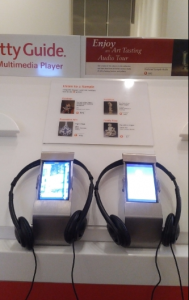
There were also Getty Guide stations placed along hallways that did not have art playing videos about various art techniques, conservation discoveries and behind-the-scenes information on certain artifacts and art pieces. People stopped by them on their way to different rooms and exhibits. They were really engaged with the video and content that was playing. I enjoyed these areas quite a bit because it shows the work put into conserving and analyzing these pieces. It also allowed people to appreciate the act of conserving, researching or performing the techniques.
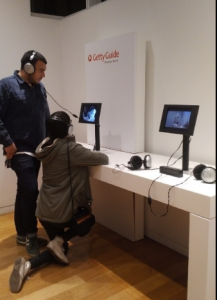
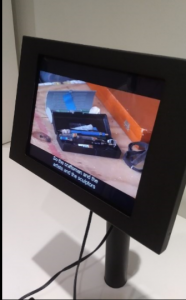
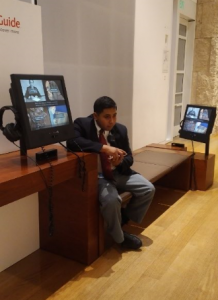
Why do you think that more people were using headsets at the Getty than other museums? Does the Getty make an effort to promote the use of their headsets in order to give their visitors a more holistic experience? It’s very interesting to me that people with the headsets tended to look at pieces for longer – that suggests to me that if museums really want their visitors to engage with the exhibits, investing in awesome (and not just good) audio guides would be a smart move.