This past Saturday, Ariana and I ventured to the Hammer Museum in hopes to find a digital component in one exhibit. Prior to our visit I had been wary of the likelihood there would be a digital component, because in all of my experience with art museums, I couldn’t think of one compelling digital component.
When we arrived at the Hammer, we approached the front desk to inquire if there were any exhibits that featured digital components. At first, the man looked at us quizzically, but then he said, “Well, you could check out this exhibit we have on bitcoin.” Instantly, I figured that would be an exhibit to check out. When we found the exhibit, we noticed a video on the wall, but we were looking for something more interactive, more digital. Inside, the exhibit looked like the perfect breeding ground for creative digital content, especially given that bitcoin is entirely digital. Yet, there was nothing digital inside the room, and I was disappointed. Perhaps it was that I had nothing to analyze for this blog post, or perhaps it’s that I have a deep desire to physically interact with things in a museum. My grandfather had long told me that I was always more engaged at the museums where I could touch things, his favorite example being when he brought me to the London Museum. However, this exhibit lacked that, leaving me itching for something to do.
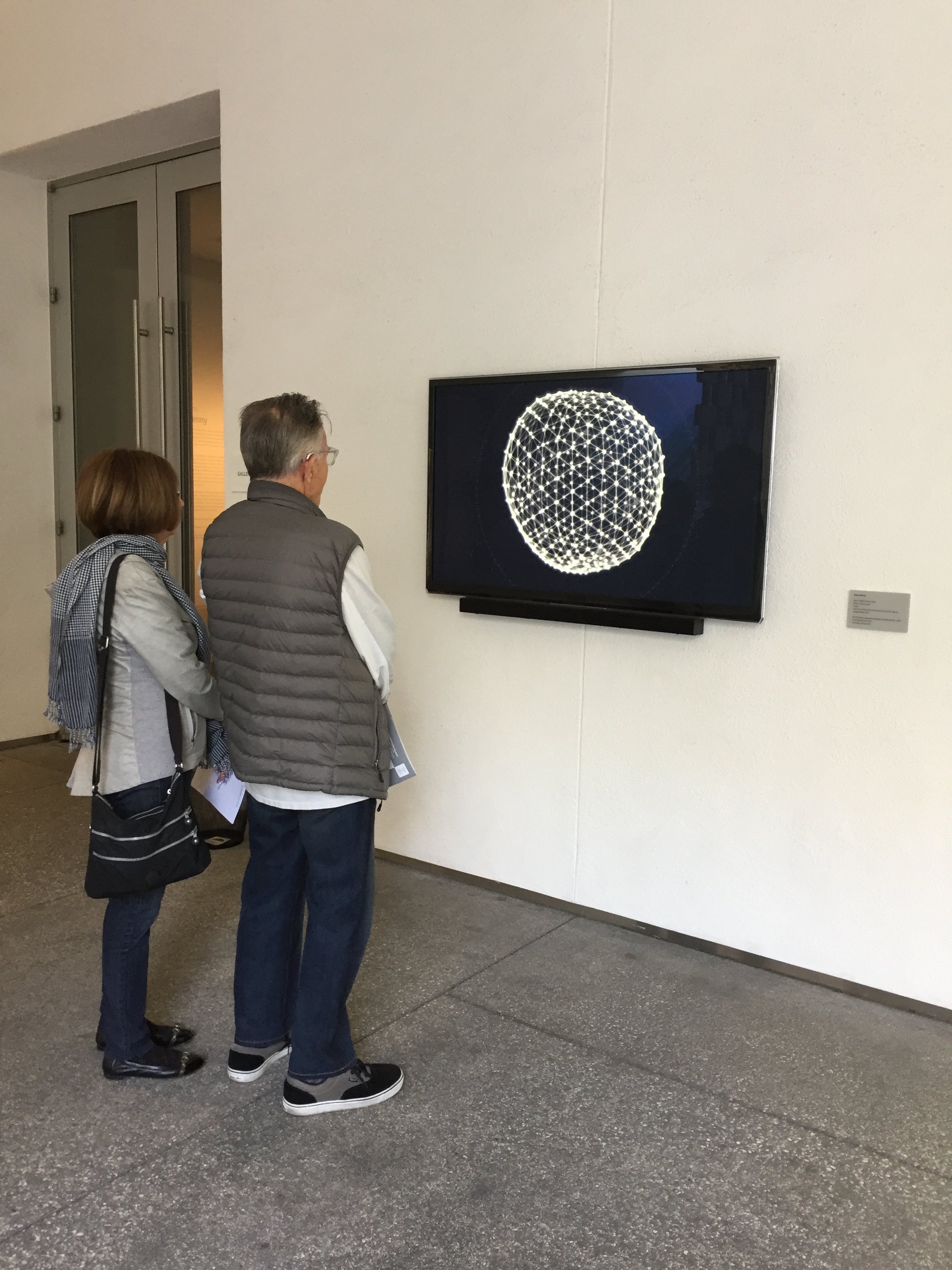
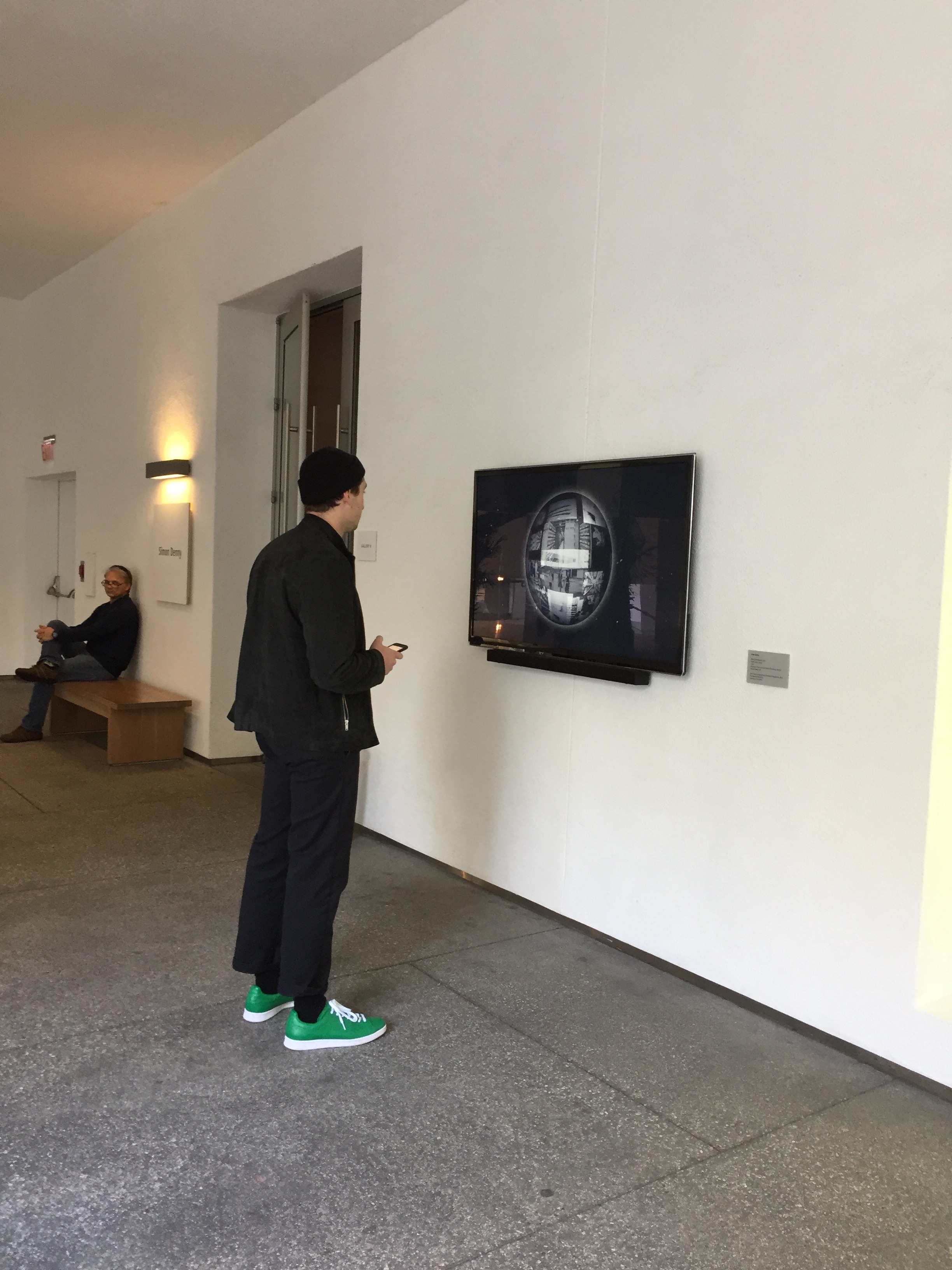
The exhibit, Simon Denny, uses a video on the outside of the exhibit to explain its subject matter, bitcoin, in a deeper visual way. In having it as an outside introduction, it assumes that viewers need that visual explanation of bitcoin in a way a static visual can’t describe or convey. Having the video on the outside of the exhibit signals to me that it is considered separate from the art rather than incorporated and part of the art inside the room.
With the video, few visitors take time to watch it for longer than a couple seconds, as if they acknowledge that this is an art museum and that they are expected to simply consume and appreciate what has been dictated as art. This, to me, falls into the exhibitionary complex, in that they are aware of how they are “meant” to interact in the space, and they stick to that.
Ariana and I sat in the iconic spinning chairs placed outside of the exhibit and waited to observe people interacting with the video, but it was in this sculpture garden we were waiting in that I noticed people interacting the most with their personal technology. Patrons would take pictures on the spinning chairs, of the hanging sculptures above, of their loved ones near other sculptures, as if the three dimensional, physical art was more appropriate to interact with and put on social media. I don’t necessarily see this same level of technological interaction with the 2D elements in the exhibit space.
In us going to an art museum, there is a clear lack of technology and interaction, which signals to me that artists might not be looking for that direct art consumer feedback or interaction, but would rather have their pieces appreciated in an art space as it stands alone or in an exhibit context. Technology and art museums have yet to fully integrate, and it will be an interesting transition in making patrons comfortable with that integration when it does.
Maybe the spinning chairs are the most effective form of technology at the Hammer! They are irresistible, and they accomplish their intended purpose of getting people to relax and interact with each other! (I always get dizzy, though.)
I went to the Hammer Museum as well for this assignment, and I completely agree with you on your comment about the lack of interactive technology. I thought Simon Denny’s interior exhibit was particularly interesting, because the pieces seem touchable at first sight– that is, until you hear the museum employees mention that they’re not interactive! I also really liked what you said about the appropriateness of interacting with the physical objects over the technologic pieces. I didn’t realize it at the time, but in hindsight I definitely remember seeing people enjoying the physical space more than the technology in this particular museum.
I think you’re right that most people would rather interact physically with exhibits in a museum as you did as a child. Most people (including myself) at museums seem to have that exhibitionary complex where they feel as though they are only meant to stare and take in the actual art or exhibit instead of focusing on anything else. This may be why there is such a lack of technology and interaction I have seen at museums. I haven’t visited this museum but would love to try those spinning chairs, that sounds like a lot of fun. Thanks for sharing!