I chose to visit the Broad museum to observe how museum-goers interact with the artwork and exhibits and how technology comes into play with their experience. The external appearance of the building is a unique contemporary shape that foreshadows the modern art from the 1950s – present that is displayed within. The first floor is dedicated to special exhibits like the Infinity Mirrored Room, which people reserve tickets for ahead of time. I focused on the third floor, where the vast white openness – like a canvas – allows ample space to display huge sculptures on the floor and paintings along the walls.
Upon entering this space, the surrounding galleries are overwhelming and it’s difficult to decide where to start. The Broad mobile app is a way for visitors to use technology to enhance their experience and navigate the building. It offers audio, video, and descriptive text about the collection and artists on display, along with free self-guided audio tours. Four topics are covered – the “Architecture Tour,” “Inside the Broad Collection” (gives background, history, highlights, and photos for the galleries I explored), “Looking With LeVar” (a tour for children), and “Artists on Artists” – allowing you to skip short segments to align with which piece of work you’re standing in front of. The app also allows you to reserve, view, and redeem museum tickets; even though admission and tickets are free, this function is useful as the Broad is a popular spot for tourists and locals alike and booking tickets in advance makes the most of your time. Although the app is a convenient tool, especially since it can be pulled up directly on a smartphone and giving easy access to a majority of people, the problem is that visitors aren’t likely to take that first step in downloading it.
I noticed that most people instead incorporated technology into their visit via taking photos on their smartphones and documenting their experience through Snapchat. I wasn’t surprised because I initially heard about the Broad through social media – countless Instagram posts of people posing in front of the sculptures and artwork foreshadowed what I would encounter when I visited the museum in person. I couldn’t really tell if people were staring at their phones to use the app or to scroll through Instagram, but I feel like that goes to show how technology has become such an integral part of our daily lives and the Broad attempts to appeal to this and turn it into an educational opportunity.
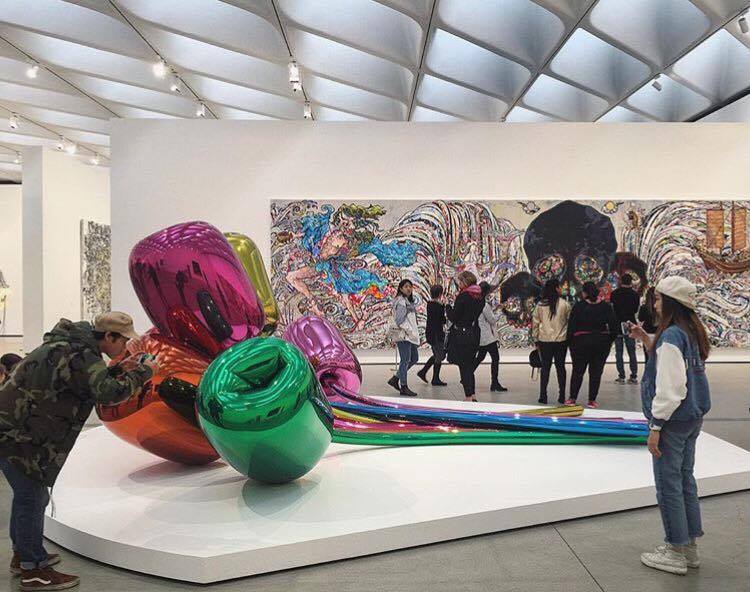
The galleries on the third floor are organized loosely by artists and time period. Although there is some text on the walls about the artist and the work, people seem to be too busy taking pictures of (and with) the art or being distracted by its visual appeal. The Koons sculptures tend to gather crowds because of their massive size and reflective porcelain surface, and “Under the Table” as well because of its giant dimensions. People tend to take pictures in front of trendy pop art by artists like Lichenstein and Warhol. Because the artwork is so visually appealing, it seems like people don’t feel compelled to use technology to learn about a work of art because they treat it as a purely aesthetic object rather than learning more about the ambiguous meanings that contemporary art tends to hold.
I definitely agree that The Broad is purposefully appealing to the social media trend! Even their Instagram (like this for example: https://www.instagram.com/p/BOkv7xUFGlr/?taken-by=thebroadmuseum) features some of the selfies visitors have taken. In a modern art history class I took around the time the museum first opened, we talked about how the placement and choice of the works included, along with the lighting of the rooms, create an ideal selfie. It also reminds me of The Hammer, who created a hashtag #spunday for Instagram photos taken of visitors in the spun chairs located in the museum’s courtyard, once they noticed the frequency of these selfies. While these examples came about fairly organically, I do wonder in the future if museums following this trend will be doing so in a way that feels inauthentic , or if it could eventually become more about the social media aspect than the art.
Very interesting! I love your observation that the Broad is a museum designed for the social media age!
I find the idea of having a self-guided audio tour accessible on your personal smartphone to be really compelling. Personally, my first experiences and memories of technology in museums when I was a kid consisted of everyone fumbling around with headsets and mp3 players given out by the museum, and the Broad’s app seems like a cool spin on that. Yet, as you mentioned there is the strange sense that you’re traditionally not supposed to be on your phone much in a museum, and you can’t really tell if people are using their phones to engage more with the art, or if they are becoming distanced and distracted because of it.