
Today I visited the Hammer museum and was blown away by Jimmie Durham’s exhibit: “Jimmie Durham: At the Center of the World”. His work is extremely abstract and unique. It allows for an insight into political activism. His work is a wonderful contribution to our class in particular because he highlights the importance of artists of color and has art pieces specifically focusing on racism, Apartheid, and the US government’s intervention into Central America. After walking through his collection, I revisited some of the sections with technology added to the exhibit context to observe how others interacted with the addition. I noticed that when technology was added to an exhibit it drew people in and almost captured their attention more than a piece without technology would have. The observers would watch the technology patiently waiting for it to run its particular course of action.
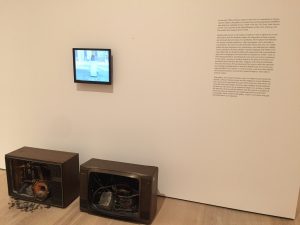
For the example above, the screen showed blocks of cement being thrown at a fridge until it became very indented. The process was captivating to watch. However, there were rooms within the exhibit as a whole that only included technology and did not involve any actual sculptures or art to accompany it. These rooms were a bit deserted and seemed much less inviting than the rest of the exhibit. I tried the technology myself. The process involved putting on headphones and watching a clip about the explorations of the artist. While is was interesting, the dark room and lack of color or other exhibits made the space seem unwelcoming to most of the other observers. During my time in the exhibit I never saw another person enter this particular section. It seemed that these were the least favorite aspects of the exhibit.
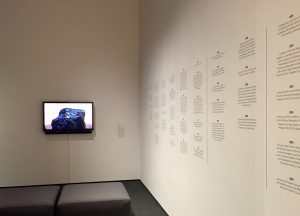
From my personal experience, I preferred looking at the art and reading about it to watching a clip about it on the television. However, the background information that the clip provided was a nice addition to the exhibit all together. I am torn between agreeing with the involvement of technology and disagreeing with the involvement. I think that while it adds some extra information that is nice to have when learning about an artist, their research and history of their art, the technology still takes away some of the authenticity of the art and the simplicity that comes with soaking it all in just by examining it in person. From the observations that I made earlier today, it seems that not many people that are visiting museums are there for the technological aspects, unless they are accompanied by a piece of art. So maybe just ridding the exhibit of the solely technological rooms would be beneficial for maintaining the overall aura of the exhibit and its naturalness. The exhibits were insanely beautiful and definitely did not need any technological aids to make a statement. I highly recommend this exhibit to everyone; it is one of my favorites I have ever seen at the Hammer and definitely one of the most inspiring I have seen out of all the exhibits I have had the opportunity to experience.
Perhaps you would have appreciated the films more if they were integrated into the galleries rather than located in a separate dark room? The film of Durham throwing rocks at the refrigerator is an art performance he created while in completing an artist residency in France. As a work of art itself, this film is included in the main gallery rather than shown in the media room. I agree that the separation of the films from the rest of the art does change the viewers perception of and interest in the film.