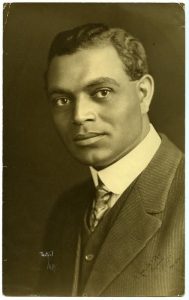
Jane Gaines’, “In-and-out-of-race: the story of Noble Johnson” examines the connection between Noble Johnson and race film. Gaines describes the story of Noble Johnson, surprisingly, as one of “race loyalty and then race betrayal, of family belonging and then disconnection”. Noble, the brother of George P. Johnson, was one of the “first black American film stars”, and appeared in several Lincoln Motion Picture Company (founded by George) race films during his early career. After his acting career took off, Noble left the Lincoln Motion Picture Company, which did not do very well after his absence (partially because it was being overshadowed by Oscar Micheaux films). One of Noble’s main film legacies was as the first race “cross-over” star, where he played a multitude of different ethnicities on-screen, including Hispanic, Asian, and Native American. In this way, he lived a life of “subtle subversion of categories”, whether intentional or unintentional. By doing his makeup and costume, and acting as a variety of ethnic characters, he never really fit into one race category. When Noble died in 1978, his death certificate even listed him as “white”. With all these competing racial identities, the question is raised: does Noble Johnson actually represent African-American race film, as he is historically viewed as doing? And then, how do these considerations affect his placement in race film in the way that we are studying?
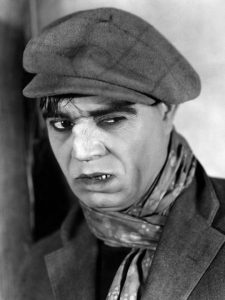


Gaines also draws a contrast between the life works and legacies of George and Noble. George was a writer, producer, and distributor for the Lincoln Motion Picture Company, that produced race films in order to “uplift” the African-American race. He also collected articles about and kept records of race films. George’s “race loyalty” is clearly illustrated. However, while Noble played a key role in race film early in his career, Gaines notes that his later career is more a story of “race betrayal”. She writes that “Noble Johnson’s silence in answer to his brother George’s urging that he write his history as the history of a black man makes him less easy to claim for African-American history”. She explores the question of how to view a historical figure: by their actual actions and accomplishments, or how they chose to define and present themselves.
Noble Johnson’s life of being “in-and-out-of-[his] race” is important to consider when looking at race film, in general and for the George P. Johnson exhibit we are putting together. Though it does complicate the history, it is important to note that Noble may have some aspect of racial “flip-flopping”.
Wow, I am surprised and honestly, perplexed, by the fact that Noble Johnson was listed as white on his death certificate. Hard to know what to make of that. How do you feel about Gaines accusing Noble of racial “flip-flopping”? Seems reductive and somewhat unfair to me. I doubt this kind of accusation would be leveled at a white actor who appeared in race films at the time so it doesn’t seem fair to pigeonhole Noble that way. Fascinating photos!
Thank you for the inclusion of those images! How interesting. I agree with Adelaide here in that I don’t think that pitting someone as assimilationist/ “sell out” versus a militant claiming of blackness is fair. In Chicanx studies we talk a lot about navigate liminal, “third spaces” of identity or deploying specific identities in particular contexts, often to guarantee our survival or physical safety (Chela Sandoval calls this “differential consciousness” which is a way of expanding on “double consciousness.” I feel like that might be a more considerate approach to thinking about how folks of color navigate both their identities and bodily/spiritual/mental health and safety.
It was really interesting reading about these ideas of “racial betrayal” and “racial flip-flopping”. It never occurred to me how Johnson’s ability to act so many roles and portray himself across a wide spectrum of ethnicities was not just a testament of his extraordinary acting abilities– it also presents an unclear presentation of his self-identity, and poses the question of whether or not he is a true representation of African-American race film.
One of the key takeaways I got from reading your precis was that there exists these conflicting ideas: Noble Johnson was a key figure in race film, yet as an actor and individual, he did not really fit into one particular category of race. Can we really say he represents race film as the remarkable actor he is? Was he racially confused with himself or intentionally flip flopping between races?